by David Himmelstein, MD
WBUR.org
Thursday, February 7th, 2008
Last week the news leaked out from the Patrick administration that public spending for the health reform plan in the coming fiscal year will be about $400 million over the original projections. This follows a $146 million cost overrun in the current year.
Why are such miscalculations the norm? Are the costs of health reform unknowable? Or did politicians (and the media) listen only to the “experts” who told them what they wanted to hear?
As I wrote here several months ago, the Census Bureau has been saying for years that there were far more uninsured in Massachusetts than state leaders cared to admit. But politicians and the economists who advised them stuck to their guns. It turns out the Census Bureau was right. The result is that many more people are eligible for the subsidized coverage than the legislature or governor planned for. And, by the way, the demand for free care from safety-net hospitals and clinics is not dropping as fast as projected, again a result of undercounting the uninsured and ignoring the large number of immigrants who are mostly ineligible for insurance under the reform.
Of course, the economic advisors also underestimated the impact of rising medical costs, taken in by claims that that the “Quality and Cost Control Council” would rein in costs, and that the computerized health records and improved prevention touted in the bill would save money. I laughed those off last May in this space.
(By the way, the same health economist who advised the legislature as it was drawing up the original budget, recently told a real whopper in the letters section of the Boston Globe — claiming that a single payer reform “would cost many multiples of the current Massachusetts reform effort.” He chose to ignore the reams of evidence that single payer would save vast sums on bureaucracy and profits. Indeed, the CBO, the GAO, and even the Lewin Group, a consulting firm which is owned by a health insurer, have all projected that single payer would cover everyone without any increase in total costs).
Unfortunately, any reasonable forecast sees more fiscal trouble ahead for Massachusetts’ health reform. The $400 million overrun estimated for the coming year doesn’t account for the recession that looks to be headed our way. If we’re lucky, it’ll be no worse than the fairly mild downturn in 2001-2003. Back then, the number of working age people who didn’t have jobs climbed by 167,000, and the number of uninsured rose by 168,000 — presumably including many of those who lost jobs, as well as some of their dependents. So a modest downturn is likely to swell the ranks of the low-income uninsured by about 165,000 — adding perhaps $400 to $600 million to the bill for public subsidies.
So as we plan for the next year or two, let’s factor in the real costs that lie ahead, not the fantasy projections politicians would like to believe. If those realistic cost estimates look unsustainable, then lets get ready to talk about a reform that we can afford — like a single payer program.
David Himmelstein is an associate professor of medicine at Harvard Medical School and Co-founder of Physicians for a National Health Program
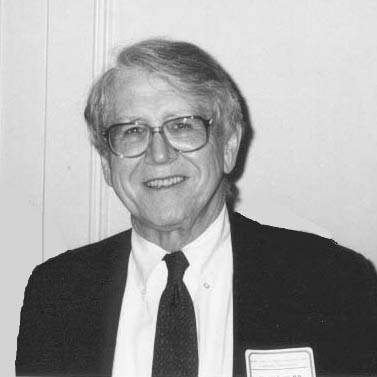 QUENTIN YOUNG, MD, Chicago, Dr. Young is a practicing internist in Hyde Park. He chaired the Department of Internal Medicine at Cook County Hospital for a decade. He is the former President of the American Public Health Association. Contact: 312.782.6006
 OLVEEN CARRASQUILLO, MD, MPH, New York City is Assistant Professor of Medicine and Public Health at Columbia University’s College of Physicians and Surgeons. Dr. Carrasquillo is a member of the Advisory Committee of the National Hispanic Medical Association, and is a practicing internist with patients in the predominantly Latino community of Washington Heights.
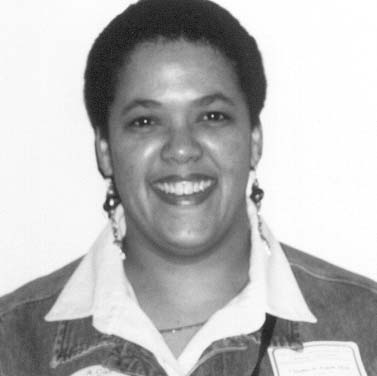 CLAUDIA FEGAN, MD, Chicago, Associate Chief Medical Officer of the Ambulatory and Community Health Network, of the Cook County Bureau of Health Services. She is a co-author of “Universal Healthcare: What the United States Can Learn from Canada” (The New Press, 1999)
 OLIVER FEIN, MD, New York, is Professor of Clinical Medicine and Clinical Public Health at Weill Medical College of Cornell University. He was Robert Wood Johnson Health Policy Fellow during 1993-1994, when he worked as a legislative assistant for Senate Democratic Majority Leader, George Mitchell.
 JERRY FRANKEL, MD, Dallas, is a urologist who is recently retired from private practice in McKinney, Texas. He is a leader in the development of less-invasive surgical techniques in his field. He ran for Congress in 1996 against House Republican Dick Armey. Dr. Frankel has published numerous articles and letters on single-payer national health care and appeared on the local affiliates of ABC, NBC, PBS, and NPR.
 DAVID HIMMELSTEIN, MD, Boston, is an Associate Professor of Medicine at Harvard. He is a co-founder of PNHP and his research focuses on problems in access to care, administrative waste, and the advantages of a national health program.
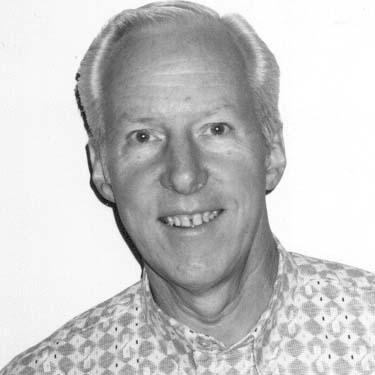 DON McCANNE, MD, California, (Senior Health Policy Fellow) Dr. McCanne is a retired family physician in San Clemente, California. For three decades, Dr. McCanne has allotted one-half of his practice hours to indigent patients.
 DEB RICHTER, MD, Vermont, practices family medicine in Montpelier, Vermont, and is a frequent spokesperson in the print, TV, and radio media.
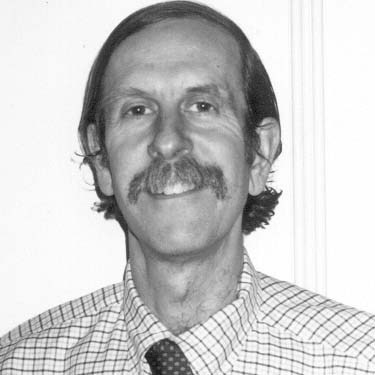 GORDON SCHIFF, MD, Massachusetts, Dr. Schiff is an internist at the Brigham and Women’s Hospital in Boston. He is an expert in patient safety and Medical Informatics and teaches at the Harvard School of Public Health.
 WALTER TSOU, MD, MPH, Philadelphia, Dr. Tsou is an internist and former Health Commissioner of Philadelphia. He currently serves on the Executive Board of the American Public Health Association.
 STEFFIE WOOLHANDLER, MD, MPH, Boston, Dr. Steffie Woolhandler is an Associate Professor of Medicine at Harvard and co-director of the Harvard Medical School General Internal Medicine Fellowship program. She worked in 1990-91 as a Robert Wood Johnson Foundation health policy fellow at the Institute of Medicine and the U.S. Congress. Dr. Woolhandler is a frequent speaker and has written extensively on health policy.