By Donald Broder, M.D.
The New York Times, Letters, Nov. 8, 2013
Re “Despite Fumbles, Obama Defends Health Care Law” (front page, Nov. 7):
Nicholas D. Kristof points out that without universal health care, many of us die prematurely. But before we solve this terrible problem, we have to grapple with our confusion and ambivalence as to what, if any, responsibilities we have for one another.
Do we just cluck our tongues and blame Richard Streeter, featured in the column, for not buying insurance? Do we let him seek care at a hospital emergency room knowing that it will be far more expensive and far less effective than timely care would have been?
Do we construct a Rube Goldberg-worthy health plan to protect the profits and inefficiencies of every powerful lobby group except that of “we the people” who need care?
So far, the answer seems yes. So even with the benefits the Affordable Care Act is bringing, we will still have tens of millions without care, we will still be subsidizing health insurance companies, and we will still be throwing money down a rathole.
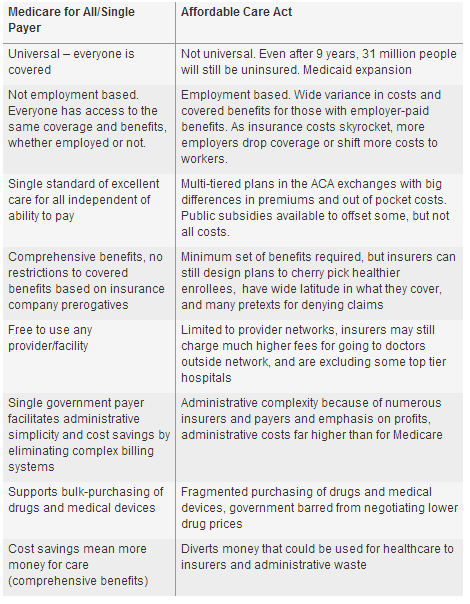
Until we recognize that we are our brother’s keeper and build a health care system funded by taxes we all pay and delivered by a regulated health care community — improved Medicare for all — we will continue to read tragic stories like the one Mr. Kristof gave us.
Dr. Donald Broder is a psychiatrist. He resides in Studio City, Calif.
http://www.nytimes.com/2013/11/08/opinion/obamacare-consider-the-alternative.html?_r=0
A 5% commitment for Medicaid?
Professionalism and Caring for Medicaid Patients — The 5% Commitment?
By Lawrence P. Casalino, M.D., Ph.D.
The New England Journal of Medicine, November 7, 2013
Medicaid is an important federal–state partnership that provides health insurance for more than one fifth of the U.S. population — 73 million low-income people in 2012. The Affordable Care Act will expand Medicaid coverage to millions more. But 30% of office-based physicians do not accept new Medicaid patients, and in some specialties, the rate of nonacceptance is much higher — for example, 40% in orthopedics, 44% in general internal medicine, 45% in dermatology, and 56% in psychiatry. Physicians practicing in higher-income areas are less likely to accept new Medicaid patients. Physicians who do accept new Medicaid patients may use various techniques to severely limit their number — for example, one study of 289 pediatric specialty clinics showed that in the 34% of these clinics that accepted new Medicaid patients, the average waiting time for an appointment was 22 days longer for children on Medicaid than for privately insured children.
Physicians have good reasons for not accepting Medicaid patients, as I learned from direct experience as a member of a nine-physician primary care practice in California. We accepted Medicaid patients, but it was difficult. Medicaid’s payment rate was very low — we lost money on each Medicaid visit. When referrals were necessary, we often had to personally ask specialists to accept our patient. Administratively, it was not simple to obtain payment from Medicaid for our services, in part because some patients frequently moved between eligibility and ineligibility for the program. In addition, it was time-consuming for our physicians and staff to deal with the Medicaid pharmaceutical formulary and to obtain prior authorization for Medicaid patients to see specialists and obtain imaging studies.
There are additional reasons — beyond low payment rates, administrative complexity, and problems obtaining specialist care — why physicians may be reluctant to see Medicaid patients. Medicaid patients often have complicated behavioral health, transportation, and social service needs that require physician and staff time.
Nevertheless, there is a fundamental reason why physicians should strongly consider providing care for at least a reasonable number of Medicaid patients. It is a core professional principle that physicians should put the patient’s interest first; refusing to care for vulnerable, socioeconomically disadvantaged Medicaid patients seems incompatible with this principle. Many medical schools ask their students to accept the World Health Organization’s Declaration of Geneva (a modified version of the Hippocratic Oath), which states in part that “I will not permit considerations of age, disease or disability, creed, ethnic origin, gender, nationality, political affiliation, race, sexual orientation, social standing or any other factor to intervene between my duty and my patient.”
Physicians who are reluctant to provide care for Medicaid patients can argue, with justice, that policymakers are trying to make medicine as market-driven as possible, that physicians are increasingly expected to respond to market incentives and market constraints, and that no business in other sectors of the economy is asked to provide a service that loses money year after year. Many physicians, however, earn very high incomes, and some of the highest-paid specialties are the least willing to care for Medicaid patients. Would it be reasonable to ask all physicians to commit to providing care for enough Medicaid enrollees so that at least 5% of each physician’s practice consisted of Medicaid patients (assuming sufficient demand)?
We live in an era in which, for better or for worse, market-based solutions are dominant and policymakers tend to view physicians as self-interested actors. Little or no attention is paid to physician professionalism or to the possible effects of policies on professionalism. Policies that are based on this view may be justifiable if many physicians are indeed seeking to maximize their incomes and refusing to accept even a slight reduction in income as the price for helping to provide care to the most vulnerable patients in our society. A 5%-commitment campaign would be a meaningful, highly visible demonstration of physician professionalism — of putting patients first.
http://www.nejm.org/doi/full/10.1056/NEJMp1310974
Comment:
By Don McCanne, M.D. The expansion of Medicaid for low-income patients is one of the more troublesome features of the Affordable Care Act. Because of low payment rates, many physicians, especially high-income specialists, already refuse to accept Medicaid patients. Increasing the burden on those physicians who do accept Medicaid is apt to result in a pushback wherein access may be further impaired. What can be done? Lawrence Cassalino has provided us with an excellent description of the dilemma, but I’m afraid that his 5% solution – physicians devoting 5% of their practices to Medicaid – will fail since it depends on physician professionalism, of putting patients first. After a career of trying to obtain specialized care for Medicaid patients, it was quite clear that that level of professionalism was not ubiquitous in my community, and I doubt that it is in most other communities. Relying on the pure goodness of physicians will not work because there are not enough so oriented to meet the need. One important measure in ACA is the expansion of funding for federally qualified health centers. These centers improve access for vulnerable populations, though they still have difficulties obtaining adequate support of specialists. Today, the government announced a $150 million grant to assist these community health centers. $150 million? Unless the government becomes serious about community center funding, and unless something is done to attract specialists to support these centers, we cannot expect them to fill the void either. There is a clear solution. We could establish a single payer national health program in which everyone has the same coverage and access to care. That may or may not renew the commitment of today’s physicians to professionalism, but at least it would create the appearance that patients would be placed first. For individuals considering a future career in medicine, professionalism would be a given.
]]>Petty appointed executive director of PNHP
FOR IMMEDIATE RELEASE
November 7, 2013
Contact: Mark Almberg, communications director, mark@pnhp.org
Physicians for a National Health Program announced today that Matthew Petty has been appointed executive director.
Petty, who has most recently served as the group’s director of operations, will be responsible for mobilizing PNHP’s membership in advocating for single-payer reform at the national and state levels, growing its membership and financial base, and enhancing its outreach programs, media work and ties with coalition partners.
Of the new responsibilities Petty will assume, Dr. Andrew Coates, PNHP’s president, said: “Our new executive director will coordinate a remarkably talented team of professionals in our national office.”
Pointing out that public debate over health care remains acrimonious and that PNHP’s perspective is often sought, Coates added: “The PNHP Board of Directors chose Matt as executive director with an awareness that we have entered a new period characterized by the growth of private, profit-centered corporate influence over the practice of medicine.
“At a time when we need to develop a new generation of physician leaders, Matt, only 30 years old, has grown with the organization. He has proven himself by taking day-to-day responsibility to safeguard our ability to fulfill our mission and grow our organization.”
Following his appointment, Petty said, “I look forward to continuing to serve members of PNHP in this new role as we work together to achieve single payer and to restore the doctor-patient relationship, free from corporate dictates.”
Petty, a native of Fargo, N.D., majored in social policy at Northwestern University, with a special concentration in health policy. While at Northwestern, he conducted research in racial disparities in infant mortality, diversity in health professions, rural prison expansion, and Social Security. He minored in political science and obtained his bachelor’s degree in 2005. He spent time working on Capitol Hill, and has worked for PNHP for the last eight years.
PNHP is a nonprofit, 18,000-member research and educational organization of doctors who support single-payer national health insurance, or “an improved Medicare for All.” It was founded in 1986. Headquartered in Chicago, the group has become a nationally influential voice on health policy, with chapters and spokespeople throughout the United States.
Petty’s appointment became effective on Nov. 3 by action of PNHP’s national board, which met in Boston at the conclusion of the group’s Annual Meeting. The meeting was its largest gathering ever, organizers said.
]]>Delaware committee hears single-payer health care system bill
By Michael Chesney
WBOC-TV (Salisbury, Md.), Nov. 6, 2013
DOVER, Del. – A single-payer health care system in Delaware was what was up for discussion Wednesday night at Legislative Hall, even though the Delaware General Assembly is out of session.
A single-payer system is government-run health care. The state, not private insurance companies, would handle all health care costs.
HB 74 would create that system in Delaware. It was introduced back in April. But its sponsor requested it be heard outside of session. So, it was a very small crowd on-hand in the house chamber to discuss the specifics of the single-payer healthcare system plan. According to Rep. John Kowalko, D-Newark South, the bill’s sponsor, the state would pay for the system mainly through a payroll tax for employers, federal medicare and medicaid money and a personal income tax increase of 2.5 percent.
“The first instinct is you’re going to increase my tax,” he said. “If you’re decreasing the current money you pay for health care, if you decrease the cost of co-pays, deductibles, if you eliminate those, you’ll find that 2.5-percent is a savings compared to what you’re paying now.”
Beth Clifton, of Smyrna, is comfortable with a two-point-five percent income tax increase. She says it would probably end up costing the same as her current insurance.
“I think overall it’s a good thing,” Clifton said. “I know health care costs in general have sky-rocketed. I saw my deductible go up this year. Prescription premiums went up a lot this year.”
Martin Shuey came up from Bridgeville for the hearing. He’s not necessarily opposed to a single-payer system, but he has serious issues with this bill.
“It all sounds good when you hear it from them. But the way it’s written is scary,” he said. “Any time you talk about one-payer systems. I’m not saying they’re bad. But they have to be controlled properly. I think that needs to be a concern for everybody.”
While a few people at the hearing had questions and concerns like Shuey’s, nobody spoke in strong opposition to it. In general opponents of plans like this don’t want government this involved in health care – believing it will lead to a rationing of care.
The lack of people at Wednesday’s hearing could be an indication of the traction this bill has. A similar bill didn’t go anywhere in 2012. Or the small turnout could be a result of lawmakers not actually being in session.
There are plans for two more meetings on the topic. No action was taken at this meeting. Even if the bill passed in this upcoming legislative session, the system wouldn’t go into effect for a few years.
http://www.wboc.com/story/23899985/del-committee-hears-single-payer-health-care-system-bill
Why are they all saying ‘single payer’?
By Andrew D. Coates, M.D., F.A.C.P.
WAMC Northeast Public Radio, Nov. 1, 2013
Last week we saw a domestic national news cycle dominated by the “glitches” that derailed the launch of the web-based exchanges where uninsured American people and their small business employers can shop for private health insurance. This week, as stories about private health insurance continue to dominate the headlines, the term “single payer” has bobbed up with increasing frequency.
“Single payer” or “Medicare for All” has simultaneously appeared on the lips of many mainstream voices, right, left and center. Mostly those who say the words would like to dismiss the idea — and yet they clearly recognize that the single-payer proposal, public health insurance for each and all, is a policy proven to guarantee access, improve health outcomes and control costs.
The latest media flashpoint shines a light on an estimated 10 million to 15 million people who already purchase private health insurance individually. Many of these people have been getting letters from their insurance companies canceling their policies at year’s end.
Republicans pounced on the occasion to embarrass the president, accusing him of false promises. Mr. Obama had often claimed that under his reform, “If you like your health insurance, you can keep it.”
In his defense, the president explained that the Affordable Care Act places new regulation upon the insurers, that it establishes basic minimum coverage thresholds, that insurers can no longer exclude applicants due to pre-existing health conditions, that millions of people will be income eligible for Medicaid or federal subsidies to cover private insurance premiums.
In other words, although you might not be able to keep your woefully inadequate policy that you liked for its low premiums (but might have hated in the event you actually got sick!), there is a chance that you will get a new policy, and perhaps a subsidy toward its premium costs, something you might like after all.
But as an axiom from establishment politics of the 1980s runs – “if you’re explaining, you’re losing.” Hearing the president’s explanations, the Republicans stepped up their criticism.
The media, for the most part, has played its usual part too, repeating the talking points – “he said, she said.” Yet few journalists have pointed out that the mainstream debate, although flamboyant in style – press conferences, congressional hearings, talking heads galore – remains perfectly flat in substance.
The president and his party tout the virtues of private health insurance. In vociferous opposition, the Republicans and their Tea Partiers tout the virtues of private health insurance.
But then comes the double irony – something funny happened on the way to covering this forum. As journalists looked for the story beneath the story, they come across real human beings caught in this odd political crossfire.
We’re told stories about people who desperately need private insurance and are grateful for the chance to purchase it in order to escape ongoing financial ruin. Poignant articles have underscored how whole families can be devastated financially by “out of network” costs (and some by “in network” costs). We read about people whose households now live with extreme insecurity, as their employers or their insurers have cancelled their policies.
Private health insurance has not only failed to cover everyone, but it often proves incapable of adequately covering anyone, especially any one of us who faces a grave illness. Health insurance is not the same as health care.
On top of this, private health insurance is basically an enormous personal hassle – not something we like, but something we’re forced to grapple with. It’s something we’re happier to have than not have, but it’s also something we’re stuck with.
Everyone knows that those without insurance face high barriers to getting care and are more likely to die than those who have it. Does this explain the latest news cycle? I think not, because both Republicans and Democrats want us to buy private insurance, which erects its own high barriers – premiums, deductibles, and co-pays, for example.
More to the point, I’m sure that each of us – everyone listening today – knows a family member or a friend who has speculated on whether the Affordable Care Act might help them in a personal way with getting private insurance … and maybe getting to see a doctor.
So it’s a double-edged sword. Private insurance, while considered desirable by many, introduces its own insecurities and uncertainties into our daily lives. I think that is what’s driving the mainstream discussion. And if we dig a little deeper, when it comes to health care, everyone knows that we are all in this together.
If we’re all in this together, why not a system based upon that very idea? Why not a truly universal, improved Medicare for All? And that explains why we have all of a sudden also heard so many voices, right, left and center, comment upon the single-payer solution to our health crisis.
Dr. Andrew Coates practices internal medicine in Upstate New York. He is president of Physicians for a National Health Program.
You can listen to Dr. Coates’ radio broadcast here: http://wamc.org/post/andrew-coates-why-are-they-all-saying-single-payer
Single payer: the logical choice, not the radical choice
By Dave Mindeman
MinnPost, mnpACT! Progressive Political Blog, Nov. 5, 2013
When it comes to health care, single payer advocates (like myself) are considered to be on the fringe — the “far” left. Too often, the second you say single payer, the word “socialist” enters the conversation or the obligatory eye roll shuts down rational talk.
Yesterday I motored on down to Mankato to listen to a pitch for the Minnesota Health Plan, which is Senator John Marty’s pride and joy as well as a number of progressive legislators in both the House and Senate.
This Mankato seminar was dubbed “MNsure and Beyond: The Minnesota Health Plan.” It is an appropriate title because the MNsure exchange would not be one of the few state exchanges that actually works if it hadn’t been for health care single payer activists that wanted to make sure it worked right.
In fact, you can point to farm advocates for shepherding this project along because farmers, more than any other profession, have to deal with the individual insurance market. Paul Sobocinski and Megan Buckingham (Land Stewardship Project) presented an overview of MNsure and the complications of making a market work that still depends on the old insurance system.
The health care debate in the legislature also made some very important changes to MinnesotaCare that tried to make a smoother transition to incorporation into the ACA. First, they removed a $10,000 coverage cap (which, prior to that, had made MNCare little more than a stop gap insurance measure). Secondly, they removed the asset restrictions. This was important to farmers in getting affordable insurance.
Now, with MinnesotaCare as a viable insurance alternative for low to moderate taxable income residents, the next phase in health care is possible.
This brings us to the Minnesota Health Plan which is a viable health care coverage plan that utilizes a single payer base. This isn’t pie in the sky socialism, it simply solves a lot of basic health care problems.
For instance:
1. Health Care Choice. With single payer, you don’t have to worry about in-network or out of network providers. Everybody is in.
2. Eliminates bureaucracy. It might be strange to think that a government program would actually reduce bureaucracy, but it will. Insurance and health provider networks have become an intolerable maze of coverage snafus. From network plans to tiered prescription plans to “experimental” treatment to pre-authorizations to step therapy programs, it is just plain nuts. Single payer will be one payment — one set of coverages — and one place to ask questions or to appeal.
3. Bulk purchasing. Companies that employ a lot of people can get the power of special bulk pricing. Companies that provide services will compete to get that business. That has left individual policy holders holding the bag. But not with single payer. The state is the ultimate in bulk purchasing power and everyone gets the same advantages.
4. Businesses Can Focus on Business. Too often, health care becomes a dominant part of business costs, business time, and business competitiveness. So much money and effort is wasted trying to find reasonably priced health care that the focus of really doing business can get lost. Single payer frees up business from having health care be a secondary business. Think about that as an economic benefit.
We just have to think about this in a realistic manner. We can’t continue to have two-thirds of all bankruptcies caused by medical debt. We can’t continue with 45,000 people dying because they lack health care access. And most certainly, we cannot continue to have one-third of every health care dollar wasted on administration.
Single payer isn’t a radical choice — it is the logical choice.
This post was written David Mindeman and originally published on mnpACT! Progressive Political Blog. Follow Dave on Twitter: @newtbuster.
If you blog and would like your work considered for Minnesota Blog Cabin, please submit our registration form.
http://www.minnpost.com/minnesota-blog-cabin/2013/11/single-payer-logical-choice-not-radical-choice
Geraldo Rivera supports single payer
Geraldo Rivera
November 1, 2013
“You know, it’s great that people get health care. I want everyone to have health care. I want single payer. I want Medicare for everybody. I want it to be like Sweden. I want it to be like the United Kingdom or Canada. I want everyone to have health care. This program (Obamacare), though, is deeply flawed, and I think part of the problem is we let the insurance industry write the legislation, and when the insurance industry, like they did for the prescription plan, Part B (D), when they write the legislation, they stack the deck so they’re the beneficiaries.
Geraldo Rivera Radio, 11/1/2013 – at the 48:55 mark: http://www.wabcradio.com/common/page.php?pt=Geraldo+Podcasts&id=512&is_corp=0
Comment:
By Don McCanne, M.D. Geraldo Rivera was quite sincere when, on his radio show, he discussed briefly the serious flaws of Obamacare and then explicitly supported single payer – Medicare for everybody. This is from a Republican who also has a show (“Geraldo-at-Large”) on the Fox News Channel. Recently, much of the media attention on single payer has been coming from conservatives who seem to be threatening us with the prospect of single payer as an inevitable outcome of expanded coverage through the Affordable Care Act. They may be correct, but not for the reasons they imply. Rather than ACA being a step closer to single payer, it moves in the direction of expansion of enrollment in private plans, whereas single payer would essentially eliminate private plans. The real reason that ACA moves us closer to single payer is that the plans are further limiting our choices of physicians and hospitals, and they are shifting an unbearable amount of the costs to patients. Once a critical threshold of patients experience these abuses, the public will demand that everyone be covered with a public program like Medicare. During our PNHP meeting in Boston last weekend, Fox News broadcast an attack on single pager (likely only coincidental that it was during our meeting). It represents what seems to be an orchestrated attempt to discredit single payer before it gains further traction. If you watch the 7 minute video at the following link, you may find disconcerting the fact that media professionals apparently believe that the intellect of the average American is so low that they would be swayed by their framing. Anyway, I report, you decide: http://www.youtube.com/watch?v=AS_eKBjW5QM On a more positive note, there are many Republicans, such as Geraldo Rivera, who do understand and support the single payer model. We need to expand our message beyond the progressive community by increasing our efforts to communicate with Republicans and with the business community. Tomorrow, November 7, Geraldo Rivera is going to have as a guest on his program, PNHP co-founder David Himmelstein: WABC at 10:00 AM Eastern (Click on “Listen Live” or listen later to the podcast): http://www.wabcradio.com/common/page.php?pt=Geraldo+Podcasts&id=512&is_corp=0
]]>Beware: Health insurers shaving networks
By Stacey Singer
Palm Beach Post, Nov. 3, 2013
As consumers begin to comparison shop “Obamacare” health plans, a new problem has emerged: The cheapest plans may have such limited provider panels that the nearest in-network hospital could be about 30 miles away for people living in northern and western Palm Beach County.
Consumers shopping for health insurance plans typically focus on price, understandably, experts say. But this year, more than ever, they need to hold a magnifying glass to plans’ networks, the doctors and hospitals willing to accept their coverage.
It’s true for people buying plans for the first time through the Affordable Care Act marketplace. It’s also true for seniors who are long-time users of Medicare Advantage, the privatized Medicare benefit option. Both sectors are embracing what the industry refers to as “narrow networks” to cut their costs this year, analysts said.
The reason? Starting in January, health insurers can no longer charge more for people with pre-existing health conditions. Meanwhile, there are caps on consumers’ out-of-pocket costs. So insurers have less “wiggle room” to manage costs, said health marketplace analyst Allan Baumgarten.
“In the effort to meet a lower price point, they have to find another tool to use. That tool is network design,” Baumgarten said.
Humana’s HMO marketplace plans leave out two-thirds of area hospitals, those run by HCA and Tenet Healthcare.
Someone from Jupiter would face a minimum 27-mile trip, with tolls, to the closest in-network hospital. It’s Wellington Regional Medical Center. In case of emergency, they can use the nearest hospital, Humana spokesman Mitchell Lubitz said.
Humana buyers in Belle Glade and Pahokee face an even longer drive to stay in the network. That same Wellington Regional, the nearest in-network hospital, is a 35-mile drive away from the Glades.
The CoventryOne Carelink HMO catastrophic plan, from Aetna, also includes no HCA hospitals, a spokesman said. It leaves out JFK Medical Center in Atlanta, Palms West Hospital in Loxahatchee and West Palm Hospital, cutting out a large share of the limited in-patient psychiatric beds here.
Enrolling through the federal marketplace web site healthcare.gov continues to be difficult, although it’s gotten easier to see plans and prices. Those price lists show that Humana wins the cost contest on most scores. But Humana’s lower premiums may come with inconvenience that’s harder to spot.
Healthcare.gov doesn’t yet link to the insurance plans. If consumers do manage to use an Internet search engine like Google to find the provider panels, they may be surprised. Humana offers marketplace shoppers just four choices of in-network hospitals, all of them in central or south Palm Beach County. They include Bethesda’s two Boynton Beach hospitals, as well as Boca Raton Regional Hospital and Wellington Regional.
“We are trying to ensure the exchange plans in Florida are affordable, and so that has meant a smaller network of hospitals doctors and specialists to keep costs down,” Lubitz said.
Florida’s deputy insurance commissioner for health, Wences Troncoso, said the network issue is one more reason that insurance brokers remain important partners for consumers.
“Reach out to your local agents. They can help provide that information, they are well-trained at it,” Troncoso said.
It’s the job of CMS – the U.S. Centers for Medicare and Medicaid Services – to make sure that networks have adequate hospitals and doctors for both Medicare Advantage and marketplace plans. Humana has concluded that different rules are in place for each market, though federal officials weren’t willing to agree late Friday.
Medicare Advantage reviewers at CMS interpret “adequate network” to mean within a 30-mile or 30-minute drive, in most cases.
“I checked with our provider team for South Florida, and the 30-minute, 30-mile rule does not apply to commercial and individual health insurance plans, only to Medicare,” Lubitz said.
While narrow networks mean less choice for consumers and longer drives for care, they do allow for lower premiums.
But to come out ahead, consumers must be savvy, remembering to stay within their plan’s panel, and follow all of its rules, including getting referrals for specialists for HMO plans. It will be a steep learning curve for the uninsured, insurance experts predict.
Baumgarten predicted further that it may be the hospital industry absorbing the brunt of the troubles, as they struggle to collect thousands of dollars from low-income patients who can’t easily pay.
Medicare beneficiaries who use the privatized Medicare Advantage plans have grown used to the tough in-network rules of their HMOs. But the churn of providers is a newer trend.
This fall, UnitedHealth Group’s popular AARP-branded Medicare Advantage plan cut thousands of physicians from its networks in Florida, Connecticut, Rhode Island, Indiana and New Jersey. A spokesman said the move enables the plan to be more efficient, and control quality and costs.
It’s the plan of choice for about 20 percent of Palm Beach County Medicare Advantage customers.
Those consumers need to check in with their doctors, said Jennifer Vander May, the local coordinator for the Area Agency on Aging’s SHINE project, which stands for “Serving Health Insurance Needs of Elders.” The Medicare Advantage open enrollment period ends Dec. 7.
Thousands of seniors have recently received letters about the change from UnitedHealth Group, she said.
“Some are very frustrated,” Vander May said. “Every year we encourage them to find out what’s in their plans, ask what their doctor accepts.”
West Palm Beach dermatologist Dr. Howard Green recently learned his large dermatology group had been dropped by UnitedHealth Group’s AARP plan. He’s livid.
“We are losing patients with whom we have cared for continuously for two decades,” he said of Dermatology Associates of the Palm Beaches. “This is nothing more than rationing for profit. This is pure politics. They are grabbing profits under the anarchy of Obamacare.”
Stacey Singer is a staff writer at the Palm Beach Post.
http://www.mypalmbeachpost.com/news/lifestyles/health/beware-health-insurers-shaving-networks/nbfpc/?icmp=pbp_internallink_textlink_apr2013_pbpstubtomypbp_launch
Insurance corporations set to reap profits from health reform without solving crisis
By Richard A. Damon, M.D.
The Missoulian, Letters, Nov. 4, 2013
The greatest scam ever was allowing health insurance corporations to write the federal health law (Affordable Care Act). After enhancing their profits, the government and non-profit groups are marketing their shoddy products. Billions of public dollars have been expended to create new health insurance markets, advertise and solicit buyers. Strange that we would permit this since for 40 years our market-based health care system has not worked effectively or efficiently. Insurers compete by selling policies to those who are the healthiest, and deny or restrict coverage for those in need. The impression that insurers will change tactics is false, because they have cleverly worked around intended regulations. The law is designed by and for the health industries that profit from the current health system. Regulations can be circumvented or waived. Insurers can continue to find innovative ways to avoid the sick and paying for care.
ACA fails to solve the health care crisis.
It leaves tens of millions without coverage. It lowers the bar on what is acceptable insurance coverage. It continues the problem of financial barriers to care. It circumvents the requirement to cover pre-existing conditions. Insurers are restricting their marketing networks by avoiding areas of large medical centers and public hospitals where sick people accumulate, and limiting the number of providers. It has given insurers thousands of waivers from Health and Human Services to exempt them from requirements. One is the cap on consumer out-of-pocket spending; insurers claim “their computers are not ready to handle the caps.” We can expect higher premiums, lower coverage, and change of minimum benefit levels. It shifts funding from small hospitals to subsidize private insurance. It allows consolidation of health facilities by for-profit entities. It boosted payment to Medicare Advantage plans paying insurers exorbitantly.
Space doesn’t permit more.
The real solution is HR 676, Medicare for All.
Dr. Richard A. Damon lives in Bozeman.
http://missoulian.com/news/opinion/mailbag/insurance-corporations-set-to-reap-profits-from-health-reform-without/article_d17cac0e-40d6-11e3-8fce-0019bb2963f4.html
Exchange plans hide your true financial exposure
Coverage When It Counts
How much protection does health insurance offer and how can consumers know?
By Karen Pollitz, Eliza Bangit, Jennifer Libster, Stephanie Lewis, and Nicole Johnston
Center for American Progress Action Fund, May 2009
Knowing whether insurance provides adequate coverage can be a challenge. Health insurance policies are complex products, highly variable in their design, and key information about how coverage works is not always disclosed during marketing. Further, health insurance promises protection against future, unknown events. Consumers who are healthy today can find it difficult to anticipate future medical problems and costs and harder still to evaluate how insurance might cover those needs.
Using simulated claims scenarios for different types of patients we analyzed the content of coverage under a variety of health insurance policies sold to individuals and small employers in Massachusetts and California and estimated out-of-pocket costs for care that patients might face.
This project estimated cost scenarios for patients with serious medical conditions: breast cancer, heart attack, and diabetes.
Massachusetts is unique in requiring residents to have health insurance that meets minimum creditable coverage (MCC) standards — a state criteria for ensuring adequate coverage. As a result of this individual mandate and minimum coverage rule, health coverage tends to be much more standardized and comprehensive in Massachusetts compared to most other states. MCC standards for 2009 include inpatient and outpatient hospital and physician care, emergency services, mental health and substance abuse treatment, and prescription drug coverage.
The Commonwealth Connector (i.e., exchange) offers plans with high, medium, and low tiers of coverage — characterized as gold, silver, and bronze. Policies offered by competing insurers within each tier are supposed to be “actuarially equivalent.” Policies are said to be actuarially equivalent if, for the same population covered, they would each pay the same share of the population’s total expected medical bills. However, for any given patient, actuarially equivalent policies might offer different protection.
To illustrate how coverage can vary — and how challenging it might be for consumers to appreciate the differences — we mapped the simulated claims scenarios against specific health insurance policies.
Figure 2. Seemingly similar Massachusetts policies work differently
Plan C – Bronze
Deductible $2,000
Patient out-of-pocket costs
Breast cancer $12,907
Heart attack $8,400
Diabetes management $960
Plan G – Bronze
Deductible $2,000
Patient out-of-pocket costs
Breast cancer $7,983
Heart attack $6,237
Diabetes management $4,383
Massachusetts has made great strides toward assuring that all residents will have basic health insurance protection, and the Commonwealth Connector has surpassed other states in the amount and quality of comparative health plan information provided to consumers. Yet even in that state, gaps in coverage persist and consumers may not easily appreciate what those gaps could cost if they get seriously ill.
http://www.americanprogressaction.org/wp-content/uploads/issues/2009/05/pdf/CoverageWhenItCounts.pdf
Comment
By Don McCanne, M.D. These boring minutiae on benefits of two actuarially equivalent plans offered through the Massachusetts health insurance exchange seem like they would have little relevance compared to the major features of the Affordable Care Act. Quite the opposite. These numbers demonstrate that the concept of transparency in shopping for plans in the ACA exchanges is a cruel fiction. It is impossible to know what your out-of-pocket expenses will be for any given plan that you select. In ACA, just as in the Massachusetts exchange, plans in the same metal tier (bronze in the example above) must be actuarially equivalent; that is, they must pay the same average percentage of covered expenses, leaving the balance to be paid the patient. But the definition of what is covered can vary, even while maintaining actuarial equivalency. Thus, even though the plans have an annual out-of-pocket limit, that applies only to covered services, which can vary by plan. This study looked at expected expenses for three serious conditions and then calculated what each plan would cover. The out-of-pocket expenses often exceeded the plan limit because of the cost of essential services that were not covered. Think about this. When electing a plan you have to decide in advance whether or not you are going to have breast cancer or develop diabetes or have a heart attack next year. Then you have to see how much out-of-pocket expenses you will be left with after the plan makes its payments. In the case of breast cancer, even though Plans C and G are actuarilly equivalent, you would choose Plan G with out-of-pocket expenses estimated to be $7,983 since Plan C would have out-of-pocket expenses of $12,907. But wait. Suppose you are going to develop diabetes instead. Then you need to pick Plan C with out-of-pocket expenses of $960, since Plan G would entail $4,383 in expenses. Or if you are going to have a heart attack, you would save some with Plan G at $6,237 as opposed to C at $8,400. But then consider this. These numbers were not available in the plan information provided by the exchanges. They were not even available in the detailed insurance contracts that you receive after you purchase a plan. These numbers had to be calculated by policy experts who meticulously reviewed each plan. They didn’t even include costs incurred because of care unavoidably obtained out-of-network. Further, because the calculations are quite laborious, they did not provide them for the hundreds or thousands of other disorders you could develop next year. But then, really, who knows what next year holds for us? For ACA, the calculations would be even more difficult. Although there are ten categories of essential health benefits that must be included in the coverage, the insurers are allowed to vary the benefits within each of the ten categories as long as they remain actuarially equivalent. Imagine the calculating tool that would be required to compare plan coverage. It would challenge the Obamacare exchange computer systems in complexity. The bottom line? Because of private health plan chicanery, it is impossible to know what expenses you may face in the next year. But if you develop a major disorder, there is a great risk that you will have to pay more than the out-of-pocket limit that is posted on the exchange plan descriptions. For no more than our current national health expenditures, we could have had prepaid health care with first dollar coverage for everyone. We still can by enacting a single payer national health program – an expanded and improved Medicare for all. (Those attending the Boston meeting of PNHP this past weekend will recognize the numbers presented in Figure 2 above. Our thanks to Steffie Woolhandler and David Himmelstein for bringing them to our attention.)
]]>Drug and device studies being withheld illegally
Non-publication of large randomized clinical trials: cross sectional analysis
By Christopher W Jones, Lara Handler, Karen E Crowell, Lukas G Keil, Mark A Weaver, Timothy F Platts-Mills
BMJ, October 29, 2013
Randomized clinical trials are a critical means of advancing medical knowledge. Clinical trials depend on the willingness of participants to expose themselves to the risks of randomization, blinding, and unproven interventions. The ethical justification for these risks is that society will eventually benefit from the knowledge gained from the trial. Because the risks involved in trial participation may be significant, and because individual trial participants often do not benefit directly from trial participation, substantial safeguards have been implemented to protect the interests of study participants both prior to and during the trial. These safeguards take multiple forms, including oversight by institutional review boards, the informed consent process, and data and safety monitoring boards. Until recently, the protection of the interests of study participants after trial completion has received significantly less emphasis. This began to change in 1997 with the signing of the Food and Drug Administration Modernization Act in the United States, which mandated that the US Department of Health and Human Services establish a registry of clinical trials, thereby providing permanent, public access to information on the conduct of both publicly and privately funded clinical trials.
In 2005 the International Committee of Medical Journal Editors (ICMJE) required that prospective trials involving human participants be registered prior to the beginning of study enrollment in order to be considered for publication in member journals. This requirement was later incorporated into the ICMJE’s “uniform requirements for manuscripts submitted to biomedical journals,” along with the updated CONSORT 2010 statement for the reporting of randomized controlled trials. The prospective registration of phase II-IV clinical trials subsequently became federal law in the United States in 2007 with the passage of the Food and Drug Administration Amendments Act. This legislation also expanded the scope of ClinicalTrials.gov to include a database of trial results. Results from all registered studies may be posted to ClinicalTrials.gov, including studies completed prior to enactment of the Food and Drug Administration Amendments Act. In addition, reporting results is now mandatory for many trials. Failure to comply with this mandate can result in substantial penalties, including civil fines of up to $10 000 (£6200; €7400) per day and withholding of funds from investigators sponsored by the National Institutes of Health.
The registration of clinical trials serves an important role in protecting the interests of study participants after trial completion. In addition to discouraging investigators from preferentially choosing to report statistically significant positive outcomes, trial registration can increase awareness of possible publication bias within the medical literature by allowing the public to compare the subset of trials with published results to the total number of trials that were registered and conducted. Publication bias can distort the apparent efficacy of interventions, which complicates the interpretation of the medical literature. The non-publication of trial data also violates an ethical obligation that investigators have towards study participants. When trial data remain unpublished, the societal benefit that may have motivated someone to enroll in a study remains unrealized. Systematic trial registration provides a tool that can help to assess both the magnitude and the causes of these problems.
Data sources
PubMed, Google Scholar, and Embase were searched to identify published manuscripts containing trial results. The final literature search occurred in November 2012. Registry entries for unpublished trials were reviewed to determine whether results for these studies were available in the ClinicalTrials.gov results database.
Results
Of 585 registered trials, 171 (29%) remained unpublished. These 171 unpublished trials had an estimated total enrollment of 299 763 study participants. The median time between study completion and the final literature search was 60 months for unpublished trials. Non-publication was more common among trials that received industry funding (150/468, 32%) than those that did not (21/117, 18%), P=0.003. Of the 171 unpublished trials, 133 (78%) had no results available in ClinicalTrials.gov.
From the Discussion
Trial investigators and sponsors have an ethical obligation to study participants to publish trial results. This principle is implicit in the US Federal Policy for the Protection of Human Subjects, also known as the “Common Rule,” which outlines the scope and responsibilities of institutional review boards for overseeing research using human participants. The Common Rule states that institutional review board approval requires demonstration that “risks to subjects are reasonable in relation to anticipated benefits, if any, to subjects, and the importance of the knowledge that may reasonably be expected to result.” Similarly, the Declaration of Helsinki, which was instrumental in developing the modern system of oversight by institutional review boards, also acknowledges the importance of disseminating research results, stating “Authors have a duty to make publicly available the results of their research on human subjects and are accountable for the completeness and accuracy of their reports.” By directing institutional review boards to assess the societal importance of resulting knowledge in addition to the possible risks and harms to individual research participants, the Common Rule provides justification for institutional review board oversight of results reporting, including trial registration and publication. Because the involvement of institutional review boards with clinical trial oversight begins prior to participant enrollment, these institutions are uniquely positioned to protect the rights of study participants throughout all stages of trial conduct, from study planning to reporting results. Given the persistent problem of unpublished trial results despite continued emphasis on trial registration from governmental agencies, funding organizations, and the editorial community, increased institutional review board attention toward this issue may be needed.
Conclusions
We observed that non-publication is common among large randomized clinical trials. Furthermore, the sponsors and investigators of these unpublished trials infrequently utilize the ClinicalTrials.gov results database. The lack of availability of results from these trials contributes to publication bias and also constitutes a failure to honor the ethical contract that is the basis for exposing study participants to the risks inherent in trial participation. Additional safeguards are needed to ensure timely public dissemination of trial data.
http://www.bmj.com/content/347/bmj.f6104
NIH: ClinicalTrials.gov
Comment
By Don McCanne, M.D. Publication bias of drug and device studies has bordered on the criminal. Industry funded studies in particular were often withheld from publication if the results were not favorable for the future marketing of the product; that is, if the studies showed no benefit or, worse, if they showed that the products were harmful. Recognizing the problem, in 2005 medical journal editors began to require that studies be registered before clinical trials began or the studies would not be published in peer reviewed journals. In 2007 the federal government began to mandate the reporting of studies with the threat of civil fines for failing to comply. Many of us recognized that this failure of the private sector required government intervention, and we were relieved to finally see it. Alas, this study shows that non-compliance is still common, especially with industry funded studies. Not only does this corrupt the data bases on which our knowledge of new drugs and devices relies, it is also a failure of ethics by withholding results of human experimentation consented to by individuals who placed their health at stake to advance our understanding of the benefits and potential harms of these products. That ethical failure extends to future individuals who might be exposed to ineffective or harmful interventions merely because this adverse information was withheld from the medical community. There is an analogy with single payer. Private sector enthusiasts insist on exposing us to the waste, inefficiencies, and sometimes harm inflicted on us by the private insurance industry and its marketplace applications. The administrators of a government single payer program do not experiment with patients in order to expand the market for health care. However, they do collect generic data, rather than hiding it, to help advance our understanding of beneficial health care interventions. Whether it’s drug and device research or health care financing, we need more government involvement, not less.
]]>Single-payer healthcare vs. Obamacare
‘Medicare for all’ isn’t perfect, but it does what the ACA can’t: Guarantee better healthcare and a simpler system
By David Sirota
Salon, Oct. 31, 2013
Whenever scandal arises in Washington, D.C., the fight between the two parties typically ends up being a competition to identify a concise message in the chaos — or, as scientists might say, a signal in all the noise. This week confirms that truism, as glitches plagued the new Obamacare website and as insurance companies canceled policies for many customers on the individual market.
Amid the subsequent noise of congressional debate and cable TV outrage, Republicans argued that the signal is about government — more specifically, they claim the controversies validate their age-old assertions that government can’t do anything right. Democrats countered that the signal in the noise is about universal healthcare — Obamacare is a big undertaking, they argue, and so there will be bumps in the road as the program works to provide better health services to all Americans.
This back and forth is creating an even more confusing cacophony — and further obscuring the signal that neither the two parties nor their health industry financiers want to discuss. That signal is about the need for single-payer healthcare, otherwise known as Medicare for all.
One way to detect this signal is to consider the White House guest list.
In trying to show that he was successfully managing the Obamacare rollout, the president last week staged a high-profile White House meeting with private health insurance executives — aka Obamacare’s middlemen. The spectacle of a president begging these middlemen for help was a reminder that Obamacare did not limit the power of the insurance companies as a single-payer system would. The new law instead cemented the industry’s profit-extracting role in the larger health system — and it still leaves millions without insurance.
The second way to see this single-payer signal is to behold the Obamacare-related congressional hearings. During the proceedings, you’ve been hearing a lot about the insurance enrollment website that the government is paying millions to insurer UnitedHealth Group to build. But you’re not hearing much about actual health care. That’s because the insurance industry wrote the Affordable Care Act, meaning the new statute’s top priority isn’t delivering health services. Obamacare is primarily about getting the insurance industry more customers and government contracts, whether or not that actually improves health services.
The third way to see this single-payer signal is to simply experience the confusion about Obamacare for yourself.
If you’ve managed to successfully navigate Healthcare.gov, you probably have been treated to a wave of perplexing information about different kinds of private insurance plans and premiums. In other words, you haven’t seen a simple, standardized and guaranteed form of healthcare coverage like the kind provided by the single-payer government-administered Medicare system. You’ve likely seen the same maddeningly labyrinthine private insurance system that works to ration — and often deny — access to healthcare.
It didn’t have to be this way. Back when Obamacare was being negotiated, Congress could have circumvented the private insurance industry by simply expanding Medicare to cover everybody. Medicare isn’t perfect, of course, but it remains one of the most popular institutions in America because its single-payer model guarantees access to decent, cost-effective health care rather than just meager health insurance. It also does a good job of preventing profit-taking middlemen from getting between patients and their physicians.
Obamacare doesn’t do all that. It certainly includes some important reforms, but it doesn’t do what a single-payer system does — it doesn’t guarantee better healthcare or a more simple health system.
Those Democrats who pretend it does are just as dishonest as the Republicans who ignore Medicare and pretend government cannot effectively manage healthcare. All of them are making noise to drown out the single-payer signal.
David Sirota is a nationally syndicated newspaper columnist, magazine journalist and the best-selling author of the books “Hostile Takeover,” “The Uprising” and “Back to Our Future.”
http://www.salon.com/2013/10/31/single_payer_health_care_vs_obamacare/