Gov. Shumlin and the Push for Single-Payer Health Care
By John Buntin
Governing, Oct. 25, 2011
At a time when states are struggling to comply with the provisions of the Affordable Care Act (ACA), Vermont’s ambitious plan to create the nation’s first single-payer health financing system might be hard to comprehend. Vermont Gov. Peter Shumlin sees this initiative as common sense. I recently had a chance to talk with Shumlin, an experienced legislator and small business owner, about why he thinks such radical change in health care is a necessity. An edited transcript follows.
Earlier this year you signed legislation making Vermont the only state in the nation to move toward a single-payer system. Why?
Good question. I guess what I keep wondering is, why not? The rising cost of health care in America and in Vermont is unsustainable. If we don’t get health-care costs under control, we will bankrupt our small businesses and use the precious resources that we need to invest in job growth and innovation and spend them on health care.
We’re trying to pass the first health-care system in the country where health care is a right and not a privilege. Where it falls on the individual and isn’t the burden of the employer. Where it’s publicly financed. And most importantly, where we spend our health-care dollars on preventive care — not on waste, insurance company profits, bureaucracy and a payment system that rewards providers for the quantity of work they do to you, not the quality of work they do for you.
It’s an ambitious plan, but if Vermont can get this one right, we’ll get the jobs, we’ll get economic growth and we’ll save our small businesses.
One of the big questions that people ask about Vermont’s approach is: Why are you acting now? After all, just two years ago, Congress passed ACA. What is Vermont trying to do that Congress didn’t do?
I’ve been working on health-care reform as a House member, as a state senator and now as a governor, for years. I’ve become convinced that piecemeal reform will cause more problems than it solves. I’ve learned that the hard way. If you’re not willing to reform, if you’re not willing to address the way we spend dollars, you’re not going to solve the problem.
I think the federal bill is a step in the right direction. But what government has done wrong almost every single time is confuse the need for access with the need for cost containment. We constantly come up with schemes to make it possible for those who can’t afford it to have coverage. We have never done universal reform where we actually stop spending like a bunch of drunken bandits on the delivery of health care. We’ve got to do that.
Listen, the rest of the world spends a fraction of what we spend and they have better health care outcomes than we do. If we don’t attack the cost problem, the spending problem, we will bankrupt our nation. We’ve watched all of this with tremendous frustration from almost any political perspective. We’ve watched the ineptitude of Congress over the past few months. If you took all of the proposals that were made for cost containment, for cutting budgets by the Tea Party folks in Congress and you took all the suggestions for revenue, going back to the Clinton tax rates [from] Democrats, you would still be right back where you are in three years because health care spending is rising so uncontrollably. My question is: How can public officials from both parties continue to ignore the real problem? It’s called rising health-care costs and spending.
Could you explain how the system Vermont is setting up, Green Mountain Care, will actually work?
Well, for consumers, it would mean you would get a Green Mountain health-care card, assuming you’re a resident of the State of Vermont. That card will give you health-care coverage for a defined-benefit package [which will be administered by a single insurer the state contracts with to run the system]. With that card, you’ll adjudicate your bill with the single payer when you come out of the provider’s office.
After Vermonters go in for their doctors’ visit, they’ll check out with the receptionist and be told, “You owe us X dollars,” and that will be that?
Right. With everybody in a single system, the insurer will tell you on the spot how much you’re paying and how much they’re paying. You’ll pull out a check, cash or credit card, and you’ll pay that before you leave the provider’s office. That saves 8 to 9 cents to the dollar according to Dr. [Bill] Hsiao [of the Harvard School of Public Health].
That same card will be a pipeline to your medical records so that when you go to the next doctor, the next provider will know exactly what all of the providers in your medical history have done to you. That stops waste, inefficiency and unnecessary health-care services.
Finally, and this is the most difficult and challenging but most important, we’re going to move from a fee-for-service payment system to one where providers get reimbursed for keeping you healthy. Outcomes-based medicine is going to replace the fee-for-service payment system.
And how will this work for health-care providers?
For the provider, what it means is getting the insurance company off their back. They get to spend their time making you healthy instead of dealing with billing bureaucrats. So, we think Vermont will be a better and more attractive place to practice medicine since providers really want to make people healthy. That’s what they’re trained to do.
You often talk about health-care reform in the context of economic competitiveness. What’s the connection?
I’m a business person. I came to government from business. Like many Vermont businesses, my biggest challenge as a business person is that every year, I get from one of our three payers (MVP Healthcare, Blue Cross Blue Shield, or Cigna) my premium increase. It’s never a decrease. It’s anywhere between a 12 and 32 percent increase every single year. I have no way to control that cost. As a small business person, we’re too small to run an ERISA plan. Some 80 percent of Vermont’s businesses are 50 employees or less. It’s a cost that gets forced upon us as employers. Our response is to pay more and more money to insurance companies, sign up for less and less coverage and ask our employees to pay a larger and larger share. It’s not sustainable.
My point is this: If we can design the first health-care system in the country that delivers better quality care for less money, I think that Vermonters will be delighted to pay for that system versus the current system which they know they can’t afford. How would we pay for it? We’ll come up with a package that spreads the burden equally among all Vermonters. We’re not going to ask business alone to pay the bill.
Did you feel like the current system puts Vermont at a competitive disadvantage with the Canadian provinces?
Absolutely. [Quebec Premier Jean Charest] and I are pretty good friends. I was up there recently. After we had a couple of glasses of wine, he turned to me and he said, “You know I love eating your lunch on jobs. I love eating your lunch every single time on job growth, new jobs.”
I said, “What do you mean?”
He said, “You know, I meet employers that are thinking about settling in Quebec or Vermont or New York or Maine, and I get them every time.”
I said, “Well, how do you do that?”
He said, “Well, I just explain that it’s $8,000 to $9,000 an employee for them to go across the United States border. Or, up here, they won’t have any of that cost. It seems to convince them every time.”
I said, “Premier Charest, that’s not nice. That’s not fair. I want to fix that.”
As the ACA is currently written, it would not be until 2017 when you could actually opt out of the mandated system of e
xchanges and create a single-payer system.
We’re shooting for 2014. The one act that we need from Congress is to change the date by which they allow single-payer assistance from 2017 to 2014. Sen. Leahy, Sen.Sanders and Rep. Welch are working hard on that. President Obama has been extraordinarily open to the suggestion. At the [National Governors Association] January meeting, at my urging, he said to all 50 governors, “I believe that your states should be the laboratories for change. As long as you’re not reducing standards, I’m with you. And we want to give you that flexibility, including supporting moving the 2017 date to 2014 for single-payer health care.”
What are Vermont’s next steps?
Really, the next step is to design the system that I just described that no one has ever done before in America. A system that has the technology to adjudicate the bill on the spot. That has the technology to get all of the medical records into a single form and card. Most importantly, that has a payment system that rewards — that allows doctors, providers, to practice medicine again by promoting healthy living, good diet, early prevention, and preventative care instead of the current system that rewards financially for quantity of care.
What do you see as the most challenging obstacles to actually doing this?
I think the most daunting task is to be inclusive enough with providers, consumers, the health-care community and the business community, so that we can actually make this happen without fear of the unknown and eroding public confidence.
Has there been a lot of concern about this in the business community?
To be honest, most businesses understand that they’re paying a health-care tax right now and it’s rising much faster than they can afford. They understand that the current system isn’t sustainable. So I think most of them are grateful that we’re trying to solve a real problem. I think what puzzles many of us in Vermont is: How can so many others pretend that this isn’t the biggest threat to job growth, to economic expansion and the economic security of the middle class?
I’ve got 625,000 Vermonters. We only have 40,000 to 50,000 uninsured. That’s pretty remarkable. But I’ve got 150,000 who are underinsured. What’s that mean? That means that every single day middle-class families know that if they get really, really sick or one of the family members get really, really sick, they’re bankrupt. They’re done. The party’s over. They can’t pay the bill.
And you obviously feel like ACA doesn’t do enough to address that problem?
Right. It’s a great start. It’s going to help us tremendously because it’s a bridge to the single-payer system. But the challenge of the Affordable Care Act is like most of what happens in Washington. By the time you compromise and water it down, it doesn’t solve the real problem which is health-care costs, health-care spending. It’s not sustainable.
Even the biggest critics of my plan, and I’ve got plenty of them as you can imagine, if you ask them, “Hey, what if we do nothing?” They say, “Oh, we can’t do that. It’s not sustainable. The system’s not sustainable.” Now, we’re not talking about the corner grocery store here that’s not sustainable, or the corner laundromat. We’re talking about our health-care system.
We understand that in a small rural state, our providers and our small hospitals are the first to go. I mean, we’ve got health-care providers in small hospitals that are struggling to stay alive in this state right now. They know that the current system is going to bankrupt them. We have docs every year that can’t stay in private practice because they have a lot of Medicaid and Medicare patients and they just can’t pay their bills. It’s not that they don’t want to deliver health care. It’s that they’re not getting paid enough to do it. So we’ve got real challenges and we’re trying our best to solve them. I say, if we can get this one right, it’ll be a huge lift for Vermont both in terms of job growth and in terms of quality of life.
http://www.governing.com/columns/gov-shumlin-push-single-payer-healthcare.html
Curing the economy: health consumer spending
It’s Consumer Spending, Stupid
By James Livingston
The New York Times, October 25, 2011
AS an economic historian who has been studying American capitalism for 35 years, I’m going to let you in on the best-kept secret of the last century: private investment — that is, using business profits to increase productivity and output — doesn’t actually drive economic growth. Consumer debt and government spending do. Private investment isn’t even necessary to promote growth.
This is, to put it mildly, a controversial claim. Economists will tell you that private business investment causes growth because it pays for the new plant or equipment that creates jobs, improves labor productivity and increases workers’ incomes. As a result, you’ll hear politicians insisting that more incentives for private investors — lower taxes on corporate profits — will lead to faster and better-balanced growth.
The general public seems to agree. According to a New York Times/CBS News poll in May, a majority of Americans believe that increased corporate taxes “would discourage American companies from creating jobs.”
But history shows that this is wrong.
Between 1900 and 2000, real gross domestic product per capita (the output of goods and services per person) grew more than 600 percent. Meanwhile, net business investment declined 70 percent as a share of G.D.P. What’s more, in 1900 almost all investment came from the private sector — from companies, not from government — whereas in 2000, most investment was either from government spending (out of tax revenues) or “residential investment,” which means consumer spending on housing, rather than business expenditure on plants, equipment and labor.
In other words, over the course of the last century, net business investment atrophied while G.D.P. per capita increased spectacularly. And the source of that growth? Increased consumer spending, coupled with and amplified by government outlays.
The architects of the Reagan revolution tried to reverse these trends as a cure for the stagflation of the 1970s, but couldn’t. In fact, private or business investment kept declining in the ’80s and after. Peter G. Peterson, a former commerce secretary, complained that real growth after 1982 — after President Ronald Reagan cut corporate tax rates — coincided with “by far the weakest net investment effort in our postwar history.”
President George W. Bush’s tax cuts had similar effects between 2001 and 2007: real growth in the absence of new investment. According to the Organization for Economic Cooperation and Development, retained corporate earnings that remain uninvested are now close to 8 percent of G.D.P., a staggering sum in view of the unemployment crisis we face.
So corporate profits do not drive economic growth — they’re just restless sums of surplus capital, ready to flood speculative markets at home and abroad. In the 1920s, they inflated the stock market bubble, and then caused the Great Crash. Since the Reagan revolution, these superfluous profits have fed corporate mergers and takeovers, driven the dot-com craze, financed the “shadow banking” system of hedge funds and securitized investment vehicles, fueled monetary meltdowns in every hemisphere and inflated the housing bubble.
Why, then, do so many Americans support cutting taxes on corporate profits while insisting that thrift is the cure for what ails the rest of us, as individuals and a nation? Why have the 99 percent looked to the 1 percent for leadership when it comes to our economic future?
A big part of the problem is that we doubt the moral worth of consumer culture. Like the abstemious ant who scolds the feckless grasshopper as winter approaches, we think that saving is the right thing to do. Even as we shop with abandon, we feel that if only we could contain our unruly desires, we’d be committing ourselves to a better future. But we’re wrong.
Consumer spending is not only the key to economic recovery in the short term; it’s also necessary for balanced growth in the long term. If our goal is to repair our damaged economy, we should bank on consumer culture — and that entails a redistribution of income away from profits toward wages, enabled by tax policy and enforced by government spending. (The increased trade deficit that might result should not deter us, since a large portion of manufactured imports come from American-owned multinational corporations that operate overseas.)
We don’t need the traders and the C.E.O.’s and the analysts — the 1 percent — to collect and manage our savings. Instead, we consumers need to save less and spend more in the name of a better future. We don’t need to silence the ant, but we’d better start listening to the grasshopper.
(James Livingston, a professor of history at Rutgers, is the author of “Against Thrift: Why Consumer Culture Is Good for the Economy, the Environment and Your Soul.”)
http://www.nytimes.com/2011/10/26/opinion/its-consumer-spending-stupid.html
Comment:
By Don McCanne, MD
According to Professor James Livingston, the key to economic recovery is to use tax policy and government spending to redistribute income away from profits and toward wages so that it can be spent on products and services. So what does this have to do with health care?
Our current national policies have moved us in the wrong direction. The tax burden in the United States is one of the lowest of OECD nations. We are told that taxes need to be reduced further to enhance profits that can then be reinvested in our economy. Yet those profits are not being directed to consumer spending. Instead this surplus capital has been used in financial markets to wreak havoc on our economy. The billionaires scoop up more funds while the consumers have even less income to spend. What we need is an infusion of more funds into the economy – spending on real products and services, not on destructive financial instruments.
Health care is one of the most, if not the most, valuable sectors of our economy. Spending on health care is one of the better things that we can do. Yet our current policies are directed to shifting more of the costs to individuals with health care needs, with the result that there will be a decrease in health care purchasing simply because the health care consumer doesn’t have enough money.
Cutting back on spending in Medicare and Medicaid, and shifting to the new standard of unaffordable private underinsurance plans called for in the Affordable Care Act will deprive this important, beneficial sector of our economy of much needed consumer/government funds.
It has long been recognized that health care financing must be progressive if we are going to provide essential care for everyone. The retained corporate earnings and other stashes of wealth are crying out to be tapped to be moved back into our economy, whether it’s for health care or for the multitude of other essential needs that should be met in a well functioning society.
For the health care sector of our economy, we need equitable tax policies and government spending. An improved Medicare for all would work just fine. It would be good for our economy, and good for the health of each and everyone of us.
What Obama can learn from Lincoln
Abraham Lincoln was at heart a moderate, but he abandoned moderation on slavery when this proved to be morally and politically unsuited to the imperatives of his moment, writes E.J. Dionne Jr. By following Lincoln’s example and acting against the injustices of our time, Obama could also come to occupy the high ground.
E.J. Dionne / Syndicated columnist
Seattle Times, Thursday, October 20, 2011
WASHINGTON — Can President Obama take advantage of the egalitarian sentiment let loose in the country by the Occupy Wall Street demonstrations? Would doing so be consistent with the moderate, conciliatory persona he has cultivated?
The best response comes not from polls but from history. Eric Foner’s magnificent book on Abraham Lincoln’s evolving views on the slavery question, “The Fiery Trial,” offers some surprisingly relevant lessons.
The thing to remember is that on the slavery question, Lincoln was a moderate, not a radical. He promised in the 1860 election to leave slavery alone in the South, and even after the Civil War began, he tried again and again to conciliate Southerners, believing that Southern unionist sympathies would eventually prevail over slaveholder extremism.
As a result, he was accused by his allies of “too much tenderness toward traitors and rebels,” and Lincoln worried to Republican leader Carl Schurz that his middle-of-the-road politics would offend both Democrats (the conservative party of the time) and Republicans (many of whom yearned for bolder action against slavery). Foner summarizes Lincoln’s concerns: “He feared he was too radical for the Democrats and not radical enough for the Republicans and would end up without political support.” Sound familiar?
Eventually, Lincoln grew weary of being caught in the middle and seeing his overtures to the South rejected. The government, he observed at one point, “cannot much longer play a game in which it stakes all, and its enemies stake nothing.”
And so he finally issued the Emancipation Proclamation on Jan. 1, 1863. Hostilities commenced on April 12, 1861, with the South’s attack on Fort Sumter, so Lincoln took his time before embracing his role as the Great Emancipator. Obama, who even three months ago was seeking compromise with his congressional opponents, might understand.
Now comparing anything with Lincoln and the Civil War requires a paragraph full of caveats. So: No, we are not approaching civil war, and no, the issues we confront now aren’t as morally momentous as slavery. And lest conservative readers get bent out of shape, I am not saying that Obama is Lincoln. FDR vies with Lincoln to be America’s greatest president, and even he wasn’t Lincoln.
But the political parallels are striking. Lincoln was always aware that getting too close to the abolitionists risked losing the political center of his time. Obama also cares about the center and has been wary of his party’s left. Lincoln believed in reason and conciliation even with enemies who had taken up arms against the government he led. They wouldn’t be conciliated — and Obama has had no better luck with less fearsome opponents.
In the meantime, as Foner points out, “abolitionists and Radicals” were pushing public opinion in the North to see that ending slavery was a necessary step toward winning the war and reuniting the nation. Their “agitation,” Foner writes, “helped to establish the context within which politicians like Lincoln operated.”
And so has the agitation of Occupy Wall Street begun to change the context of our discussion. Politicians and commentators who had been silent about economic inequality and the excesses of the financial sector are finally facing up to economic injustice and the irresponsibility of the financial elites. In the meantime, Obama’s moderation has won him absolutely nothing. Having done much to save Wall Street and the banks, he receives in return only ingratitude and criticism. Bankers and financiers who needed the rest of America to bail them out now respond arrogantly when the rest of America complains about the unpaid promissory note it holds.
My old friend Doug Schoen wrote in Tuesday’s Wall Street Journal about a poll of “nearly 200” Occupy Wall Street protesters in New York, concluding that they are committed to “radical left-wing policies.” I’m sure there are some radicals in the crowd, since moderates aren’t given to mass protests. But the dissatisfaction with the privileged that the demonstrators are expressing extends far beyond the left, and majorities share OWS’ inclinations on many issues, including the need for the wealthy to pay more in taxes.
In their time, the abolitionists were radicals, too. Lincoln, a shrewd politician, understood that public opinion in the North did not fully embrace their cause but was moving in their direction. Lincoln remained at heart a moderate, but he abandoned moderation on slavery when this proved to be morally and politically unsuited to the imperatives of his moment. By following Lincoln’s example and acting against the injustices of our time, Obama could also come to occupy the high ground.
E.J. Dionne Jr.’s column appears regularly on editorial pages of The Times. His email address is ejdionne@washpost.com
http://seattletimes.nwsource.com/html/opinion/2016558735_dionne21.html
The fundamental flaws in the Massachusetts (and ACA) model
The Massachusetts Model of Health Reform in Practice
Mass-Care & Massachusetts Physicians for a National Health Program
October 2011
The reform has not addressed the health care crisis that most Massachusetts residents face, and that renders our entire health care system increasingly unaffordable. Health care costs – which are straining employer and household budgets, edging out all other spending priorities by the state and municipalities – have increased at even more rapid rates following reform. Administrative waste in the system has grown as a consequence of introducing new payers into an already bureaucratic health care system. Cost shifting under employer-sponsored insurance, particularly for small business employees, has accelerated. Reform has not achieved universal coverage, despite the mandate, largely because the state has been unable to ensure that truly affordable plans are available. Reform has not reduced the burden of medical bills or medical bankruptcy on Massachusetts’ families. The demand for safety net services by the uninsured and underinsured has remained high, and has begun to grow, while reform and subsequent state policy has created a financial crisis for safety net providers serving low-income and minority communities in the state. Reform has not been able to significantly slow the rising use of emergency departments for care.
Most concerning, the modest gains achieved by the reform have come at a high cost – even after the state has successfully shifted many of these costs on to federal taxpayers. The costs of the reform are widely acknowledged to be unsustainable and the state has been forced to restrict benefits and shift costs to residents, employers, and federal taxpayers as a consequence. This may help explain the declining support for reform noted in recent years. Moreover, the costs of the reform have not been born equitably, with low and middle income individuals bearing a disproportionate share of the costs.
The Massachusetts reform has not addressed the fundamental deficiencies in the health care system. The reform contained no proven or robust cost-control measures and thus the state has had to struggle to afford expanded coverage in the face of unsustainable cost increases. The Massachusetts reform introduced new programs and rules to an already complex blend of public and private insurers, leaving the state with increasing administrative complexity – and increasing costs.
There is every reason to believe that the recently passed national reform law based on the Massachusetts reform (The Affordable Care Act) will result in similar mixed outcomes. Our hope is for an equitably financed health care system that serves all Americans in a cost-effective way, without requiring cost-sharing that prohibits needed care. A Massachusetts-style reform will not achieve these goals.
http://masscare.org/wp-content/uploads/2011/10/masshealthreforminpracticefinal.pdf
Comment:
By Don McCanne, MD
The Massachusetts plan has been successful only in nominally increasing the numbers of individuals insured, but at a trade-off of making almost everything else worse, including the insurance coverage itself. The federal Affordable Care Act (ACA) used the Massachusetts model, and experience with the implementation to date indicates that we can expect the same or similar fundamental deficiencies, making unaffordable under-insurance the new national standard.
In a PNHP press release, Dr. Rachel Nardin, assistant professor of neurology at Harvard Medical School and co-author of this study, stated, “The Massachusetts reform built on a complex blend of public and private insurers, adding to the administrative complexity and cost of the system. To achieve cost-effective, high-quality and truly universal care, we need a single-payer system.”
To better understand why the Massachusetts/ACA model can’t work, it would be worthwhile to read the full 46 page report, accessible at the link above.
Mass. health reform’s impact augurs poorly for federal health law: new report
FOR IMMEDIATE RELEASE
Oct. 25, 2011
Contact:
Benjamin Day, executive director, Mass-Care: The Massachusetts Campaign for Single-Payer Health Care, cell: (617) 777-3422, director@masscare.org
Pat Downs Berger, M.D., co-chair, Mass-Care, patberger@yahoo.com
While the Massachusetts health care reform in 2006 reduced the number of people who are uninsured in the state by about half, it did so at a high price and is unsustainable over the long haul because of skyrocketing costs, a group of Boston-area physicians and researchers say in a new report released today. The results do not augur well for the similarly structured Affordable Care Act, they say.
The report, titled “The Massachusetts Model of Health Reform in Practice,” presents data showing how the Massachusetts law has resulted in a surge in the sale of skimpy, inadequate insurance policies with high deductibles, along with a sharp rise in health care premiums for individuals and small businesses.
The authors also document how the law has created a financial crisis for the state’s safety-net hospitals and community health centers by cutting their public funding and redirecting the money to subsidize the purchase of private insurance policies.
The financial burden of the reform has fallen disproportionately on lower-middle-class families, they say. Meanwhile, the number of uninsured is once again on the rise.
Those are just some of the findings in a new, exhaustively documented report released today by Mass-Care and the Massachusetts chapter of Physicians for a National Health Program. The report, which is extensively illustrated with tables and graphs, draws on hundreds of sources, including academic studies, government statistics and surveys, in the most comprehensive compilation of its kind.
Other findings include the following:
– The use of high-deductible health plans more than tripled for residents with private insurance
– Good health insurance coverage at small businesses all but disappeared after the reform
– Most of the gains in the number of insured represented a shift of patients from the state’s former Free Care Pool to costlier private insurance programs, where the patients sometimes face new co-payments and premiums that impede their access to care
– The reform did not reverse the growing use of the state’s emergency departments
– The rate of personal bankruptcies linked to medical debt has not significantly decreased
Benjamin Day, executive director of Mass-Care and the study’s lead author, said, “Based on what we’ve seen in Massachusetts, and given the similarities between our state law and the new federal law, it’s reasonable to expect a similar course for the Affordable Care Act: a significant initial expansion of insurance coverage and a moderate improvement in access to care.
“However, by not addressing any of the underlying problems of the health care system – its uncontrollable costs, high levels of inequality, and high administrative costs associated with having multiple private insurers – we will see a worsening cost crisis for the rest of the population and a failing safety net for the most vulnerable populations,” Day said.
The report finds that small businesses were hit particularly hard by health reform. Quality coverage for small business employees all but disappeared over a few short years after reform – while the share of all insurance plans with high deductibles tripled – and health care premiums for small employers rose more rapidly after the reform than in other states (7 percent faster for individuals and 14 percent faster for families).
Dr. Rachel Nardin, chief of neurology at Cambridge Hospital, assistant professor of neurology at Harvard Medical School and co-author of the study, said, “The Massachusetts reform built on a complex blend of public and private insurers, adding to the administrative complexity and cost of the system. To achieve cost-effective, high-quality and truly universal care, we need a single-payer system.”
Nardin’s views echo those of other Massachusetts doctors. The Massachusetts Medical Society’s newly released 2011 survey of physician attitudes toward health reform showed 41 percent of the respondents would select a single-payer system as their first choice for national reform, versus 17 percent who would prefer the Affordable Care Act model. Support for single-payer reform rose 7 percentage points in the year since the last survey.
****
A PDF of “The Massachusetts Model of Health Reform in Practice” is available here:
http://masscare.org/massachusetts-health-reform-in-practice/
****
Mass-Care, The Massachusetts Campaign for Single-Payer Health Care (masscare.org), is an umbrella organization of more than 100 member groups who represent diverse constituencies including the elderly, low-income people, religious groups, labor unions, teachers, nurses, social workers, doctors, women, immigrants, and local towns and cities. Together these organizations represent over 500,000 Massachusetts residents who are supporters of single-payer reform in Massachusetts.
Physicians for a National Health Program (www.pnhp.org) is an 18,000-member organization of doctors advocating a nonprofit, single-payer national health insurance program for the United States.
Occupy Wall Street Protesters Rally For Health Care Reform
By Erica Ferrari
NY1 News, Oct. 23, 2011
Nurses and doctors joined the Occupy Wall Street protesters Sunday to rally for health care reform, and tourists continued to funnel in and out of Zuccotti Park to witness the demonstrations for themselves. [PNHP note: See video with several PNHP doctors here.]
The event in Zuccotti Park featured speakers demanding significant health care reform across the country.
“If we eliminated some of the profits of pharmaceutical companies, insurance companies, medical device companies, we could provide healthcare to everyone and do it really well,” said Dr. Mary O’Brian of St. Luke’s Columbia Student Health Service.
“The insurance companies don’t wanna provide care because every time they provide care it’s less profit for them. That’s their inherent motto, that’s the fiduciary duty is to deny people care,” said rally participant Dr. Stephen Auerbach.
On Wednesday, healthcare workers say they plan to march from Empire Blue Cross/Blue Shield’s headquarters downtown up to the former site of St. Vincent’s hospital, which closed down last year after filing for bankruptcy.
Meantime, protesters Saturday joined a rally in Union Square against police brutality, and organizers held a teach-in and a march.
They said blacks and Latinos are being brutalized by police officers, and they also spoke out against the police department’s controversial “stop and frisk” policy.
NYPD officials have long said the policy helps reduce crime in the city.
No arrests were reported in the rally.
Meanwhile, with protests now going for more than a month, the Occupy Wall Street encampment at Zuccotti Park is becoming something of a tourist attraction.
More and more visitors from across the country stopped by to take pictures and videos, ask questions and even walk among the protesters.
“Turn back the clock maybe 35 years ago, I was doing the very same thing against the war in Vietnam,” said one tourist.
“This was of great interest to us. I mean, I feel like we’re in sympathy with what they’re doing,” said another.
Protesters say they welcome the out-of-towners because they’re helping to spread the message back home.
Doctors, nurses join Occupy Wall Street
By GLENN WILBURN, MyFoxNY.com
Fox News, Oct. 23, 2011
The Occupy Wall Street protesters used health care reform as a rallying cry and had support in Queens on Sunday.
Nurses and doctors from the groups Physicians for a National Health Program and the National Physicians Alliance joined the protesters in Zucotti Park.
The groups combined to speak out on the need for reform on health care. [PNHP note: Click here to get to the 4-minute video segment featuring doctors and medical students at the Wall Street action; the health care segment is accessible via the smaller video box on the right (the one showing PNHP’s Dr. Mary O’Brien in her white coat) immediately below the larger video still shot.]
In Queens, many immigrant and workers rights organizations gathered in Jackson Heights and marched from 69th to 83rd Street to launch the founding of I.M.A. (International Migrants Alliance) in the U.S.
The organizations say they’re standing shoulder-to-shoulder with the Occupy Wall Street movement.
The Queens protesters called for the immediate legalization for the undocumented and for an end to deportations.
http://www.myfoxny.com/dpp/news/organizations-join-occupy-wall-street-20111023-gjw#ixzz1biZxtdFu
OECD/WHO report on the Swiss health system
NOTE: The Swiss have a universal, highly regulated system of social insurance based on nonprofit private insurance plans. Many consider their system to be superior to ours and one that ours might eventually emulate. Though this message is long, you should save it if you don’t have time to read it now. It explains why an “ideal” system based on private health plans is not such a great idea after all.
OECD Reviews of Health Systems: Switzerland 2011
OECD, World Health Organization
Organization for Economic Cooperation and Development (OECD)
October 18, 2011
Chapter 2 – Health Insurance
(Excerpts)
In 1996, Switzerland implemented the Health Insurance Law (LAMal), which sought to achieve three main objectives: strengthening solidarity in the Swiss health system, containing health spending, and guaranteeing high-quality coverage.
2.1 General trends in the Swiss health insurance market
The Swiss health insurance market relies on regulated competition based on a set of key principles: health insurers cannot make profits on contracts for mandatory health insurance, consumers have free choice of insurer, and insurers are compelled to accept any applicant. The benefit basket covered by health insurance is defined at national level for all insurees and health insurers must offer the same premium to all enrollees with the same health insurance contract provided they are in the same age category and same region. Health insurers can propose optional health insurance contracts which provide lower premiums in exchange for higher deductibles or “managed care” contracts. Insurers can also offer “bonus” contracts, where insurees receive premium reductions if they do not claim any reimbursement from their insurance fund.
# Swiss health insurance offers comprehensive coverage of health care
In principle, all medical treatments and diagnostics prescribed by doctors and dispensed by licensed professionals are covered, unless they are explicitly excluded from the benefit basket. Mandatory health insurance also covers the costs of medical care provided to patients receiving long-term care in institutions or at home.
After paying a deductible, patients contribute to the cost of care through coinsurance rates – usually 10% of costs – up to an annual ceiling.
“Rationing” has not been part of the political agenda. The level of user charges, however, is one of the highest in the OECD.
# Consumers can choose between different options for health insurance plans
Ordinary contracts offer the highest level of financial protection against health care spending but also have the highest level of premiums. Other forms of health insurance contracts offer lower premiums with either higher deductibles or restrictions in the choice of doctor or hospital.
The take-up of ordinary plans has been continuously declining, first to the benefit of high-deductible health plans. However, since 2004, the popularity of plans with restricted choice of provider has increased dramatically, with the share of insurees choosing such plans (36.9%) now higher than ordinary plans (35.2%), high-deductible plans (27.9%) and bonus plans (0.1%).
# Consumer choice has increased at cantonal level, in spite of market concentration nationally
# Private supplementary health insurance covers one third of the population
2.2 The 1996 Health Insurance Law has strengthened solidarity, but health financing inequalities remain
# Switzerland has reached universal coverage
Health insurers have been required to refuse payment for health care bills presented by negligent defaulters (366,000) until they have fully recovered unpaid premiums and related interests. In March 2010, the parliament revised the law with the objective of protecting people facing serious financial problems for paying premiums.
# Health insurance premiums vary widely across and within cantons
These intra-cantonal premium differences persist because of insurers’ risk-selection activities and also because relatively few insurees switch insurers from year to year, although this number has been rising recently.
# Public subsidies help some individuals and families pay health insurance premiums
By nature, non-income related premiums are very regressive. In 2008, premiums accounted for 11.8% of household income for the lowest income quartile and 3.4% for the highest income quartile.
The LAMal requires premium reductions of at least 50% for children and young adults in training in low and middle income households, but lets cantonal authorities define the thresholds used to define “low and middle income.”
Sixteen cantons fix a maximum percentage of households’ income to be spent on premiums and subsidise any additional amounts. While this limits the households’ effective burden, premium payments remain regressive.
It is worth noting that achieving horizontal equity in health financing is not an explicit policy goal in providing premium subsidies in Switzerland. Furthermore, subsidies do not address health financing inequities resulting in out-of-pocket expenditure, such as copayments and deductibles which are independent of household incomes.
# Swiss patients face relatively high out-of-pocket payments for health care
Per capita out-of-pocket payments in Switzerland are significantly higher than in all other OECD countries: they are 60% higher than the United States and almost three times as high as the OECD average.
# Out-of-pocket payments are usually regressive and thus the least equitable means to finance health care.
The fact that an increasing number of consumers are opting for high-deductible plans is very likely to increase user charges for “essential care” and weaken the solidarity of the health insurance system.
# Contributions to the financing of health spending are inequitable
# Financing health care is a high burden for low-income families
There is some indication that people forego health services due to high out-of-pocket expenditure, and that this is related to socio-economic status.
2.3 Competition in health insurance markets does not deliver all its promises
# Switching rates are still low, though increasing in the recent period
# Fragmentation increases administrative costs and premiums
Multiple fund systems, especially with small pools, often coincide with relatively higher administrative costs. Moreover, a risk equalisation mechanism also creates additional administrative costs. Switzerland has relatively higher administrative costs for both social and private health insurance. Those accounted for respectively 5.9% and 17.0% of total health insurance costs.
# Health insurers mainly compete on risk-selection
Van de Ven et al. (2007) listed possible strategies for insurers to select good risks despite their obligation to accept any applicant. The list includes:
* Marketing through targeted advertisements aimed at the healthier.
* Selective contracting with providers (i.e., in managed care contracts) likely to attract the healthier who are more willing to accept limited provider choice.
* Designing complementary insurance benefits packages and setting premiums such that low-risk individuals are attracted.
* Exclusively offering contracts with high deductibles, which will offset higher risk individuals.
* Establishing insurance conglomerates to channel new enrollees to specific contracts depending on their
health risks; this strategy most often works due to the huge number of different contracts on offer, limiting the consumer’s ability to be fully informed.
* Identifying high risks via a health status declaration for those seeking complementary insurance.
* Delaying reimbursements for chronically ill persons in order to make them leave the insurance.
* Terminating insurance activity in areas with any high-cost patients.
Many of these strategies are indeed manageable options for Swiss health insurers. The extent to which they really use them is not easy to determine.
# Managed care plans have taken off since 2006 but insurers only modestly “manage care”
The extent to which current managed care networks increase quality and efficiency in health care delivery is not well known. By nature, the impact of managed care is difficult to assess and disentangle from risk-selection, since these specific forms of contracts are known to attract people with good health risk profiles. Thus, age and gender adjusted comparisons of health care spending of managed care policy holders and other insurees are not sufficient to estimate savings achieved through managed care.
# The inclusion of another risk factor into the risk-equalisation formula is a good step but may not be enough
Initially, the risk equalisation mechanism was based on two simple risk factors only: age and gender.
A new and third risk factor – hospitalisation beyond three days in the previous year – has been included in the risk equalisation formula and will be applied from January 2012 onwards. While this new factor will not fully avoid risk selection, it will now also be profitable for insurers to invest in product innovation, i.e. further develop managed care contracts.
(Single payer)
The high levels of fragmentation in a country with a small population raises questions about a single health insurer. In theory, a single insurer could pool risks more effectively. In light of risk equalisation mechanisms that are imperfect as long as there remain incentives for risk selection, a single insurer might in principle better ensure health financing equity across the population and strong purchasing, in addition to a tendency for lower administrative costs. Moreover, it provides incentives to focus more on prevention. A single insurer system thus has some important advantages. However, it has also its drawbacks, since it eliminates consumer choice, may inhibit innovation in insurance products or risk under-provision and rationing care when negotiated prices are too low.
Shifting from a multiple insurer system to a single insurer system is with no doubt a tremendous challenge, although Korea demonstrated that a step-wise merging into a single fund is possible. However, this is likely to be particularly difficult for Switzerland, which has a very long history of multiple insurers for over 100 years, a strong preference for choice, and as a reflection of its federalism, an attachment to cantonal organisation. Moreover, there are considerable transaction costs to consider, not least the question about where to place all staff from the current health insurers. Any such reform option thus needs to be critically assessed as to its overall financial implications, its practical implementation as well as political feasibility. In fact, the option of a single insurer in Switzerland has already been rejected several times so far by the population, although a new initiative was launched in 2011.
OECD Reviews of Health Systems: Switzerland 2011 (160 pages):
http://www.oecdbookshop.org/oecd/display.asp?sf1=identifiers&st1=9789264120907
Comment:
By Don McCanne, MD
It is not clear why so many in the U.S. are enamored of the Swiss health insurance system when this OECD/WHO report confirms that it is highly inefficient and fragmented, with profound administrative waste, inequitably funded, with regressive financing and with wide variations in premiums, has the highest out-of-pocket costs, has an increasing prevalence of managed care intrusions, and is controlled by a private insurance industry that has learned how to game risk selection at significant cost to those on the losing end.
There is one bit of good news buried in this report. A single payer system would correct these deficiencies. Although the report mentions the drawbacks of eliminating consumer choice and inhibiting innovation in insurance products, these are actually advantages. The loss in consumer choice is the loss in the ability to choose from a large market of private health plans which often take away provider choice. Eliminating the plans returns choice of providers to the patient. Innovations in insurance products are designed to benefit the private insurers by gaming the system to the detriment of the patients. That’s innovation that they can do without.
The report also cautions that a single payer could “risk under-provision and rationing care when negotiated prices are too low.” This is a criticism of single payer systems that does have some merit, but it ignores the fact that this risk is even greater in privately insured managed care models. All systems face capacity and access problems, but the public stewards of a single payer system are in a position to act in the public interest, whereas private insurers use tools to deliberately obstruct access in order to reduce spending. Public single payer stewards are much more capable than private insurers of using capacity refinement and queue management to reduce the risk of under-provision (rationing) of care. It is true that conservative fiscal hawks, when they are in control, continually threaten excessive budget constraints, but the behavior in the private sector is much worse as ever more of the costs are shifted to those with greater health care needs, creating a formidable financial barrier to care. Our U.S. system of inhumanely rationing care by ability to pay is far worse than systems that struggle with capacity and queues because of budgetary limitations, especially when you consider that we already have by far the largest per capita health care spending of all nations.
The important take-home point is that an “ideal” social insurance program based on the mandatory purchase of highly regulated, nonprofit private health plans, such as that in Switzerland, is far from ideal in that it fails to prevent the flaws inherent in the private insurance model – including segmentation and fragmentation, costly administrative excesses and inefficiency, inequitable regressive financing, excessive premium variation, shifting of costs (risks) to patients in order to protect insurance plans, and, perhaps most fundamentally, rejecting a public service model in favor of a private business model that intrudes in the relationship of patients and their health care professionals and institutions by gaming the system for the primary purpose of achieving success as a business, while relegating serving patients to a secondary role.
In 2007, even though the Swiss understood the advantages of a single payer system, they rejected it in a ballot measure. The predominant reason was that 70 percent of the Swiss were not willing to trade their private insurance plans, which were perceived to be functioning fairly well except for high premiums, for a public program for everyone that they feared would be like their existing health welfare program for the poor, which most believed was plagued by bureaucratic inefficiency and cost overruns. They feared that they would be worse off in such a public program. In their campaign against the single payer proposal, the organization representing Switzerland’s private health insurers, santésuisse, deliberately mislead the public by modeling the single payer proposal as a welfare program that would be funded primarily by middle-inc
ome citizens, creating this widely held misperception that resulted in the measure’s defeat.
The Swiss voters will get another chance with a new initiative launched this year. The question is, when will we get our chance?
The Republican Debates, The President’s Solutions, And The Need for A Progressive Alternative
By Robert Reich
Nation of Change Op-ed, Tuesday 18 October 2011
Republicans are debating again tomorrow night. And once again, Americans will hear the standard regressive litany: government is bad, Medicare and Medicaid should be cut, “Obamacare” is killing the economy, undocumented immigrants are taking our jobs, the military should get more money, taxes should be lowered on corporations and the rich, and regulations should be gutted.
Four years ago the most widely-watched TV debate among Republican aspirants attracted 3.2 million viewers. This year it’s almost twice that number. And for every viewer assume a multiplier effect as he or she shares what’s heard with friends and family.
Americans are listening more intently this time around because they’re hurting and they want answers. But the answers they’re getting from Republican candidates – tripping over themselves trying to appeal to hard-core regressives – are the wrong ones.
The correct ones aren’t being aired.
That’s partly because there’s no primary contest in the Democratic party. So Republicans automatically get loads of free broadcast time to air their regressive nonsense while the Democrats get none.
But even if the President had equal time, the debate about what to do about the crisis would still be frighteningly narrow.
That’s because the President’s answers don’t nearly match up to the magnitude of the crisis.
Without bold alternatives, Americans desperate for big solutions are attracted to bold crackpot ideas like Herman Cain’s “9-9-9” proposal, which would raise taxes on the poor and cut them for the rich.
This is where the inchoate Occupy Wall Street movement could come in. What’s needed isn’t just big ideas. It’s people fulminating for them – making enough of a ruckus that the ideas can’t be ignored. They become part of the debate because the public demands it.
The biggest thing the President has proposed is a plan to create 2 million jobs. But that’s not nearly big enough. Today, 14 million Americans are out of work, and 11 million more are working part-time who’d rather be working full time.
The nation needs a real jobs plan, one of sufficient size and scope to do the job – including a WPA and a Civilian Conservation Corps, to put the millions of long-term unemployed and young unemployed to work rebuilding America.
I’m not criticizing the President. Without energized, mobilized, and organized progressives, even the best people in Washington can’t overcome the monied interests.
For example, America’s long-term debt needs to be addressed, but not the way the President is doing it. He wants to lop $4 trillion off the budget over the next ten years. This almost certainly means sacrificing education, job training, food stamps, and everything else now listed in the so-called “non-defense discretionary” budget, as well as cuts in Medicare and Medicaid.
What about halving the military budget instead? It doubled after 9/11, and military contractors are intent on keeping it in the stratosphere. So is Secretary of Defense Leon Panetta. Result: Defense cuts this size won’t be on the table unless progressives vociferously demand it.
And what about really raising taxes on the rich to finance what the nation should be doing to create a world-class workforce with world-class wages?
Here again, the President’s proposal is paltry compared to what should be done. He wants to raise taxes on the rich by ending the Bush tax cut for incomes over $250,000 and limiting certain deductions.
Yet income and wealth are now more concentrated than they’ve been in 70 years. The top 1 percent gets over 20 percent of total income and holds over 35 percent of national wealth; the richest 400 Americans have more wealth than the bottom 150 million Americans put together.
Meanwhile, effective tax rates on the rich are lower than they’ve been in three decades.
We need to push for higher marginal taxes on the top, and more brackets. Incomes of more than $5 million should be subject to a 70 percent rate. (The top marginal rate was never below 70 percent between 1940 and 1980.) And these rates should apply to all income regardless of source, including capital gains.
This would allow for a bigger Earned Income Tax Credit (that is, a wage subsidy) for lower-income workers. And lower taxes on middle-income workers.
There should be a 2 percent annual surtax on all fortunes over $7 million. This would only hit the richest half a percent of Americans at the very top of the heap. And would yield $70 billion a year – enough to improve our schools and make college affordable to everyone.
And a tax on financial transactions. Even a tiny one of one-half of one percent would generate $200 billion a year. That’s enough to make a major contribution toward early childhood education for every American toddler.
The President’s healthcare law is a good start but it’s not the solution, either. We need Medicare for all. Medicare has lower administrative costs than private insurers. And it has the bargaining heft to reduce drug and hospital costs as well as shift the system from fee-for-services to payments for healthy outcomes.
The President’s financial reforms are also a beginning but they’re way too weak to stop Wall Street depredations. (At this moment, for example, no one even knows the exposure of Wall Street banks to European banks and, through them, Europe’s debt crisis.)
We need to resurrect the Glass-Steagall Act and break up the biggest banks.
The President has talked about fixing Social Security by raising the retirement age. But the best way to ensure the program’s long-term solvency is to lift the ceiling on income subject to Social Security payroll taxes (now $106,800.) Yet this, too, is off the table.
Workers also need more bargaining power. The ratio of cor&
shy;porate profits to wages is now higher than it’s been since before the Great Depression. Workers should be able to form unions through a simple up-or-down vote, without delay.
None of this is possible without strong and consistent pressure from the progressive side. Regressives are setting the agenda.
The President isn’t even talking about the environment any more. Yet climate change is a reality, and our survival depends on reducing carbon emissions.
We should tax carbon-based fuels, and divide the revenues equally among all Americans. It’s the best way to get us to switch to non-carbon fuels, and stimulate research and development of them. And by dividing the revenues, the typical American would come out ahead even though some prices would increase.
Finally, we need public financing of elections and strict limits on so-called “independent” expenditures. Corporations should have to get the approval of every shareholder before spending corporate funds – the shareholders’ money – on politics.
I have no idea whether the Occupiers will morph into the kind of progressive force necessary to put these ideas into play. But if Americans stand together and demand real reform, we can have a real national debate in 2012.
Tomorrow’s Republican debate may attract lots of viewers. It need not capture their minds.
This article was originally posted on Robert Reich’s blog.
Medical Triage at Encampment
By JESSICA FIRGER and SUMATHI REDDY
The Wall Street Journal, October 22, 2011
[PNHP note: The following article mentions the involvement of Dr. Mary O’Brien and several other members of the New York Metro chapter of PNHP in the Occupy Wall Street actions. For a more complete picture of the chapter’s participation in the OWS movement in New York, visit their blog.]
As temperatures dip and the Occupy Wall Street protesters head into their sixth week of camping at Zuccotti Park, health professionals say they are treating activists for ailments ranging from hypothermia to skin infections, the effects of living outside in crowded conditions with little more than sleeping bags and tarps.
At a medic tent at the Lower Manhattan encampment volunteer doctors and nurses treated more than 100 patients one day this week for a variety of conditions, many of which were related to the rainy and increasingly chilly weather.
“One person had a dislocated shoulder, another with asthma,” said Mary O’Brien, a member of Physicians for a National Health Program who volunteered Tuesday evening at the tent. Another had a seizure disorder and no medication, she said.
Daniel Todd, a member of the protesters’ “street medic” committee, said he saw 25 cases of hypothermia on Wednesday.
The 21-year-old CPR-certified Brooklyn resident was mincing garlic and ginger on Thursday. “I’m the herbalist here,” he said, explaining he would combine the ginger and garlic with apple cider and cayenne pepper to make what he calls fire water. The concoction, he said, is “for congestions and colds.”
Protesters had formed their own medic committee, whose members wear reflective vests with stickers that say “99 percent ER.” Now they are working with National Nurses United, which has established more formal first-aid tents at Occupy movements across the country.
The group also has circulated a petition to city officials seeking permission for protesters to erect tents to sleep in to protect them from the increasingly cold weather. City rules say tents and other structures can’t be put up on public spaces. Still, on Friday night, a dozen or more personal tents began appearing.
A spokeswoman for Mayor Michael Bloomberg didn’t respond to a request for comment.
At the National Nurses United tent, three nurses work six-hour shifts. Four doctors from PNHP also have signed up to volunteer, and several more have expressed interest. The city had threatened to dismantle the tent earlier in the week, according to the nurses group, but has allowed it to remain standing in recent days. Outside the tent, there is a “help yourself” first-aid station with bandages, antacid, witch hazel, calamine lotion and vitamins.
George Machado, 20 years old, was among the protesters who have sought medical assistance. Mr. Machado said he sprained his ankle at a protest at Washington Square Park. “There was some swelling,” he said. “I went in the tent and they elevated it and iced it. This is great, I don’t have health insurance.”
Mr. Machado’s case isn’t unusual.
“Everyone I saw yesterday had no health insurance,” said Maria Fehlig, an NNU member who left her family and hospital job in Las Vegas to volunteer for three weeks.
Some protesters have been directed to the nearby Access Community Health Center on Maiden Lane, which largely serves residents without health insurance.
Debra Sorkin, executive director of the center, said they have seen a steady flow of protesters. Most prevalent are fungal and skin infections and respiratory illnesses “from the torrential downpours,” said Ms. Sorkin. “The first ones came to us about two weeks ago,” she said, adding that they hope to make flu shots available soon.
Health care at Zuccotti Park extends beyond unions and formal organizations. Jack Berall, 70, visits Zuccotti Park about four or five times a week. A doctor with a private practice, he also works at a clinic.
In a rumpled suit and with a copy of the Occupied Wall Street Journal in his jacket pocket and a stethoscope around his neck, Dr. Berall surveys the park to see if anyone needs medical help. His main piece of advice: that protesters and visitors refrain from shaking hands. He suggests they do a “fist bump” instead.
http://online.wsj.com/article/SB10001424052970204485304576645531217538502.html
Is medical care a good business?
By Philip Caper
OpEd, Bangor Daily News, Oct. 20, 2011
For the past several decades, America has been experimenting with applying the principles of business to our health care system. Many believed that by unleashing the power of markets, health care costs would be controlled and access and quality improved.
That experiment has been a spectacular failure. Today, a larger percentage of Americans lack health insurance or are seriously under-insured than at any time since the enactment of Medicare and Medicaid 46 years ago. That number is increasing every day.
Health care costs are at levels never before seen anywhere in the world and are increasing in an uncontrolled and unsustainable way. Despite our high per-person costs — double those of other developed countries — tens of thousands of Americans die every year from lack of timely access to health care.
The degree of interference with doctors’ and patients’ health care decisions that exists in America today would not be tolerated anywhere else in the world. “Death panels” do exist in America, but they are run not by government but by private corporations. Their purpose is to maximize profits.
Americans are unique in the world in thinking about health care as a business. In no other country is that notion so widely and unquestioningly accepted.
In his landmark 1983 book about the sociology of American medicine, Paul Starr describes its evolution throughout much of the 19th and 20th centuries as being driven primarily by mission — preventing illness when it could and diagnosing, treating, curing and comforting patients when it couldn’t. In the early 20th century, George Merck, founder of the large pharmaceutical company bearing his name, provided an example of this approach when he said “If we develop good medicine that cures people, money will take care of itself.” Mission, not money, motivated most of those involved in medical care.
Starr’s book describes the successful efforts of physicians to block the creation of health care as a right of all Americans during the first half of the 20th century. They were afraid of a government takeover of medicine. But, Starr warned, the real threat to the autonomy of American doctors was not government, but corporations.
Now, almost thirty years later, Starr’s warning has come true. Large corporations, many of them for-profit and publicly traded now dominate the financing and delivery of American medical care. As Melody Petersen has documented in her book “Our Daily Meds,” instead of embracing George Merck’s philosophy, pharmaceutical companies have become huge marketing machines. They now are focused far more on their profitability than on their healing mission. Producing medicine that cures diseases instead of just treating symptoms has become a bad business model. Once a disease is cured the customer disappears and profits decline.
It was not always this way. Thinking about medicine shifted during the late 1970s due to the belief that what was needed to cure the rising costs and increasing numbers of uninsured was a more businesslike approach. Business schools began to offer courses in health care and doctors began to acquire MBAs.
The culture and vocabulary of health care underwent a remarkable change. Where hospital directors used to be called “administrators,” they became CEOs. What used to be called “hospital services” became “product lines.” Those who used to be called “patients” became “market share.” Advertising by doctors and hospitals, once considered unethical, became commonly accepted.
Although these changes resonated with many Americans, there was one huge problem. The mission of health care is very different from the mission of business. Health care is about keeping people healthy or returning them to health when they become ill. Business is about generating wealth for its owners. In investor-owned businesses, wealth comes in the form of profits. In nonprofit businesses, it is in the form of unchecked expansion and high executive compensation.
Both health and wealth are missions that have their places. But in health care they often conflict. In Maine, 80 percent of doctors are now corporate employees. In too many cases, corporate executives, not caregivers, are calling the shots. In today’s corporate health care industry, physician “productivity” is often measured not by patient health but by profit.
That conflict explains why so many doctors are becoming so frustrated with their profession. Likewise, many patients are becoming distrustful of our increasingly corporatized and bottom-line-driven health care system and of their own doctors. But trust is crucial to healing.
The corporate takeover of health care in America is one of the most important factors driving the explosion in health care costs and the rising number of Americans without timely access to medical care. This change in the culture of American health care from a mission of healing to a mission of profit has had profoundly damaging consequences.
Physician Philip Caper of Brooklin is a founding board member of Maine AllCare, a nonpartisan, nonprofit group committed to making health care in Maine universal, accessible and affordable for all. He can be contacted at pcpcaper21@gmail.com.
http://bangordailynews.com/2011/10/20/health/is-medical-care-a-good-business/
Why I won’t give up in the fight for single payer
By Robert Peck, M.D.
Dr. Robert Peck is the honorary chair of the Los Angeles Chapter of PNHP California. The following is a brief autobiography of a physician who has dedicated his life to patient advocacy.
Nineteen-twenty-six was a great year to be born. I have been part of all that has happened since. From ’26 to 1934 we were living pretty well in Canton, Ohio. My father, Sam Peck, managed a department in the local department store. My parents were inordinately happy to have this only child. We had a maid, spent three winter months in Miami Beach every winter. My Uncle Si rented a big house and invited his four siblings and their families to join him. My father voted for Hoover in 1932.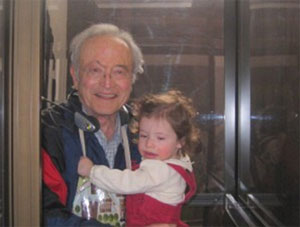
But our status came to a sudden end in ’34 when my father lost his job in the deepening Depression. We came to Los Angeles “to starve in the sunshine.” He became an ardent partisan of Franklin Roosevelt and the New Deal. So did I, and I still am. I started my public career speaking for School Bonds when I was 10. L.A. schools were unsafe after a big earthquake. People did not have money but they voted yes for school bonds.
I became radicalized when I was 14 and Uncle Si gave me a subscription to The Nation. When I was 15, in December 1941, Japan bombed Pearl Harbor. Two months later, my junior high school pal Jiro was ordered to leave his home along with all people of Japanese descent on the West Coast and were held in relocation centers. This further radicalized me.
In medical school at USC, I organized a chapter of the Association of Interns and Medical Students. AIMS worked for universal health care, which was proposed in the Murray Wagner Dingell Act at the time, for admission of all colors and varieties of applicants to med schools, end to the Cold War and other peace and justice issues. We in AIMS were clearly “subversive” in the lexicon of the FBI and the House Un-American Activities Committee. Fueled by the Cold War and then the hot war in Korea, they swooped down on AIMS and many progressive organizations. AIMS was driven off medical campuses one after another.
I was a medical resident at the University of Chicago in 1951 and ’52. I worked like hell, night and day, as I had as an intern at L.A. County Hospital the year before. I also circulated a petition urging Cedars of Lebanon Hospital in Los Angeles to reinstate three prominent physicians who had been dropped from the staff for being alleged Communists. The last national convention of AIMS was held in Chicago in 1951. Quentin Young and I and other house staff and medical students fought a rearguard action to save AIMS but the Korean War, the FBI and frightened medical school administrators shut us down. A few months later I was fired from my residency. On balance, Chicago and AIMS, working with my fellow radical activists, were great human experiences.
My wife, baby daughter, and I moved from Chicago to Harlan County, Ky. There I joined a three-man group providing care to coal miners and their families under the United Mine Workers Welfare Fund. I was the internist of the group and I also delivered babies. I loved it. But then as now you have to understand, “There’s a war on.”
In 1953 I was drafted into the Air Force illegally. The Doctors Draft Law required that drafted doctors had to be given officers commissions. Thirty-two of us refused to sign Cold-War-generated loyalty oaths and were held as “doctor privates.” As always I worked hard taking care of my patients, talking to other Air Force members about the evils of the AF loyalty oath. A year later a conservative federal judge granted my petition for a writ of habeas corpus and I was out of the Air Force.
Back home to Los Angeles, I joined the Community Medical Center (CMC), a small group medical practice which provided good quality health care to patients who could not afford usual fees. Soon after, the Un-American Activities Committee held hearings on “Communism in the medical profession.” The star witness was an alleged former member of the CMC medical staff whom I had never seen. She testified, “Those doctors are not working for patients, they are working for the Communist Party.” That was the headline in the L.A. Examiner and the “red meat” lead on TV. We gained patients after this “expose.” By contrast the CMC failed a year later because of internal rifts. The group practice survived.
From 1953 to 1974 I practiced as internist in our small medical group and then left for three more years of training and emerged as a cardiologist and assistant clinical professor of medicine at UCLA, later at Keck/USC medical school where I teach part time. Every week I take six first-year medical students from the medical school, across the street to the L.A. County General Hospital where they interview and examine patients, one-on-one, and begin the process of becoming physicians.
Achieving the universal human right to health care is a lifelong commitment. But it is not a single life issue. For example in 1961 the Civil Defense Agency urged homeowners to dig “fallout shelters” in their backyards to survive an anticipated Russian nuclear attack. School children did “duck and cover” exercises. They ducked and got under their desks to stay safe in case of an atom bomb. This widespread paranoia was produced by the U.S. government and amplified by the media. This mendacious campaign was considered essential to convince the public to support nuclear war fighting; for “defense,” of course.
In 1961, Dr. Bernard Lown, a Harvard cardiologist, and several other Boston academics, analyzed Civil Defense data supporting the premise of survivability after a single Hiroshima size bomb exploded over Boston. Their study demonstrated conclusively that no one would survive for miles around Boston. They published their results in the New England Journal of Medicine. The Civil Defense Agency didn’t survive much longer. (Now we have a federal Department of “Homeland Security.”)
But in 1961, Physicians for Social Responsibility (PSR) was born. Lown was its obstetrician and cardiologist. I began organization of the first local chapter, LAPSR. PSR is now a large, well-established national organization. For 50 years we have published, testified and demonstrated against nuclear war preparation and the nuclear industry which underpins it. PSR issues have broadened to include the environment, and others.
Two other organizations were formed by leaders of PSR. One was the International Physicians for Prevention of Nuclear War (IPPNW): “What cannot be treated must be prev
ented.” IPPNW grew rapidly among physicians in many countries including the Soviet Union. All worked to prevent nuclear weapons in their own countries. Lown worked with his counterpart, Dr. Chazov, cardiologist to the general secretary of the Soviet Communist Party, against nuclear war. In 1985, Lown and Chazov, on behalf of IPPNW, were awarded the Nobel Prize for Peace.
Soon after the founding of PSR the struggle for civil rights mobilized Americans to a degree not seen since the great Depression. Dr. Quentin Young and some other progressive doctors in Chicago organized the Medical Committee for Human Rights. We in Los Angeles organized the L.A. chapter of MCHR. Later we merged LAPSR and LAMCHR. Issues of Peace and Human Rights cannot be separate. During the Freedom Summer, 1964 LAPSR/MCHR sent MDs to Mississippi for short stays to support SNCC and others who were registering Black citizens to vote. My brief sojourn with Mississippians and the civil rights workers, who came to register them, was one of the most inspiring of my life.
An outgrowth of PSR was the Committee of Responsibility for War Injured Vietnamese children (COR). This organization grew in cities across the U.S. I was the Los Angeles board member of COR. We brought war injured Vietnamese children to U.S. medical centers for complex surgeries. In L.A., Dr. Leonard Linde, a UCLA pediatric cardiologist, organized with UCLA faculty surgeons to treat two VN children at UCLA Medical Center by the hospital and the doctors without charge. Dr. Linde was their attending pediatrician. He had to confront the medical school dean who opposed our plan. The dean rightly believed that exposing the U.S. public to the effects of our VN war on children would adversely affect public support of the war. The children underwent multiple surgeries and postoperative rehabilitation services. They lived with a member of COR and her family when they were not in the UCLA Hospital. One of the children came back to Los Angeles at age 20, a lovely young woman transformed from her grotesque face when she first arrived at UCLA.
In the U.S., there was growing resistance to the draft and widespread revulsion over the nightly TV pictures of U.S. forces killing women and children, including by napalm. Of course we organized to stop the war. In 1967, we joined several thousand other people to confront President Johnson at the Century Plaza Hotel over his escalating war in Vietnam. The police used excessive force against us. Ruth Peck confronted a policeman who was threatening a person with epilepsy who was on the ground and could not “Move On!” Next day, Ruth arranged a press conference at our house. Doctors who had been at Century City the day before testified about what they saw, an entirely peaceful demonstration with policemen attacking demonstrators. Soon after, Johnson announced that he would not run for reelection.
Ruth also organized large successful fund-raising parties to benefit the Committee of Responsibility for War Injured Vietnamese Children. At one if these events our featured speaker was renowned pediatrician and antiwar activist Dr. Benjamin Spock. A footnote that evening was the meeting of Dr. Spock and Mr. Spock, Leonard Nimoy, of “Star Trek.” Another speaker was Howard Levy, M.D., who was ordered when he was in Indochina to teach indigenous men to do first aid to win their tribes people over to fight for the Americans.
This order clearly violated the Hippocratic Oath. Levy refused and was court marshaled and sent to Leavenworth prison. He had just been released before our party. Dr. Levy told the gathering that he was a super patriot because he helped make the U.S. do right and get out of Vietnam.
On the other hand, the demands for civil rights gave Lyndon Johnson the ammunition he needed to push civil rights and Medicare through Congress. Opposition to Medicare from the Right was powerful. I debated against officers of the L.A. County Medical Association who invariably declaimed that Medicare was socialism and would put a government agent in every examining room. Some reactionary MDs pledged that they would never treat patients who wanted their services under Medicare. A few months later, all of them were treating seniors and billing Medicare, and doing very nicely, thank you. Medicare established health care as a right, but only when you reach 65 or are totally disabled.
Medicare provides seniors with a physician of their choice, has greatly expanded medical education. It has funded research which led to treatments we could only dream of before 1965. It has created millions of well-paying jobs which cannot be exported overseas. Medicare is a not-for-profit system that runs on 3 percent overhead. It is the best thing that has happened to patients and physicians. HMOs run on 20 percent overhead and are the worst thing that has happened to us and our patients.
Now we are in the long bitter struggle to improve Medicare and extend it to everyone By the mid-’70s I had been an activist for 30 years. If I had stayed in the service for 30 years, a ghastly hypothetical, I could have retired with full pension. I gave myself an honorable discharge from leadership positions in our organizations. In 1992, I helped organize CAPA, now Physicians for a National Health Program-California, and worked diligently for Proposition 186 to establish an expanded Medicare-type program for California. The authors of this bill were Dr. Kevin Grumbach, UC-San Francisco Medical School professor and CAPA leader, and a few others. Prop. 186 started out ahead in the polls but then, was defeated. For the details, please google “Buying An Election – California’s Universal Health Care Initiative – 1994” by Gordon Skene on Jan. 30, 2010.
Greed succeeded. The insurance industry used appealing actors. Remember Harry and Louise, the lovable couple who told us innumerable times on TV how they loved their HMO and feared government intervention? They overwhelmed us. Prop. 186 went down in defeat.
Now I limit my organizational activism to PNHP-CA, and serve on the board of directors. I am not available for any executive position. I serve in the new position of PNHP representative in the 29th Congressional District of Congressman Adam Schiff. Since Franklin Roosevelt was president, we always had Republican congressmen in Pasadena. In 2000, we finally defeated the last Republican troglodyte and elected Adam Schiff. I have met with him often to urge he support single-payer health care. He never does. He does cast some liberal votes and we progressives in the district compliment him on these.
In CD 29 I work in coalition with other organizations. We have lobbied in meetings with Rep. Schiff, our state senators and Assembly members and the Pasadena City Council. A leading organize
r of this coalition is Irma Stranz, chairperson in Pasadena of Health Care for All, a member of the League of Women Voters, and an active member of PNHP in Los Angeles. Other organizations we work with include the Teachers Union, other unions and the Presbyterian Church. I go to rallies, march and write, for universal humane health care and for justice and to end all our imperial wars.
I also participate with Veterans for Peace in the weekly Arlington West memorial events, remembering all of U.S. war dead in Iraq and Afghanistan, when I can. We set out 6,000-plus crosses and Mogen Davids and crescents one for each of our servicepersons killed in Iraq and Afghanistan on the sand north of the Santa Monica pier each Sunday morning and take them down Sunday evenings.
Keep working for the changes we know are right and remember the 2,000-year-old Roman adage, Illegitimi non carborundum: “Don’t let the bastards wear you down.” In this case, the bastards who stole health care.