• Skip to primary navigation
  • Skip to main content
  • Skip to primary sidebar
  • Skip to footer

PNHP

  • Home
  • Contact PNHP
  • Join PNHP
  • Donate
  • PNHP Store
  • About PNHP
    • Mission Statement
    • Local Chapters
    • Student chapters
    • Board of Directors
    • National Office Staff
    • Contact Us
    • Privacy Policy
  • About Single Payer
    • What is Single Payer?
    • How do we pay for it?
    • History of Health Reform
    • Conservative Case for Single Payer
    • FAQs
    • Información en Español
  • Take Action
    • The Medicare for All Act of 2025
    • Moral Injury and Distress
    • Medical Society Resolutions
    • Recruit Colleagues
    • Schedule a Grand Rounds
    • Letters to the Editor
    • Lobby Visits
  • Latest News
    • Sign up for e-alerts
    • Members in the news
    • Health Justice Monitor
    • Articles of Interest
    • Latest Research
    • For the Press
  • Reports & Proposals
    • Physicians’ Proposal
    • Medicare Advantage Equity Report
    • Medicaid Managed Care Report
    • Medicare Advantage Harms Report
    • Medicare Advantage Overpayments Report
    • Pharma Proposal
    • Kitchen Table Campaign
    • COVID-19 Response
  • Member Resources
    • 2025 Annual Meeting Materials
    • Member Interest Groups (MIGs)
    • Speakers Bureau
    • Slideshows
    • Newsletter
    • Materials & Handouts
    • Webinars
    • Host a Screening
    • Events Calendar
    • Join or renew your membership

pnhpf3a

Arizona Information

Contact Information

Arizona Coalition for a State & National Health Program
Website: http://az.pnhp.org

State Legislation

HB 2677 introduced by Minority Leader Phil Lopes (Link)

Media Contacts
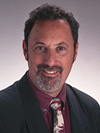
Joshua Freeman, M.D.
info@pnhp.org

Dr. Josh Freeman, now based in Tucson, is professor emeritus at the University of Kansas Medical Center in Kansas City, where he served as the Alice M. Patterson MD and Harold L. Patterson MD Professor and Chair of the department of family medicine from 2002-2016, and was also professor in the departments of preventive medicine and public health and of health policy and management.

Dr. Freeman was a Fulbright Scholar in São Paulo, Brazil in 2003 and served nationally as Treasurer of the Society of Teachers of Family Medicine and the Association of Departments of Family Medicine. He received STFM’s highest honor, the Recognition Award, in 2006. He served as a member of the board of trustees of Roosevelt University in Chicago, as assistant editor of the journal Family Medicine, and also on the board of Southwest Boulevard Family Health Center in Kansas City, KS. He publishes the widely read blog, Medicine and Social Justice, and in 2015 published his book, “Health, Medicine and Justice: Designing a fair and equitable healthcare system.”


Local Unions Endorsing Single Payer

  • National Nurses Organizing Committee — Arizona
  • Pima Area Labor Federation, Tucson, AZ

Utah Information

Contact Information

Joseph Q. Jarvis, M.D., MSPH
joseph.jarvis@msn.com


Price Differentials Are Not Evidence of Cost Shifting

by Austin Frakt
The Incidental Economist Blog
October 5, 2009

A recent Business Week article summarized an argument against a public option that is based on the unfounded claims of cost shifting made by insurers and hospitals. In it Jane Sasseen and Catherine Arnst write

Proponents add that government competition would force private insurers to lower premiums, making coverage more affordable for all.

But the business community keeps cranking out studies undercutting such arguments. The insurance industry trade group, America’s Health Insurance Plans (AHIP), compared the lower reimbursement rates for health care paid by public programs vs. private payers. The group claimed the difference reflects cost shifting, which added an estimated $1,512 to the average premiums paid by a family of four. “The existence of the private sector allows that shift,” says Karen Ignagni, the head of AHIP. “If you clamp down on one side of a balloon, the other side just gets bigger.”

Ignagni’s balloon analogy is a false one, and AHIP’s cost shifting argument is faulty. It is based on a study that misapplies the term “cost shift” to price differentials.

Continue reading at: http://theincidentaleconomist.com/price-differentials-are-not-evidence-of-cost-shifting/

IBM CEO Palmisano on single payer

IBM CEO Sees Big Opportunity In Health-Care Technology

By Peter Loftus
The Wall Street Journal
October 6, 2009

The chief executive of International Business Machines Corp. (IBM) sees a huge business opportunity in making the U.S. health-care system more efficient.

(Sam) Palmisano sees IBM providing everything from electronic-health records technology to ultra-tiny personal devices that read DNA and cost less than $1,000. He likened those technologies to health-care equivalents of universal bar-codes in the retail industry, which made that industry more efficient.

But Palmisano acknowledged that single-payer, government health systems outside the U.S. make it easier to use technology for health-information sharing, because health information is more centralized.

“The advantage of a government payer or centralized system is they can begin to create incentives for change much more so than you can in a fragmented model,” he said.

He said the federal government could save itself $900 billion over 10 years in health-care spending by simply managing it better.

http://online.wsj.com/article/BT-CO-20091006-708860.html

Comment:

By Don McCanne, MD

So IBM CEO Sam Palmisano says that single payer, government health systems have an advantage over fragmented systems (like ours in the U.S.) since they can create incentives for change. That seems counter to those who claim (falsely) that government systems suppress innovation.

He also states that the federal government could manage health care spending better (as Medicare and the VA have done).

Wow! Welcome aboard!

Life, Liberty, Health Care

By Billy Zou
The Dartmouth
Monday, October 5, 2009

For those who have been living outside the U.S. or in a cave, two health care reform bills have been proposed to universalize the American health care system. One, H.R. 3200, proposes a public health insurance plan or “public option,” while the other, H.R. 676, would create a single-payer system that would cover all medically essential care.

The Senate rejected the public option plan last Tuesday, and the forecast is gloomy for proposals of bolder changes.

There’s been a lot of “debate” surrounding the reform. With all the news stories of inflammatory protests at town halls, I suspect that there’s something more than Godwin’s Law at work in political forums across the country.

It’s obvious that private insurance companies do not want a single-payer system that would marginalize their role to providing supplemental care, or a public option that would provide competition and potentially drive down premiums.

What I am interested in, however, is not the kaleidoscopic advantages that a universal public health insurance system would provide: reduced administrative costs, more patients seeking preventative measures — which save costs in the long run — and pharmaceutical research focused on developing drugs that reap the most social benefits rather than the largest profit, for example.

According to a report by the Organisation for Economic Co-operation and Development, one reason single-payer Canada spent $3,895 per capita on health care in 2007 while the U.S. spent $7,290 — with arguably inferior outcomes and 16 percent of the population uninsured — is Canada’s reduced administrative costs.

I am interested, on the other hand, in how seriously Americans take their Declaration of Independence, which states that they have certain inalienable rights, and that among them are “Life, Liberty and the pursuit of Happiness.”

If this is the case, isn’t government justified in — nay, obligated to — protect these rights?

The question then becomes whether health care is really a human right. There are those who argue that it is not, claiming that one only has the right to seek health care, not demand that others provide it. To them I say, is it not an American right to demand protection from foreign armies? Is it not a right to demand that our water be potable, our food edible and our media credible? (OK, not the last one.)

Food need not be a public good because it is inexpensive and easily obtained. This is not the case with some the most essential medical care, which may be very expensive and unaffordable to a large slice of the population.

To have a serious illness go untreated is to be deprived of the hope of pursuing happiness, if not at some point life (according to the American Journal of Public Health, 44,800 die in the U.S. each year simply from lack of coverage).

Indeed, according to an article on the science new web site, Science Daily, a global study on Satisfaction with Life conducted at the University of Leicester found that happiness correlated with health more strongly than any other measure.

The pragmatist in me realizes that a single-payer system isn’t happening in America any time soon.

Nevertheless, if the access to necessary health care is an inalienable right, then it is something that should not be handed out by private insurance companies that would prefer to turn away patients in order to maximize profit.

Instead, providing health care should be the responsibility of the government. The sole purpose of its existence is to protect the rights of those who have to live in this country.

Docs as Props

By SinglePayerAction.org
October 5, 2009

In the Rose Garden this morning, President Obama met with a group of doctors.

From all fifty states.

Banned from the meeting were doctors from Physicians for a National Health Program — representing more than 17,000 docs who support a single payer health care system.

Those doctors were not invited to attend.

They asked to be admitted.

And were denied.

Instead, a small group of these single payer docs circled the White House in protest

And then joined a group of anti-war demonstrators at the front of the White House.

They want Congress to start from scratch.

Dr. Paul Hochfeld led a group of these doctors on a cross-country 22-day, 27-town whistle-stop tour for single payer.

This morning, Hochfeld, an emergency room physician from Corvallis, Oregon, insisted on being admitted to the Rose Garden event.

And amazingly he was allowed in — even though his name was not on the list of doctors to be admitted.

But afterward, Hochfeld said it was a mere “photoshoot.”

“There were no questions,” Hochfeld said after the Rose Garden event. “There were no comments. This was clearly a photoshoot. This isn’t about health care. This is about our legislators needing campaign financing. These were genuine doctors inside. And they agree that our political process is completely corrupt. And that’s the reason we are not getting the only solution to this real mess we are in — single payer.”

“We wanted to meet with President Obama and he refused us,” said. Dr. Michael Huntington, another Oregon doc who traveled cross country with Hochfeld and a group of other Mad as Hell Doctors. “The public option is a sham. It will cost more and serve fewer people than a single payer health plan. Obama’s plan is going to be one public plan swimming in the shark infested waters of private health insurance industry. The public plan will accept the sick and the poor. The wealthy and the employed will be excluded from the public option. The public option will struggle and fail.”

Dr. Andy Coates traveled from Albany, New York to meet with Obama today.

He too was denied entry.

“A single payer plan would save hundreds of billions of dollars a year,” Dr. Coates said. “It would be about health care, not health insurance. Our idea is evidently so dangerous that we had to be moved a quarter mile from the White House. Every entrance to the White House is closed down for the next hour and a half so there wouldn’t be a camera to take a picture showing there are doctors who want national health insurance.”

Dr. Walter Tsou came from Philadelphia to meet with President Obama.

No luck.

“The doctors in the White House will tell you that they support single payer,” Dr. Tsou said. “They want to see something done. But whatever the something is is going to be totally influenced by the insurance and drug lobby. And that something is going to put more billions of dollars of our money into their pockets. I resent that. It’s a waste of our money. We know a better solution — single payer. We need to have the courage to confront the insurance industry. I would urge members of Congress to vote against the way Obamacare is fashioned right now. Obama’s health plan is being fashioned by the industry.”

Dr. Tsou said he supported Obama during 2008, but he’s having second thoughts now.

Sam Husseini, a single payer activist, said after the event that Obama used the docs as props.

“Insurance companies are cherry picking patients,” Husseini said. “Now Obama is cherry picking doctors.”

Bad advice from the OECD

The Organization for Economic Cooperation and Development and Health Care Reform in the United States

By Don R. McCanne
International Journal of Health Services
Volume 39, Number 4 / 2009

Abstract:

Among OECD nations, the United States is an outlier in having the highest per capita health care costs in a system that unnecessarily exposes many individuals to financial hardship, physical suffering, and even death. President Obama and Congress are currently involved in a process to reform the flawed health care system. The OECD has contributed to that process by releasing a paper, “Health Care Reform in the United States,” which describes some of the problems that must be addressed, but then provides proposed solutions that omit consideration of a more equitable and efficient universal public insurance program. The same omission is taking place in Washington, DC. By reinforcing proposals that support the private insurance industry, the source of much of the waste and inequities in health care, the authors of the OECD paper have failed in their responsibility to inform on policies rather than politics.

http://baywood.metapress.com/link.asp?id=g132608kq2372735

Comment:

By Don McCanne, MD

The OECD has a mission of bringing together governments “committed to democracy and the market economy.” Their release of a paper supporting a private insurance model of reform for the United States seemed to be a fulfillment of this mission. But even their paper added nothing that would refute what we already know from our efforts at reform: the private insurance model is an expensive, wasteful, inequitable, and a fairly ineffective model of ensuring affordable, high quality care for everyone.

It’s not too late to change. Many undoubtedly contend that most of the political capital has been spent and that we cannot go back, but political capital is not a finite commodity. Political capital can be wasted, as it has been on the current reform process. Pursuing policies that cater to the private insurance industry at the cost of health care justice very rapidly depletes political capital. But new political capital can be generated simply by pursuing popular policies that would lead to success in achieving our goals.

The OECD is not going to help us infuse more political capital into the process, but we can do it ourselves. Communicate. Educate. Grassroots. Coalitions. Just think of how much political capital we could generate as long as our goal is affordable, high quality health care for everyone. The supply would be endless.

Dr. Quentin Young speaks at the Mad as Hell Doctors rally

By Illinois Media Progressives  
September 26, 2009, Chicago.

17 Held in Protest Outside Health Insurer's Offices

By Colin Moynihan
New York Times
City Room Blog
September 29, 2009

Right-wing and antigovernment activists — a few of them wielding not only signs but even loaded firearms — have organized some of the angry protests surrounding the health care debate. But in Midtown Manhattan on Tuesday morning, a different sort of health care protest took place, led by left-leaning groups who accused insurers of greed and called for nationwide, single-payer health insurance.

The police said that 17 people were arrested after refusing to leave the lobby of an office building on Park Avenue where the insurance company Aetna has offices. They were charged with criminal trespass. In addition, the police said, three of those arrested were charged with obstructing governmental administration.

Organizers said it was the first step of a national campaign meant to publicize their views and challenge claims made by right-wing radio hosts and Republican officials.

“The myths about government death panels are pure hysteria,” an organizer, Mark Milano, said on Park Avenue. “The real death panels are people who are paid by insurance companies to deny health care to patients.”

About 50 people arrived at the building, at Park Avenue and 40th Street, at 10 a.m., participants said, and sent a representative to the Aetna offices upstairs to demand that the company agree to immediately approve “lifesaving” health care requests made by doctors. When that person was turned away, organizers said, 16 protesters entered the lobby of the building and sat on the floor.

Soon the police arrived and a senior officer used a bullhorn to inform those in the lobby that they were breaking the law and subject to arrest. By 10:45, officers could be seen removing the last of the demonstrators and ushering them into the back of police vans.

A spokeswoman for Aetna, Cynthia Michener, said that no protester visited the company’s office on Tuesday.

“Aetna has been actively engaged in health reform,” she wrote in an e-mail message. “When you put yourself out there like we have on this issue, you make yourself a target. But there is more agreement than disagreement on the need to get reform done. It is important we work together to make health care reform a reality this year.”

Ms. Michener added:

Broadly, Aetna ‘s goals are to get everyone covered, improve the quality of health outcomes and provide better value for each dollar spent on care. We’re committed to guaranteed coverage without regard to pre-existing conditions along with an individual requirement to get everyone in the system and subsidies for those who can’t afford it.

Outside, a crowd chanted “patients not profits” and said that large insurers routinely made decisions on what sorts of treatment to cover based more on cost than medical necessity.

“This is very much a dignified, nonviolent response to what some people call the howler movement that erupted in August,” said Katie Robbins, part of an advocacy group called Healthcare Now.

There has been a backlash from some quarters against Mr. Obama’s support for a public insurance plan that would compete with private insurers.

Ms. Robbins advocates on behalf of a bill before the House of Representatives that would, essentially, expand Medicare to cover all citizens. She said organizers from several groups across the country, with networks in 40 states, had been working together for about six weeks on a campaign they called Mobilization for Healthcare for All.

The groups have organized using a Web site and Twitter. So far, organizers said, 300 people have signed up to take part in additional protests using civil disobedience and aimed at insurance companies that are being planned for October, while legislators are expected to be working on health care issues.

“We’re going to be in Chicago next week and L.A. the week after that,” Ms. Robbins said. “We’re timing this around the legislative efforts of Congress.”

Video:

http://www.youtube.com/watch?v=gqP8bEyFRAo

http://cityroom.blogs.nytimes.com/2009/09/29/17-held-in-protest-outside-health-insurers-offices/

A Sit-in at Aetna:"Aetna Is the Real Death Panel"

by Private Health Insurance Must Go!
September 30, 2009

19 citizens and health care providers arrested, launching national mobilization for health care for all

29 September 2009, New York, NY — Citizens and health care providers today staged a sit-in at the offices of Aetna, one of the nation’s largest health insurance companies, in New York City (99 Park Ave @40th. The action is part of a national mobilization to end health insurance abuses such as the denial of coverage for lifesaving treatments, and win support for the only real public option — Medicare for all, a single payer plan. The action was part of a Mobilization for Health Care for All campaign that includes actions in Chicago, Los Angeles, and other cities across the country.

The 19 participants, wearing T-shirts with slogans that read “Medicare for All” and chanting “patients, not profits!” linked arms and sat down in the lobby of the Aetna building, prompting Aetna employees to step around them on their way into their offices, where insurance claim reviewers are busy looking for ways to deny people the lifesaving treatment that they need. A crowd of supporters picketing outside the building held signs that said “Aetna is the real death panel,” and “Single payer now.”

Participants in the action demanded that the insurance company immediately approve all doctor-recommended lifesaving treatments in their files, stating that they would not leave until Aetna approved care. Aetna, however, refused to meet with their representative.

“Insurance companies are denying care to people who need it right and left, but that’s not how it should work. Health care is a right, not a privilege,” said Constancia ‘Dinky’ Romily, 68, just before getting arrested. Romily is a retired nurse and a resident of East Village, New York. “I’m putting myself on the line and getting arrested to end insurance abuse and win health care for all,” she says.

The sit-in is part of the Patients Not Profit campaign of the Mobilization for Health Care for All. The mobilization was launched by the organizations Prosperity Agenda, Health Care NOW!, and the Center for the Working Poor. Today’s action has been organized by the Private Health Insurance Must Go! coalition, a local New York organization.

“People are dying because these corporations put profits before patients, and the health care bill currently on the floor of Congress fails to address the real cause of the health care crisis — the insurance companies,” says Katie Robbins, an organizer with Healthcare-Now! “The only solution to our health care crisis is the real public option, Medicare for All, a single payer plan.”

Laurie Wen, 38, a Manhattan resident, is one of the everyday Americans who are fed up with the state of health care in our country, and was arrested today to stand up for the hundreds of Americans who are denied lifesaving care every day, and to call for the only solution for health care for all, Medicare for all. A friend of hers, she says, was recently denied by Aetna for coverage for a bone marrow transfusion to treat cancer for three months, setting his care back for three months.

“We will continue to stage these sit-ins as Congress debates legislation that expands the insurance company stranglehold over our health, our lives, and our government,” says Wen. “We need a better system to end insurance abuse and win health care for all.”

The Private Health Insurance Must Go! Coalition (PHIMGC) is a growing and diverse New York City-based non-partisan organization focused on education, legislative advocacy and direct action in the fight for single-payer healthcare reform and HR 676.

Single-payer national health care plan backed

Local event shows support for proposal to provide health insurance to every American

By Dann Denny
Herald Times (Bloomington, Ind.)
October 1, 2009

As Jay Bainbridge told a crowd of more than 60 people about the death of his friend, the room grew pin-drop silent.

Bainbridge, a retired Bloomington counselor, was a friend of Libby Yarnelle, the former executive director of Mother Hubbard’s Cupboard, who died last June at the age of 29 from a rare form of cancer.

“Libby was a bright, energetic, beautiful person,” he said. “After graduating from college she could have worked for a big corporation that provided health insurance. But she chose to work with the poorest of the poor at Mother Hubbard’s Cupboard.”

Bainbridge said Yarnelle began feeling a troublesome pain in her side about three years ago, but did not have it checked out by a doctor because she didn’t make much money and had no health insurance.

Eventually, he said, Mother Hubbard’s Cupboard found a way to provide health insurance for Yarnelle. She went to the doctor who diagnosed her with cancer, eight months after the onset of her pain. On June 17, the cancer took her life.

As Bainbridge scanned the audience, his eyes misted and his throat grew tight.

“Maybe Libby would have died anyway, but I sure as hell would have liked to see her get a chance by seeing a doctor earlier,” he said. “Who knows how far the cancer had spread by then.”

Bainbridge said when his wife was a student in the IU School of Medicine in 1968, Bobby Kennedy came to the school to speak about universal health care.

“Someone asked him who would pay for it and he said, ‘You are; you can afford it,’ ” Bainbridge said. “Don’t you wish we had a politician today who had the guts to say that?”

Bainbridge was one of about 10 people who spoke during a one-hour press conference Tuesday night at the Monroe County Courthouse — each expressing support for single-payer national health insurance.

The press conference was timed to coincide with the arrival of the “Mad As Hell” Doctor Care-A-Van — which recently had a rally in Bloomington — in Washington, D.C., to urge Congress to expand Medicare to cover every American.

Dr. Rob Stone, an emergency room physician at Bloomington Hospital and director of Hoosiers for a Commonsense Health Plan, said the U.S. stands alone among industrialized countries in the world.

“We are the only country that does not provide health care to all its citizens,” he said. “It’s a bad situation and it’s getting worse.”

Stone said a 2002 study found that 18,000 Americans died each year from preventable diseases because they did not have access to health care.

He said a new Harvard study, which recently appeared in the online edition of the American Journal of Public Health, showed that 45,000 Americans die each year from preventable diseases because they lacked health insurance.

“That’s 120 people a day, or one every 12 seconds,” he said. “It’s more than the number of people who die each year from auto accidents and homicides combined; more than the entire number of student, staff and faculty at Indiana University.”

Stone said all the health care reform bills being considered in Washington fall short of the mark. He said the Senate bill being put together by Max Baucus’ Senate Finance Committee would — according to the Congressional Budget Office — leave 25 million Americans uninsured.

“I find that more than frustrating,” he said. “We can’t wait another 12 seconds for the next person to die.”

Vic Kelson, president of the Monroe County Council, said health care costs comprise 16 percent of the county’s 2010 budget; and that he expects the increase in health care costs from 2010 to 2012 to exceed the increase in property tax revenue.

“Something has to give,” he said. “The council provides essential services that benefit everyone. If we have to cut staff, we will have to cut services.”

Mavis Anderson, a social worker at Bloomington Hospital, told the story of a 64-year-old woman who recently came to the hospital’s emergency department with a persistent cough. Tests showed she had lung cancer.

She said the woman had worked all her life and saved money for retirement, but had no health insurance. Because she was too young for Medicare, the woman realized she had to use her entire retirement savings for treatment, and if she survived she would have to live on minimum Social Security payments.

“We should be thoroughly ashamed to allow a woman to be treated like that at her stage in life,” Anderson said. “People should not have to live in poverty because they can’t afford health care.”

As the meeting came to a close, a man in the audience, Bill Todd from Nashville, told Stone, “We are taking the high road but the people working against us are taking the low road. Why don’t we demonize them like they demonize us?”

Stone said he preferred to use facts and common sense reason rather than harsh rhetoric.

Copyright: HeraldTimesOnline.com 2009

Imagine getting sick, getting bills you can't pay, then being sent to jail

Lawsuits, lost wages, even jail can result

By Janell Ross
The Tennessean
September 28, 2009

Kenneth Hoagland went to jail for what started as a cold.

Hoagland had refinanced his Nashville home to pay off the $25,000 tab for his weeklong diabetes-related stay at Southern Hills Medical Center.

The new mortgage left Hoagland out of medical debt but afraid to get sick again.

Unfortunately, he did. In 2004, Hoagland was in a health insurance waiting period on a new job when a cold turned into two days at Vanderbilt University Medical Center. This time, the bill was just over $1,200.

When a collection attorney working for Vanderbilt filed suit in 2005, Hoagland was afraid to take time off from work to show up in court. After a series of hearings, attempts to collect the debt and what Hoagland says were genuine efforts to pay it, an attorney working for Vanderbilt asked a judge to issue what’s known as a body attachment.

One Friday in late 2008, a sheriff’s deputy went to Hoagland’s home. Because he was at work, Hoagland was allowed to turn himself in the following Monday.

“They fingerprinted me, took my picture and asked some questions about my medical history,” he said. “When the guy who tested (my blood sugar) asked me why I was there and I told him … he said, ‘I didn’t know we did that in this country.’ I told him, ‘Until now, I didn’t either.’ ”

Hoagland, 36, is one of the hundreds of thousands of Americans — insured and uninsured — facing collection suits, wage garnishments and, more rarely, trips to jail because of medical debt.

On the other side are doctors and hospitals that say they try to work with debtors and provide millions in free care, but unpaid medical bills affect their ability to care for others.

Medical debt isn’t closely tracked by courts, but it’s one of the many types of debt collection suits that keep Davidson County’s General Sessions Courts so busy that the people at the center of those cases sometimes fill the courtroom’s audience seating and even the jury box.

But it’s the docket, the list of cases that will be heard in Courtroom 5D on any given day and the people with cases on it, that really tells the story. Some entries reveal the types of services rendered.

There are cases filed by Associates in Gastroenterology, the Anesthesia Medical Group and Nashville Bone and Joint PLLC. And then, there are the names of nearly all the area’s hospitals.

The suits represent attempts to collect on bills that in cases examined this summer ranged from $81 to $22,000. They are, in most cases, bills patients never expected to accumulate.

Judge Dan Eisenstein, one of the judges who hears these cases in Courtroom 5D, said debtors summoned to court often dispute just how much is owed to a landlord or whether a credit card debt is really theirs.

But debtors rarely dispute medical bills.

“There’s not a lot of dispute because people just have no choice,” he said. “They needed the care, and the law says they have to cover their bills.

“But it’s certainly tough to come into this courtroom and see people who have been sick or hurt and cannot pay their bills.”

Medical bankruptcy rises

A study published in the American Journal of Medicine this year found that medical debt is deeply damaging the finances of American families.

Based on a survey of 2007 filings, researchers estimate 62.1 percent of all bankruptcies that year were caused by medical debt and that 92 percent of these cases involved medical bills totaling more than $5,000, or 10 percent of the family’s total pretax income.

Other cases met the researchers’ criteria for “medical bankruptcy” because they had lost significant income from illness or mortgaged a home to pay medical debt.

Most medical debtors contacted by researchers were well-educated, owned homes and had middle-class occupations. Seventy-five percent of those surveyed had health insurance.

And, researchers found, the issue of medical debt has grown over time. Between 2001 and 2007, the share of bankruptcies attributable to medical problems rose by 49.6 percent.

Hoagland, who works in information technology, never filed bankruptcy or disputed his bill. Instead, he made payment arrangements with Vanderbilt and tried to keep them.

Sometimes he and his fiancée, Sonya Davis, had to choose between paying their mortgage or $200 a month on medical bills, Davis said. When that happened, they paid the mortgage. They figured the family had to have a place to live, and the house had belonged to Hoagland’s parents.

Then Vanderbilt filed suit. When Hoagland missed a hearing because of a work emergency, the court ruled in his absence that Vanderbilt was due the full amount. He missed two more court dates aimed at determining his assets.

A judge issued a body attachment — a document issued in civil cases that demands defendants explain why they didn’t appear in court. Sheriff’s deputies find the defendants and, in many cases, take them to jail, where they are allowed to post bond quickly.

It’s a rare action — out of 32,126 debt cases in General Sessions Court in 2008, for example, judges issued 98 body attachments.

Hoagland made bond and the $250 that he paid was applied to his debt. His wages were garnisheed for several months, and he thought he was paid up. Then a bill arrived several weeks ago for $70 — one he said he’ll pay without question.

People delay care

Davis said the experience changed their lives.

“The choice now is, do I stay sick? Because if I go run up this bill and can’t pay for it and then get arrested again, what then? What are you supposed to do?” she said.

Two months ago, they faced that question. Hoagland went to bed with a cold and woke up so listless that Davis knew immediately something was wrong.

His blood sugar was at 39. Hoagland’s blood sugar is supposed to stay between 80 and 120. He could barely speak.

“I called the ambulance,” Davis said. “And I hate to admit this, but as soon as they got here, I thought, ‘Oh God, I hope they aren’t going to have to take him.’ He was sick, but I know he was probably thinking, ‘We can’t afford another set of medical bills.’ ”

The ambulance crew wanted to take Hoagland to the hospital but agreed to let Davis make him some breakfast and see if his blood sugar levels would normalize. They wouldn’t leave until Hoagland drank some orange juice with a bit of sugar stirred in and his blood sugar surged.

As extreme as Hoagland’s attempt to avoid another hospital bill may sound, it’s not uncommon, said Shana Alex Lavarreda, the director of health insurance studies at the University of California, Los Angeles Center for Health Policy Research.

As a result of a study released by the center this year, Lavarreda began to hear troubling stories from people across the country who had delayed medical care because of existing medical debt.

“Delays in care could be something as serious as reattaching a portion of a finger or not or getting the respirator that you need,” she said.

The situation highlights the fact that many insurance policies carry a high deductible. This can turn out to be burdensome for families without significant savings if someone becomes ill, Lavarreda said.

Drama outside courtroom

What happens inside Courtroom 5D at General Sessions Court can pale in comparison to the high drama in the hallway outside.

There, hospital debt collectors pull defendants to the side for hushed conversations about what they can realistically pay. If they can figure something out, defendants don’t have to go back inside. The payment arrangement is entered into court records, and the person who owes the debt must pay it.

On Sept. 11, all the good hallway spots — with seating — were taken. So Centennial Medical Center’s attorney beckoned Stacy Grondin up to the long tables where prosecutors and defendants usually sit facing the judge during trials.

The conversation was about the $997.74 bill Grondin incurred in 2006 at Centennial when her heart rate spiked.

“I really thought I was having a heart attack,” she said.

Grondin, a grocery store manager, is insured. But she went to the hospital in an ambulance, and that required pre-approval from the insurance company.

So did her choice to seek care in an emergency room. She didn’t have approval for that either. So when it turned out the problem was anxiety or a condition doctors couldn’t precisely determine, her claim was denied.

Tom Norris, Centennial’s attorney, leaned in close.

“What kind of payment can you make?” he asked.

“I think maybe $50,” Grondin said.

Norris accepted but declined to comment about Grondin’s case or the collection process when approached by a reporter.

On that day, the bill was actually $1,246.96 — the original amount plus $161.75 in court costs and $87.47 in interest fees. The court costs are tacked on after collection efforts fail and a suit is filed. Interest accrues on medical debt at up to 10 percent after a court issues an order to pay.

But for Grondin, 35 and a single mother of three, that’s not even the sum total of her medical debt.

While Grondin discussed her bill with Norris, her 9-year-old daughter, Emily, sat in the courtroom’s gallery waiting for her mom to finish and take her to the doctor. Grondin feared Emily might have swine flu.

The little girl with the robin’s-egg blue eyes and a pair of silvery scars on her forehead heard every word of the payment discussion.

Emily barely survived a 2003 car accident with her father at the wheel. He’d been drinking. She wasn’t strapped in. A LifeFlight helicopter took her to Vanderbilt’s children’s hospital, where doctors saved her life.

Now Emily’s father is in prison because of that accident, and her mother is trying to pay $2,115.25 in medical debt charged to a credit card. That’s the 20 percent of Emily’s bill that insurance didn’t cover, plus court costs and interest.

“They sent papers to my job a couple of months ago saying they are going to garnish my wages, I think for her accident,” Grondin said. “But that hasn’t started yet.”

Grondin said she’s not sure how to feel. There’s the reality that services were rendered. But then there’s the fact that she is insured and still left with medical bills, collectors’ phone calls and soon, maybe, a wage garnishment.

“I know it’s our responsibility. It is ultimately my responsibility to pay,” she said. “But … when I first saw all the bills I was kind of mad because I am paying for this insurance which I barely use. Then, when it’s needed, it’s hardly there.”

Grondin’s medical debt story doesn’t end there. Her boyfriend, who has two children of his own, recently declared bankruptcy because he couldn’t have afforded child support and other bills if his wages were garnisheed to collect more than $7,000 in medical bills.

‘It’s good to have a plan’

Michael Wade Taylor, 57, was in Courtroom 5D just after 9 a.m. Aug. 28 when Judge Eisenstein called his name and case. Wedged between two men with debt cases of their own, Taylor stood and answered clearly, “Here.”

Southern Hills Medical Center’s attorney waved him into the hallway to work something out.

Today, Taylor is an unemployed construction worker. He had a job but no insurance in 2006, when doctors initially thought he’d had a stroke.

He spent several days in intensive care at Southern Hills, having a stent threaded from his groin to his heart to check for blockages. Later, he took a stress test on a treadmill.

The eventual diagnosis: “They told me I had the heart of a teenager and didn’t know what was wrong with me,” Taylor said. “They sent me home, and since that time I kept going down and going down.

“Then I find out that for those four days they charged me $33,000. Thirty-three thousand dollars for nothing.”

Hospital staff checked to see if he could qualify for TennCare — state-subsidized medical coverage — but his income was too high. Then they talked with him about financial aid and setting up a payment plan. Taylor said he didn’t qualify because he didn’t have a checking account.

The bills started coming, then the phone calls, then the loss of his job in 2008.

Turns out either he didn’t have the heart of a teenager or it aged very quickly, Taylor said. Two months ago, he had open-heart surgery for an arterial blockage. This time, because he was unemployed, TennCare paid the tab.

He and Southern Hills’ attorney reached an agreement that would let Taylor pay $20 a month until he covers $3,000 of the bill from three years ago.

“It’s good to have some kind of plan,” he said. “Really having that hanging over me was just something that took a situation from bad to worse.”

Hospitals provide free care

Deals like Taylor’s — taking a $33,000 bill down to $3,000 — aren’t uncommon, area hospital systems say. They give away millions in medical care each year.

Meanwhile, they say, unpaid medical debt keeps them from covering important capital costs — such as replacing buildings and equipment — or improving treatment and services.

Each has a policy of absorbing or forgiving some medical debt, but that benefits the poorest and most severely ill patients. Employees help some patients who qualify, such as Taylor, enroll in TennCare.

In fiscal year 2009, for example, Vanderbilt had $274.3 million in unpaid medical bills and absorbed about $197.9 million of that. It writes off debt for patients whose bills exceed their annual income or who earn less than 250 percent of the federal poverty rate — about $55,000 for a family of four.

Vanderbilt provides almost half of all the uncompensated care delivered in Davidson County, spokesman John Howser said.

TriStar Health System, which operates five health-care facilities in the Nashville area, offers similar help for low-income patients.

“The No. 1 reason for charity care denials is that they do not submit the application,” spokeswoman Teri Smith said.

The hospital system provided about $158 million in uncompensated care during calendar year 2008. This figure includes unpaid medical debt, bills that the hospital wrote off for its poorest patients and discounts offered to uninsured patients, Smith said.

Saint Thomas Health Services, which operates Saint Thomas and Baptist hospitals, is owed $90 million in unpaid medical debt for services provided over the past three years, spokeswoman Rebecca Climer said.

This figure does not include what the hospital system has forgiven or provided free to patients who cannot pay, Climer said. The system is a part of Ascension Health, the largest not-for-profit health-care system in the nation.

The hospital has a fiscal responsibility to attempt to collect unpaid debt from those who can pay, Climer said.
Additional Facts

MEDICAL WOES LEAD TO MORE BANKRUPTCIES

As recently as 1981, only 8% of families filing for bankruptcy did so in the aftermath of a serious medical problem.
By contrast, a 2001 study found that illness or medical bills contributed to about half of bankruptcies.
And in 2007, 62.1% of all bankruptcies were caused by medical debt.

SOURCE: American Journal of Medicine study

http://www.tennessean.com/article/20090928/NEWS01/909270377/

  • « Go to Previous Page
  • Page 1
  • Interim pages omitted …
  • Page 502
  • Page 503
  • Page 504
  • Page 505
  • Page 506
  • Interim pages omitted …
  • Page 910
  • Go to Next Page »

Primary Sidebar

  • About PNHP
    • Mission Statement
    • Local Chapters
    • Student chapters
    • Board of Directors
    • National Office Staff
    • Contact Us
    • Privacy Policy
  • About Single Payer
    • What is Single Payer?
    • How do we pay for it?
    • History of Health Reform
    • Conservative Case for Single Payer
    • FAQs
    • Información en Español
  • Take Action
    • The Medicare for All Act of 2025
    • Moral Injury and Distress
    • Medical Society Resolutions
    • Recruit Colleagues
    • Schedule a Grand Rounds
    • Letters to the Editor
    • Lobby Visits
  • Latest News
    • Sign up for e-alerts
    • Members in the news
    • Health Justice Monitor
    • Articles of Interest
    • Latest Research
    • For the Press
  • Reports & Proposals
    • Physicians’ Proposal
    • Medicare Advantage Equity Report
    • Medicaid Managed Care Report
    • Medicare Advantage Harms Report
    • Medicare Advantage Overpayments Report
    • Pharma Proposal
    • Kitchen Table Campaign
    • COVID-19 Response
  • Member Resources
    • 2025 Annual Meeting Materials
    • Member Interest Groups (MIGs)
    • Speakers Bureau
    • Slideshows
    • Newsletter
    • Materials & Handouts
    • Webinars
    • Host a Screening
    • Events Calendar
    • Join or renew your membership

Footer

  • About PNHP
    • Mission Statement
    • Local Chapters
    • Student chapters
    • Board of Directors
    • National Office Staff
    • Contact Us
    • Privacy Policy
  • About Single Payer
    • What is Single Payer?
    • How do we pay for it?
    • History of Health Reform
    • Conservative Case for Single Payer
    • FAQs
    • Información en Español
  • Take Action
    • The Medicare for All Act of 2025
    • Moral Injury and Distress
    • Medical Society Resolutions
    • Recruit Colleagues
    • Schedule a Grand Rounds
    • Letters to the Editor
    • Lobby Visits
  • Latest News
    • Sign up for e-alerts
    • Members in the news
    • Health Justice Monitor
    • Articles of Interest
    • Latest Research
    • For the Press
  • Reports & Proposals
    • Physicians’ Proposal
    • Medicare Advantage Equity Report
    • Medicaid Managed Care Report
    • Medicare Advantage Harms Report
    • Medicare Advantage Overpayments Report
    • Pharma Proposal
    • Kitchen Table Campaign
    • COVID-19 Response
  • Member Resources
    • 2025 Annual Meeting Materials
    • Member Interest Groups (MIGs)
    • Speakers Bureau
    • Slideshows
    • Newsletter
    • Materials & Handouts
    • Webinars
    • Host a Screening
    • Events Calendar
    • Join or renew your membership
©2026 PNHP