H.R. 676 Resolution Campaign
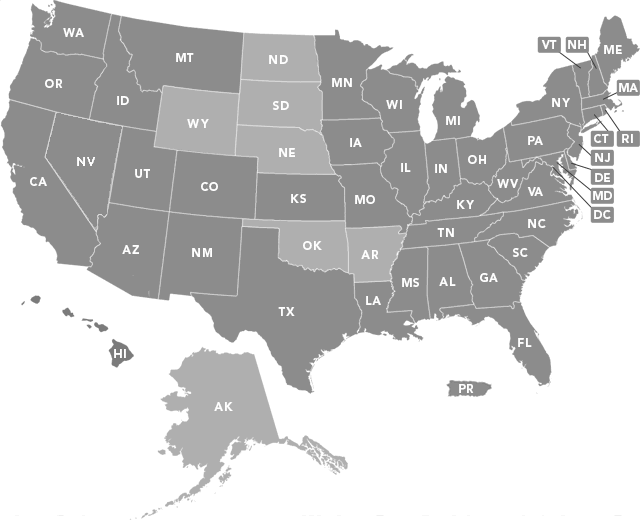
Beginning in November 2006, PNHP launched a national campaign to seek endorsements for the Conyers/Kucinich US National Health Insurance Act (HR 676). Activists are encouraged to seek endorsement resolutions from all sectors of society.
We have provided some resources below for passing HR 676 endorsements. If you pass an endorsement resolution, please let us know by using the submission form below.
List of organizaitons endorsing H.R. 676
Resolution Materials
HR 676 General Resolution (suitable for civic, church, labor, political and other groups.) (MS Word Version)
HR 676 Medical Group Resolution (MS Word version)
Sample Letter and Resolution to Labor Unions to Endorse HR 676
Sample Resolutions
- California Democratic Party
- Resolution adopted by the Hawaii Medical Association – national (MS Word)
- Resolution adopted by the Hawaii Medical Association – state (MS Word)
- Resolution adopted by the U.S. Conference of Mayors
- City Resolution (Chicago, IL)
- City Resolution (Austin, TX)
- City Resolution (Ithaca, NY)
- City Resolution (Louisville, KY) (pdf)
- City Resolution (Bloomington, IN)
- Indianapolis City-County Council Resolution
- City Council of Baltimore (MS Word)
- County Board Resolution (Lorain County, OH)
- County Board Resolution (Warren County, TN)
- County Board Resolution (Allegheny County Council, PA)
- Sample Union Resolution #1
- Sample Union Resolution #2 (pdf)
- Political Party Resolution (Originally from Rep. Dennis Kucinich)
- State Legislature Resolution (Kentucky)
- State Legislature Resolution (New York)
- State Legislature Resolution (New Hampshire)
- State Legislature Resolution (Maine)
- Presbyterian Health, Education and Welfare Association Resolution
- Draft Resolution for the American College of Occupational and Environmental Medicine
HR 676 Resolution Submission
Has your organization passed a resolution endorsing HR 676? Let us know by using the form below. Within 7 days, we will post your organization on the growing list of endorsers.
Speakers Bureau
Additional speakers are available throughout the United States and Canada. For regional speakers, see separate pages for the Northeast, Midwest, South, and West.
To request a PNHP speaker, please contact us at info@pnhp.org or (312) 782-6006.
 Steffie Woolhandler, MD, MPH, FACP – internal medicine, New York/Boston
Dr. Steffie Woolhandler is a practicing primary care physician, distinguished professor of public health and health policy in the CUNY School of Public Health at Hunter College, adjunct clinical professor at Albert Einstein College of Medicine, and lecturer in medicine at Harvard Medical School, where she co-directed the general internal medicine fellowship program and practiced primary care internal medicine at Cambridge Hospital.
Dr. Woolhandler earned her bachelor’s degree from Stanford University; her medical degree from Louisiana State University; and her master’s degree from the University of California. She worked in 1990-1991 as a Robert Wood Johnson Foundation health policy fellow at the Institute of Medicine and the U.S. Congress.
Dr. Woolhandler is a frequent speaker and has written extensively on health policy, administrative overhead and the uninsured. She has authored more than 150 journal articles, reviews, chapters, and books on health policy. A sample of Dr. Woolhandler’s grand rounds at the University of Southern California Keek School of Medicine is available here.
A co-founder and board member of Physicians for a National Health Program, Dr. Woolhandler co-edits PNHP’s newsletter and is a principal author of PNHP articles published in the JAMA and the New England Journal of Medicine in conjunction with Dr. David Himmelstein.
 Walter H. Tsou, MD, MPH – internal medicine/public health, Philadelphia
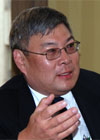
Dr. Walter Tsou is a past president of the American Public Health Association and former health commissioner of Philadelphia. He is a founding member of the National Board of Public Health Examiners and a board adviser to Physicians for a National Health Program. An expert on health reform and health care financing, he frequently briefs members of Congress on health care issues.
Dr. Tsou is a contributing editor of Physician’s News Digest and Pennsylvania Medicine. He is the recipient of numerous awards, including the Public Health Recognition Award from the College of Physicians of Philadelphia, the Leadership Award from the Delaware Valley Healthcare Council, and the Broad Street Pump Award from Physicians for Social Responsibility. He was named Practitioner of the Year by the Philadelphia County Medical Society in 2001.
Dr. Tsou received his medical degree from the University of Pennsylvania and his master’s degree from the Johns Hopkins School of Hygiene and Public Health. He holds an honorary doctorate in medical sciences from Drexel University.
 Claudia M. Fegan, MD, CHCQM, FACP – internal medicine, Chicago
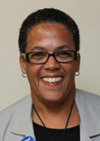
Dr. Claudia Fegan is national coordinator of Physicians for a National Health Program. In her current and past leadership roles in PNHP she has appeared on national television and radio programs on behalf of the organization, and has testified before congressional committees on a wide range of health care issues. She has lectured extensively to both medical and community audiences on health care reform in the U.S. and Canada, and is a co-author of the book “Universal Healthcare: What the United States Can Learn from Canada” and a contributor to “10 Excellent Reasons for National Health Care.”
Dr. Fegan is executive medical officer for the Cook County Health and Hospital System and chief medical officer at John H. Stroger Jr. Hospital of Cook County. She is also president of the Chicago-based Health and Medicine Policy Research Group. In 2016, Modern Healthcare named Dr. Fegan one of “10 Minority Executives to Watch,” noting her achievements in the medical profession and her single-payer activism.
Dr. Fegan received her undergraduate degree from Fisk University and her medical degree from the University of Illinois College of Medicine. She is also certified in health care quality and management and is a diplomate of the American Board of Quality Assurance and Utilization Review Physicians.
 David U. Himmelstein, MD, FACP – internal medicine, New York/Boston
Dr. David Himmelstein is a distinguished professor of public health and health policy in the CUNY School of Public Health at Hunter College, adjunct clinical professor at Albert Einstein College of Medicine, and lecturer in medicine at Harvard Medical School. He has served as chief of the division of social and community medicine at Cambridge Hospital.
Dr. Himmelstein has authored or co-authored more than 100 journal articles and three books, including widely cited studies of medical bankruptcy and the high administrative costs of the U.S. health care system. His 1984 study of patient dumping led to the enactment of EMTALA, the law that banned that practice.
A co-founder of Physicians for a National Health Program, Dr. Himmelstein co-edits PNHP’s newsletter and is a principal author of PNHP articles published in the JAMA and the New England Journal of Medicine in conjunction with Dr. Steffie Woolhandler. A sample of Dr. Himmelstein’s grand rounds at the University of Southern California Keek School of Medicine is available here.
Dr. Himmelstein received his medical degree from Columbia University and completed internal medicine training at Highland Hospital/University of California San Francisco and a fellowship in general internal medicine at Harvard.
 Diljeet K. Singh, MD, DrPH – gynecologic oncology, Washington, D.C.
Dr. Diljeet Singh is a gynecologic oncologist with the Mid-Atlantic Permanante Medical Group in Washington, DC. She recently relocated from Phoenix, AZ, where she was the program director of gynecologic oncology and the program director of Cancer Prevention and Integrative Medicine at the Banner MD Anderson Cancer Center in Gilbert, Arizona.
Dr. Singh received her medical degree from Northwestern University and master’s degree from the Harvard School of Public Health. She completed an obstetrics and gynecology residency at the Johns Hopkins and a gynecologic oncology fellowship at the MD Anderson Cancer Center. She completed her doctoral degree in public health on cost analysis at the University of Texas School of Public Health and an associate fellowship in integrative medicine at the University of Arizona. She is a national board member of Physicians for a National Health Program.
 Carol Paris, MD – psychiatry, Nashville
Dr. Carol Paris is the president of Physicians for a National Health Program. She is a recently retired psychiatrist who worked for more than 25 years in private practice, community mental health, prison psychiatry, and academia. In the course of her experience, much of which was in Maryland, she became an outspoken critic of the private-insurance-based U.S. health care system.
In May 2009, she and seven others stood up, one by one, at a U.S. Senate Finance Committee hearing on health care reform chaired by Sen. Max Baucus to ask why there wasn’t a single advocate for single-payer health care on the 41-member panel. In an action that received national media attention, Baucus had all eight peaceful protesters, including Dr. Paris, arrested. (Charges were eventually reduced, requiring only community service.)
Dr. Paris subsequently toured the country as part of the “Mad as Hell Doctors” campaign for single payer, and spent a year as a consultant psychiatrist in New Zealand, where she experienced a single-payer system firsthand. She currently resides in Nashville, Tenn., where her primary interests include strategic activism, recruiting and mentoring medical students and early career physicians for leadership positions within PNHP, and building coalitions to strengthen the single-payer movement’s impact on the national health care debate. Dr. Paris obtained her medical degree from West Virginia University School of Medicine.
 Robert L. Zarr, MD, MPH, FAAP – pediatrics, Washington, D.C.
Dr. Robert Zarr is a board-certified pediatrician at Unity Health Care in Washington, DC, where he cares for a low-income and immigrant population. He is the immediate past president of Physicians for a National Health Program.
Dr. Zarr is a past president of the DC Chapter of the American Academy of Pediatrics, and he holds adjunct professorships at Children’s National Medical Center and George Washington University. He also co-directs the Washington, DC chapter of PNHP. He is “physician champion” of DC Park Rx, a community health initiative to prescribe nature to patients and families and encourage time in one of 350 parks and green spaces in Washington, DC.
Dr. Zarr is fluent and literate in Spanish and has worked in the U.S. and abroad with Spanish-speaking populations. He is active in Washington, DC, in a variety of quality improvement initiatives including asthma management, injury prevention, literacy promotion, breastfeeding awareness, youth advocacy, tuberculosis prevention, and compliance with early and periodic screening, diagnostic and treatment standards.
Dr. Zarr received his medical degree from Baylor College of Medicine and completed his pediatric residency at Texas Children’s Hospital in Houston. He also has a master’s degree in public health, specializing in international health, from the University of Texas School of Public Health.
 Susan Rogers, MD, FACP – internal medicine, Chicago
Dr. Susan Rogers, recently retired, is a volunteer attending hospitalist and internist at the John H. Stroger Jr. Hospital of Cook County. She previously was co-director of medical student programs for the Department of Medicine. She is also assistant professor of medicine at Rush University, where she is active on the committee of admissions, and assistant professor of medicine at Rosalind Franklin University. She has received numerous teaching awards from Stroger Hospital, Rush University, and Rosalind Franklin University. A sample of Dr. Rogers’ grand rounds at the University of Illinois College of Medicine at Urbana-Champaign is available here.
Dr. Rogers received her medical degree from the University of Illinois College of Medicine and completed her residency at Cook County Hospital, where she served as chief resident. She is a national board member of Physicians for a National Health Program and a past co-president of Health Care for All Illinois. She previously served on the boards of the Near North Health Service Corp, a FQHC in Chicago, and Ancona School. Dr. Rogers is a member of the American College of Physicians, the Society of General Internal Medicine, and the National Medical Association.
 Paul Y. Song, MD – radiation oncology, Los Angeles
Dr. Paul Song is a board-certified radiation oncologist, biotech executive, and health care reform activist.
He is a national board member of Physicians for a National Health Program and serves as co-chair for the Campaign for a Healthy California. He served as executive chairman of the 1.2 million-member Courage Campaign from 2013 to March 2016. He also served as the very first visiting fellow on health care policy in the California Department of Insurance for 2013.
Dr. Song is the chief medical officer of ATGen Global and Cynvenio Biosystems. He recently left the faculty at the Samuel Oschin Cancer Center at Cedars Sinai Medical Center and currently volunteers his time seeing Medicaid and uninsured patients at California Hospital.
He attended the University of Chicago where he graduated with honors and received his medical degree from George Washington University. He completed his residency in radiation oncology at University of Chicago Medical Center.
Dr. Song serves on the boards of People for the American Way, The Asian Pacific American Institute for Congressional Studies, Liberty in North Korea, and The Eisner Pediatric and Family Medical Center.
 Oliver T. Fein, MD, FACP – internal medicine, New York
Dr. Oliver Fein is professor of clinical medicine and clinical public health at Weill Cornell Medical College, where he serves as associate dean responsible for the Office of Affiliations and the Office of Global Health Education. He is a general internist and active in clinical practice.
Dr. Fein is a past president of Physicians for a National Health Program and chair of the New York Metro Chapter of PNHP. He is a past vice president of the American Public Health Association, where he served four years on the executive board.
Much of Dr. Fein’s work has focused on health system delivery reform and access to care for vulnerable populations. His recent writings include a chapter (with Joanne Landy) on the feasibility of fundamental health reform in the new book “10 Excellent Reasons for National Health Care”; an article on ethical issues and global health in Academic Medicine; an editorial in Medical Care; and an article on U.S. health care reform and the presidential candidates in the Journal of Health Services Research and Policy. He has also published opinion pieces in the Philadelphia Inquirer and the Atlanta Journal-Constitution.
Dr. Fein received his medical degree from Western Reserve University in 1967 and completed his internship at Cleveland Metropolitan General Hospital and his residency at Lincoln Hospital in the Bronx. In 1977 he became director of general medicine outpatient services at the Columbia Presbyterian Medical Center and subsequently acting-director of the division of general medicine at the College of Physicians and Surgeons of Columbia University. He was a Robert Wood Johnson health policy fellow in 1993-1994, where he worked as a legislative assistant for the Senate Democratic Majority Leader, George Mitchell.
Dr. Fein received the Elnora M. Rhodes Service award from the Society of General Internal Medicine in 1999; the Haven Emerson Award from the Public Health Association of New York City in 2001; and the Lifetime Achievement Award from the Robert Wood Johnson Health Policy Fellowships Program in 2008.
Speakers by region
Schedule a Grand Rounds
For 35 years, Physicians for a National Health Program (PNHP) has provided thought leadership and evidence-based solutions to the problems plaguing the U.S. health system. PNHP can provide your institution with a speaker on a range of current health topics for a Grand Rounds or Noon Conference.
In recent years, PNHP leaders have published research and commentary in publications such as JAMA, Health Affairs, The American Journal of Public Health, The Lancet, and The New England Journal of Medicine. We have also provided research and policy support for members of Congress, as well as testimony for U.S. House and Senate hearings.
PNHP speakers are available in every region of the U.S. and include all specialties and most subspecialties. Possible Grand Rounds and Noon Conference topics include:
- Single-payer Medicare for All: How it works and why it’s needed
- Recent developments in reproductive health policy and their impact on patients
- Racial inequity in the U.S. health system: Problems and solutions
- The impact of privatization on Medicare and other publicly funded health programs
- How the health system exacerbates America’s mental health and addiction crises
- America’s rural health care crisis
This type of grand rounds can assist residency programs in fulfilling ACGME’s Systems-based Practice competency requirement.
Click here to see a list of sample speakers. We have many additional speakers throughout the U.S., and most of our physician members volunteer to speak with little or no honoraria unless travel is required.
To schedule a Grand Rounds speaker, please fill out the form below. For additional information, please call us at (312) 782-6006 or contact us via email at organizer@pnhp.org.
“Who’s In Charge” by John Jonik
http://jonikcartoons.blogspot.com/
"Who's In Charge" by John Jonik
http://jonikcartoons.blogspot.com/
Why Obama Needed Single Payer on the Table
Obama's Mistakes in Health Care Reform
By VICENTE NAVARRO
CounterPunch
September 7, 2009
Let me start by saying that I have never been a fan of Barack Obama. Early on, I warned many on the left that his slogan, “Yes, we can,” could not be read as a commitment to the major change this country needs (see “Yes, We Can. Can We? The Next Failure of Health Reform”). Still, I actively supported him against John McCain and was very pleased when he became president — for many reasons, encompassing a broad range of feelings. One reason was that Obama is African-American, and the country needed to have a black president. Another was that his election seemed to signal the end of the Bush era. But, the most important reason was that I saw him as a decent man, surrounded by some good people who could promote change from the center and open up some possibilities for progress, giving the left a chance to influence the administration’s policies. Well, after just over seven months of the Obama White House, I have no reason to doubt that he is a decent man, but I am dismayed by the bad judgment he has shown in the choice of some of his staff and advisors. I really doubt that he is going to be able to make the changes we need. As I said, I never had great expectations about him and his policies, but even the lowest of my expectations have not been met.
Some among the many skeptics on the left might add, “What did you expect?” Well, at least I expected Obama to show the same degree of astuteness that he and his team had shown during the campaign. He seemed to be a brilliant strategist, and his election proves this. But my greatest disappointment is the strategies he is now following in his proposals for health care reform — they could not be worse. I am really concerned that the fiasco of this reform may make Obama a one-term president.
Error number One
One of the two major objectives for health care reform, as emphasized by Obama, is the need to reduce medical care costs. The notion that “the economy cannot afford a medical care system so costly, with the annual increases of medical care running wild” has been repeated over and over — only the tone varies, depending on the audience. An element of this argument is Obama’s emphasis on eliminating the federal deficit. He stresses that most of the government deficit is due to the outrageous growth in costs in federal health programs. Thus, a crucial part of the message he is transmitting is the health care reform objective of reducing costs.
This message, as it reaches the average citizen, seems like a threat to achieve cost reductions by cutting existing benefits. This perception is particularly accentuated among elderly people — which is not unreasonable, given that the president indicates that the funds needed to provide health benefits coverage to the 48 million currently uncovered will come partially from existing programs, such as Medicare, with savings supposedly achieved by increasing efficiency. To the average citizen (who has developed an enormous skepticism about the political process), this call for savings by increasing efficiency sounds like a code for cutting benefits. Not surprisingly, then, one sector of the population most skeptical about health care reform is seniors — the beneficiaries of Medicare. The comment that “government should keep its hands off my Medicare,” as heard at some of the town hall meetings, is not as paradoxical or ridiculous as the liberal media paint it. It makes a lot of sense. An increasing number of elderly people feel that the uninsured are going to be insured at the expense of seniors’ benefits.
Error Number Two
The second major objective of health care reform as presented by Obama is to provide health benefits coverage for the uncovered: the 48 million people who don’t have any form of health benefits coverage. This is an important and urgently needed intervention. The U.S. cannot claim to be a civilized nation and a defender of human rights around the world unless this major human and moral problem at home is resolved once and for all. But, however important, this is not the largest problem we have in the health care sector. The most widespread problem is not being uninsured but underinsured: the majority of people in the U.S. — 168 million, to be precise — are underinsured. And many (32 per cent) are not even aware of this until they need their health insurance coverage. This undercoverage is an enormous human, social, and economic problem. Among people who are terminally ill, 42 per cent worry about how they or their family will pay for medical care. And most of these people are insured — but their insurance does not cover all of their conditions and necessary interventions. Co-payments, deductibles, and other extra expenses — besides the insurance premiums — can amount to 10 per cent or even higher proportion of disposable income.
During the presidential campaign, both Obama and Hillary Clinton, in discussing the need for health care reform, made frequent reference to heart-breaking stories — cases in which families and individuals suffer under our current system of medical care. But none of the proposals that the Obama administration is ready to support would address most of these cases. It will be an embarrassing and uncomfortable moment during the 2012 presidential campaign if someone asks candidate Obama about what has happened to some of the people whose stories he told in the 2008 campaign.
Error Number Three
Obama plans to cover the uninsured by increasing taxes on the rich (a very popular measure, as shown in all polls) and by transferring funds saved through increased efficiencies in existing programs, including Medicare (an unpopular measure, for the reasons I’ve mentioned). We see here the same problems we’ve seen with other programs targeted to specific, small sectors of the population, such as the poor. Programs that are not universal (i.e., do not benefit everyone) are intrinsically unpopular. This is why antipoverty programs are unpopular. People feel that they are paying, through taxation, for programs that do not benefit them. Compassion is not, and never has been, a successful motivation for public policy. Solidarity is. You support others with the understanding that they will support you when you need it most. The long history of social policy, in the U.S. and elsewhere, shows that universality is a better way to get popular support for a program than means-testing for programs targeted to specific vulnerable groups. The limited popularity of the welfare state in the U.S. is precisely due to the fact that most programs are not universal but means-tested. The history of social policy shows that the best way to resolve poverty is not by developing antipoverty programs, but by developing universal programs to which all people are entitled — for example, job and incomes programs. In the same way, the problem of noncoverage by health insurance will not be resolved without resolving the problem of undercoverage, because both result from the same failing: the absence of government power to ensure universal rights. There is no health care system in the world (including the fashionable Swiss model) that provides universal health benefits coverage without the government intervening, using its muscle to control prices and practices. The various proposals being put forward by the Obama administration are simply tinkering with, not resolving, the problem. You can call this government role “single-payer” or whatever, but our experience in the U.S. has already shown (what other countries have known and practiced for decades) that without government intervention, all the measures now being proposed by this administration will be handsome bailouts for the medical-insurance-pharmaceutical complex.
Error Number Four
I can understand that Obama does not want to advocate single-payer. But he has made a huge tactical mistake in excluding it as an option for study and consideration. He needs single-payer to be among the options under discussion. And he needs single-payer to make his own proposal “respectable.” (Keep in mind how Martin Luther King became the civil rights figure promoted by the establishment because, in the background, there was a Malcolm X threatening the establishment.) This was a major mistake made by Bill Clinton in 1993. When Clinton gave up on single-payer, his own proposal became the “left” proposal (unbelievable as that may seem) and was dead on arrival in Congress. The historical function of the left in this country has been to make the center “respectable.” If there is no left alternative, the Obama proposals will become the “left” proposal, and this will severely limit whatever reform he will finally be able to get.
But there’s another reason that Obama has erred in excluding single-payer. He has antagonized the left of his own party that supports single-payer, without which he cannot be reelected in 2012. He cannot win only with the left, of course, but he certainly cannot win without the mobilization of the left. His victory in 2008 is evidence of this. And today, the left is angry at him. It is a surprise to me, but Obama is going to pay the same price Clinton paid in 1994. Clinton antagonized the left by putting deficit reduction (under pressure from Wall Street) at the top of his policies and supporting NAFTA against the wishes of the AFL-CIO and the majority of Democrats. The Gingrich Republican Revolution of 1994 was due to a demobilization of the left. The Republicans got the same (I repeat the same) number of votes in the 1994 congressional election that they got in 1990 (the previous non-presidential election year). Large sectors of the grassroots of the Democratic Party that voted Democratic in 1990 stayed home in 1994. Something similar could happen in 2010 and in 2012. We could see a strong mobilization of the right and a very demoralized left. We are already seeing this. Why aren’t those on the left out in force at the town hall meetings on health care reform? Because the option they want — single-payer — has already been excluded from the debate by a president they fought to get elected.
This is my concern. The alternative to Obama is Sarah Palin or someone like her. Palin has a lot of support among the people who mobilized to support John McCain. And the ridicule heaped on her by the liberal media (which is despised by large sectors of the working class of this country) helps her, or her like, enormously. I am afraid we may have, in the near future, friendly fascism. And I do not use the term lightly. I grew up under fascism, in Franco’s Spain, and if nothing else, I recognize fascism when I see it. And we are seeing a growing fascism with a working-class base in the U.S. This is why we cannot afford to see Obama fail. But his staff and advisors are doing a remarkable job to achieve this. Ideologues such as chief-of-staff Rahm Emanuel (who, when a congressman, was the most highly funded by Wall Street) and his brother, Ezekiel Emanuel (who did indeed write that old people should have a lower priority for health care spending) are leading the country along a wrong path.
I don’t doubt that President Obama, a decent man, wants to provide universal health care to all citizens of this country. But his judgment in developing his strategy to reach that goal is profoundly flawed, and, as mentioned above, it may cost him the presidency — an outcome that would be extremely negative for the country. He should have called for a major mobilization against the medical-industrial complex, to ensure that everyone has the same benefits that their representatives in Congress have, broadening and improving Medicare for all. The emphasis of his strategy should have been on improving health benefits coverage for everyone, including those who are currently uncovered. And to achieve this goal — which the majority of the population supports — he should have stressed the need for government to ensure that this extension of benefits to everyone will occur.
That he has not chosen this strategy touches on the essence of U.S. democracy. The enormous power of the insurance and pharmaceutical industries corrupts the nature of our democracy and shapes the frontiers of what is possible in the U.S. Given this reality, it seems to me that the role of the left is to initiate a program of social political agitation and rebellion (I applaud the health professionals who disrupted the meetings of the Senate Finance Committee), following the tactics of the Civil Rights and anti-Vietnam War movements of the 1960s and 1970s. It is wrong to expect and hope that the Obama administration will change. Without pressure and agitation, not much will be done.
Vicente Navarro, M.D., Ph.D., professor of Health Policy at The Johns Hopkins University and editor-in-chief of the International Journal of Health Services. The opinions expressed here are those of the author and do not necessarily reflect the views of the institutions with which he is affiliated. Dr Navarro can be reached at vnavarro@jhsph.edu
Compassion for some; Solidarity for all
Obama's Mistakes in Health Care Reform
By Vicente Navarro
CounterPunch
September 7, 2009
Error Number Three
Obama plans to cover the uninsured by increasing taxes on the rich (a very popular measure, as shown in all polls) and by transferring funds saved through increased efficiencies in existing programs, including Medicare (an unpopular measure, for the reasons I’ve mentioned). We see here the same problems we’ve seen with other programs targeted to specific, small sectors of the population, such as the poor. Programs that are not universal (i.e., do not benefit everyone) are intrinsically unpopular. This is why antipoverty programs are unpopular. People feel that they are paying, through taxation, for programs that do not benefit them. Compassion is not, and never has been, a successful motivation for public policy. Solidarity is. You support others with the understanding that they will support you when you need it most. The long history of social policy, in the U.S. and elsewhere, shows that universality is a better way to get popular support for a program than means-testing for programs targeted to specific vulnerable groups. The limited popularity of the welfare state in the U.S. is precisely due to the fact that most programs are not universal but means-tested. The history of social policy shows that the best way to resolve poverty is not by developing antipoverty programs, but by developing universal programs to which all people are entitled — for example, job and incomes programs. In the same way, the problem of noncoverage by health insurance will not be resolved without resolving the problem of undercoverage, because both result from the same failing: the absence of government power to ensure universal rights. There is no health care system in the world (including the fashionable Swiss model) that provides universal health benefits coverage without the government intervening, using its muscle to control prices and practices. The various proposals being put forward by the Obama administration are simply tinkering with, not resolving, the problem. You can call this government role “single-payer” or whatever, but our experience in the U.S. has already shown (what other countries have known and practiced for decades) that without government intervention, all the measures now being proposed by this administration will be handsome bailouts for the medical-insurance-pharmaceutical complex.
(Vicente Navarro, M.D., Ph.D. is Professor of Health Policy at The Johns Hopkins University and editor-in-chief of the International Journal of Health Services.)
http://www.counterpunch.org/navarro09072009.html
Comment:
By Don McCanne, MD
The subtitle of this article is “Why Obama Needed Single Payer on the Table.” The full article is well worth reading.
A note from Rabbi Michael Lerner
Tikkun Daily
September 11, 2009
[Passage omitted] President Obama knows that a single-payer program — extending Medicare to everyone — is far more rational than what he has proposed to Congress, but he also believes that eliminating the insurance companies, hospital chains, and other medical profiteers would require a battle beyond his current capacities.
To address any of these problems fully would require a fundamental challenge to the old Bottom Line. Obama would have to call for a New Bottom Line — to advocate for defining governmental and private corporate policies as “rational,” “productive” or “efficient” not only to the extent that they maximize money and power, but also to the extent that they maximize love and caring, kindness and generosity, ethical and ecological sensitivity, enhance our capacities to respond to other human beings as embodiments of the sacred and our capacities to respond to the universe with awe, wonder and radical amazement at the grandeur mystery of the universe.
He actually reached in that direction momentarily at the end of his health care speech to Congress by seeming to endorse Senator Ted Kennedy’s “large-heartedness: a concern and regard for the plight of others” which he defined as “our ability to stand in other people’s shoes; a recognition that we are all in this together, and when fortune turns against one of us, others are there to lend a helping hand.”
Yet over and over again in the details of his plan it was not this large-heartedness that he championed, but a belief in the positive outcomes of the competitive marketplace. What Obama omitted from mention is that the ethos of that marketplace, which rewards selfishness and materialism and “looking out for number one,” as the “common sense” that guides individual as well as governmental behavior, is a product of the fear that we cannot count on others, that there will be no one there to take care of us, and that we must therefore maximize our own advantage lest someone else do so for themselves in ways that will permanently hurt or undermine us.
Obama can’t help us overcome that fear until he does so himself. He has to allow himself to know, and then help Americans to understand, that most people actually do want to help each other, get delight in being caring and loving, feel fulfilled when they are able to improve the well-being of others. Most people already know this about themselves, but are unsure whether its true of their neighbors or others. Obama’s most important contribution would be to fight for policies based on this understanding and to challenge those who believe the world is filled with people who are primarily self-seeking and aggressive. Unfortunately, he can’t do that while remaining loyal to the centrist ideology and its insistence that the aggressiveness manifested in the current competitive marketplace, is what will produce the greatest good for the greatest number.[passage omitted]
Imagine, for instance, if Obama had started his speech with the idea of “we are all in this together” that he ended it with, and then applied that to each specific part of his program. Sadly, that was impossible precisely because his actual program is in conflict with this at several points. He won’t support health care reform that raises the deficit. How can that be justified by a President who raised the deficit to help bail out the people who caused the banks and investment companies to fail all of us! He promises not to give any benefits to immigrants-but then “we” are not “all in it together!” He is willing to use government to coerce people into his plan those who would not voluntarily join, but not to force insurance companies to lower the prices (for example, by regulating their prices at the expense of lowering their profit rates or simply by creating Medicare for All. He tries to make a public option plausible by comparing it to public community and state colleges, but also assures the insurance companies that they have nothing to worry about from his plan because “the public insurance option would have to be self-sufficient and rely on the premiums it collects.” Yet the public option will not be open to those of us who already have private health care insurance. These limitations guarantee that the public option will not achieve the goal of lowering prices or obscene levels of profits. Public universities and community colleges have never been able to sustain themselves on the tuitions of those who use them. If that had been the requirement from the start, tens of millions of Americans would never have obtained the benefits of a public education that enabled them to get better jobs and go on to make valuable contributions to society in turn. If the principle had been that these colleges could not contribute to state or federal deficits, they would long ago have folded. So where is the “we” who are “all in it together” when crippling the only part of his plan that really makes an attempt at a universal solidarity? [passage omitted]
Rabbi Michael Lerner is editor of Tikkun Magazine (www.tikkun.org) , chair of the interfaith Network of Spiritual Progressives (www.spiritualprogressives.org) and rabbi of Beyt Tikkun synagogue in San Francisco (www.beyttikkun.org).
It's Simple: Medicare for All
By George S. McGovern
Washington Post
Sunday, September 13, 2009
For many years, a handful of American political leaders — including the late senator Ted Kennedy and now President Obama — have been trying to gain passage of comprehensive health care for all Americans. As far back as President Harry S. Truman, they have urged Congress to act on this national need. In a presentation before a joint session of Congress last week, Obama offered his view of the best way forward.
But what seems missing in the current battle is a single proposal that everyone can understand and that does not lend itself to demagoguery. If we want comprehensive health care for all our citizens, we can achieve it with a single sentence: Congress hereby extends Medicare to all Americans.
Those of us over 65 have been enjoying this program for years. I go to the doctor or hospital of my choice, and my taxes pay all the bills. It’s wonderful. But I would have appreciated it even more if my wife and children and I had had such health-care coverage when we were younger. I want every American, from birth to death, to get the kind of health care I now receive. Removing the payments now going to the insurance corporations would considerably offset the tax increase necessary to cover all Americans.
I don’t feel as though the government is meddling in my life when it pays my doctor and hospital fees. There are some things the government does that I don’t like — most notably getting us into needless wars that cost many times what health care for all Americans would cost. Investing in the health of our citizens will enhance the well-being and security of the nation.
We know that Medicare has worked well for half a century for those of us over 65. Why does it become “socialized medicine” when we extend it to younger Americans?
Taking such a shortsighted view would leave nearly 50 million Americans without health insurance and without the means to buy it. It would leave other Americans struggling to pay the rising cost of insurance premiums. These private insurance plans are frequently terminated if the holder contracts a serious long-term ailment. And some people lose their insurance if they lose their jobs or if the plant where they work moves to another location — perhaps overseas.
We recently bailed out the finance houses and banks to the tune of $700 billion. A country that can afford such an outlay while paying for wars in Iraq and Afghanistan can afford to do what every other advanced democracy has done: underwrite quality health care for all its citizens.
If Medicare needs a few modifications in order to serve all Americans, we can make such adjustments now or later. But let’s make sure Congress has an up or down vote on Medicare for all before it adjourns this year. Let’s not waste time trying to reinvent the wheel. We all know what Medicare is. Do we want health care for all, or only for those over 65?
If the roll is called and it goes against those of us who favor national health care, so be it. If it is approved, the entire nation can applaud.
Many people familiar with politics in America will tell you that this idea can’t pass Congress, in part because the insurance lobby is too powerful for lawmakers to resist.
As matters now stand, the insurance companies claim $450 billion a year of our health-care dollars. They will fight hard to hold on to this bonanza. This is a major reason Americans pay more for health care per capita than any other people in the world. The insurance executives didn’t cry “socialism” when their buddies in banking and finance were bailed out. But to them it is socialism if the government underwrites the cost of health care.
Consider the campaign funds given to the chairman and ranking minority member of the Senate Finance Committee, which has jurisdiction over health-care legislation. Chairman Max Baucus of Montana, a Democrat, and his political action committee have received nearly $4 million from the health-care lobby since 2003. The ranking Republican, Charles Grassley of Iowa, has received more than $2 million. It’s a mistake for one politician to judge the personal motives of another. But Sens. Baucus and Grassley are firm opponents of the single-payer system, as are other highly placed members of Congress who have been generously rewarded by the insurance lobby.
In the past, doctors and their national association opposed Medicare and efforts to extend such benefits. But in recent years, many doctors have changed their views.
In December 2007, the 124,000-member American College of Physicians endorsed for the first time a single-payer national health insurance program. And a March 2008 study by Indiana University — the largest survey ever of doctors’ opinions on financing health-care reform — concluded that 59 percent of doctors support national health insurance.
To have the doctors with us favoring government health insurance is good news. As Obama said: “We did not come to fear the future. We came here to shape it.”
George S. McGovern, a former senator from South Dakota, was the Democratic nominee for president in 1972.
The virtues of single-payer
BY JOHN KAY
News & Observer (Raleigh, NC)
Sep 11, 2009
CHAPEL HILL – Opponents of health-care reform have tried to twist the idea of a single-payer system into some sort of threat to the American way of medicine. They are wrong. As someone who spent half my working life in Canada and half in the United States, I’ve been covered by two single-payer health systems, one in Canada and now under Medicare. They both work.
I have yet to meet my first Canadian who would exchange his or her health-care system for what we have. I have also given a number of talks at retirement communities in North Carolina, and I usually ask for a show of hands of those who would like to give up Medicare. I have yet to see a hand go up.
The Canadian system is based on four cornerstones:
* Universality — everyone is covered.
* Portability — one is covered no matter where one lives, and one can move anywhere with little change in coverage.
* Availability — one has access to basic health care everywhere, and if it is necessary to go to a major center for specialized care, that is where one goes.
* Comprehensiveness — there are no exclusions from reasonable coverage.
All this is done under a single-payer system. If this looks very much like Medicare, it is.
Health care is costly. This is one area in which we Americans are undisputed world leaders. Our costs average $7,290 per person per year. Our Canadian neighbors, who on average live almost three years longer than we do, pay out only $3,895 per person per year. To put this in perspective, if we could ever achieve the Canadian number, we would save $1 trillion per year.
Over the course of a lifetime, we spend an extra $265,000 per person on health care and get three fewer years to show for it.
Much discourse is afoot these days on how we don’t want the government involved in our health care. We are told that we don’t want “socialized” medicine like Canada has even though Canada’s system is not socialist. We are told that Canadian health care is rationed and that there are long lines to see doctors. The one place there are no lines is at the border waiting to enter the U.S. to obtain health care.
Yes, we have good care here, but ours is rationed, reserved for those who can pay and for those lucky enough to work for a company that still provides subsidized insurance for its employees.
Here in the Research Triangle we live in the shadow of two of the top teaching hospitals in the country. There are few places in the entire world with better access to care. But imagine for a moment that you are a single, unemployed mother with three young children living in rural North Carolina.
Where do you go when someone gets sick, and how do you pay for it if you do go?
There are other ways our health-care system affects us in this global economy. Not too long ago, Toyota, after looking throughout North America for two years, put a new Lexus plant in Cambridge, Ontario. One of the primary reasons was the lower health-care costs that manufacturers enjoy in Canada versus in the U.S.
And curing the problem of our uninsured through private for-profit health-care insurance is virtually impossible. According to a study by the Rand Group, a 50 percent reduction in health insurance premiums would reduce the number of uninsured only by 3 percent.
Universal health care should be a right, not a privilege, in this the richest country in the world. If a criminal in our country has the right to a lawyer, shouldn’t someone who is sick have the right to a doctor?
John Kay of Chapel Hill is a recently retired business executive.
'Mad as Hell' caravan tours Montana, touts health care for all
By MIKE DENNISON The Missoulian Friday, September 11, 2009
HELENA – Retired internist Robert Seward, a self-described “Mad as Hell” doctor who wants a publicly funded health system that covers all Americans, told a Helena crowd Thursday that he had a telling conversation with a Canadian citizen a day earlier.
As Seward checked into his motel in Spokane, he told the Canadian about the “Mad as Hell” cross-country caravan, meant to publicize how a Medicare-for-all system is the best way to reform health care in America – a system like Canada’s, where all citizens are covered equally with taxpayer-financed health insurance.
The Canadian man was perplexed as to why Americans wouldn’t embrace such a system, Seward said, and why America allows citizens to go bankrupt because of personal health care costs.
“He asked, ‘Why don’t you Americans take care of your own people?’ ” Seward said. “We don’t. It’s embarrassing. That’s why I’m mad as hell.”
Seward and some of his physician colleagues from Oregon and Washington are in Helena until Saturday, as part of their three-week tour to promote a Medicare-for-all system of health coverage as the best reform for the nation. The nation’s health-care system is “far more broken than you could possibly imagine,” said emergency room physician Paul Hochfield of Corvallis, Ore., and the only way to fix it is get rid of private, for-profit health insurance and replace it with a public system.
“It’s being hijacked by the industry for profits instead of for the public good,” he said.
The doctors, who said they used their own money to start the tour, say health reforms being advanced by President Barack Obama, Sen. Max Baucus, D-Mont., and others simply serve to entrench profitable private interests that are making health care unaffordable for the average person.
The tour is scheduled to end Sept. 30 in Washington, D.C., where the doctors will be part of a rally for a single-payer, Medicare-for-all system.
They’re stopping for three days in Helena, including a rally held Thursday on the Capitol steps, a town meeting on Saturday at Carroll College, and, on Friday, a panel/debate at the Montana Medical Association convention.
At the MMA convention, the Mad as Hell doctors will square off against physicians with a conservative group, the Coalition to Protect Patients’ Rights, which opposes more government involvement in health care and is dead-set against a single-payer system.
Mike Huntington, a retired radiation oncologist from Corvallis, Ore., said the Mad as Hell group believes the country would be better off with Congress passing no reform this year, as opposed to the reforms being considered now, so the public could become more familiar with the benefits of Medicare-for-all.
Huntington also commented on Obama’s Wednesday speech to Congress, in which the president talked about the myriad of problems with the current health care system and then said he won’t support Medicare-for-all because we need to build on the current system. “That’s political doublespeak for, ‘The health-and-insurance industry has told me I might not be re-elected unless I include them and I write laws that satisfy them,’ ” Huntington said.
Congress is not seriously considering a Medicare-for-all system, although there is supposed to be a vote this month on a House amendment that would enact such a system. Baucus, a key figure in health-reform legislation, has declared Medicare-for-all “off the table” from the beginning.
Some liberals in Congress are pushing for a so-called “public option” as part of reforms, which is a government-run health insurance plan that’s supposed to compete with private insurance.
Huntington said the public option is a joke, because the only people covered by it would be the people that the private insurers don’t want: The poor, the unemployed and people with health problems. It might struggle along for a few years and eventually die, overburdened by high costs, and then conservatives would use it as an example of how government can’t run anything, he said.
http://www.missoulian.com/news/local/article_e6432836-9e8f-11de-85f3-001cc4c002e0.html