By Andrew Welsh-Huggins
Associated Press
January 31, 2008
Six years after the collapse of the country’s biggest health care finance company (National Century Financial Enterprises), a trial is nearing for five executives accused of a $1.9 billion fraud that helped bring the company down.
The case involves one of the largest alleged white-collar crimes after Enron or WorldCom, yet it is largely unknown to the public.
National Century had been the nation’s largest source of financing to health care providers. Doctors, hospitals and other providers received money from the company rather than waiting for insurance payments, usually getting 80 or 90 cents on the dollar. National Century was then to collect and keep the full amount of the payments owed by insurance companies.
The government alleges National Century executives routinely overpaid some health care providers, many of them entities the executives had a financial interest in.
National Century raised the money to fund its business by selling bonds to investors, who received interest payments followed by a lump-sum payment.
Federal prosecutors say the officials conspired to defraud investors by diverting money from investors’ funds for improper uses, fabricating data in investor reports, and moving money back and forth between accounts to conceal investor fund shortfalls.
http://ap.google.com/article/ALeqM5gkdc2GUMaHK0IngdvbVHeZuQs0fgD8UGFDRG1
Comment:
By Don McCanne, MD
Accepting accounts receivable as security for short term loans is a process know as factoring. Based on this report, it appears that National Century was yet another administrative intermediary that used a variation of factoring to divert 10 to 20 percent of health care dollars to its own interests. As if we didn’t have enough administrative excesses in our system already, this is an atrocious waste of resources.
Why does this industry even exist? Well, it does meet a need. If payment for health care services already delivered is delayed, funds required to pay overhead expenses are tied up in the accounts receivable. Factoring increases cash flow, allowing the bills to be paid, though at a very high cost.
If we had a single national health program with one set of rules, billing for services would be much more efficient and timely, and there would be no need to depend on factoring to increase cash flow.
So what is different about our current system that would create delays in cash flow? A major contributor to the problem is our multi-payer system, which creates administrative barriers to payment though the complexities of coverage and payment rules by the different insurers. Errors are inevitable, which result in payment delays or denials.
There is also a nefarious element in the delays. Private insurers can and do use relatively minor technicalities to delay payments often for months, especially for larger claims. Why would they do this? It is because it allows them to work the float. This past year, 43 percent of private insurers’ profits were from investment income from their reserves. That is a motivation unique to private insurers that would not exist in a public financing program.
Of course, National Century was involved not only in the “legitimate” business of factoring, but it also engaged in fraudulent acts involving investors, crossing the line into criminal activity.
But aren’t factoring, programed delays in claims payment, and selling innovative bond products all pretty much from the same mindset? How much longer are we going to leave the market element in charge?
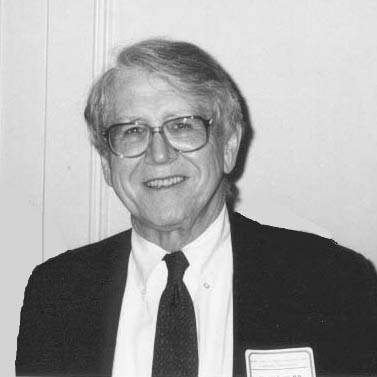 QUENTIN YOUNG, MD, Chicago, Dr. Young is a practicing internist in Hyde Park. He chaired the Department of Internal Medicine at Cook County Hospital for a decade. He is the former President of the American Public Health Association. Contact: 312.782.6006
 OLVEEN CARRASQUILLO, MD, MPH, New York City is Assistant Professor of Medicine and Public Health at Columbia University’s College of Physicians and Surgeons. Dr. Carrasquillo is a member of the Advisory Committee of the National Hispanic Medical Association, and is a practicing internist with patients in the predominantly Latino community of Washington Heights.
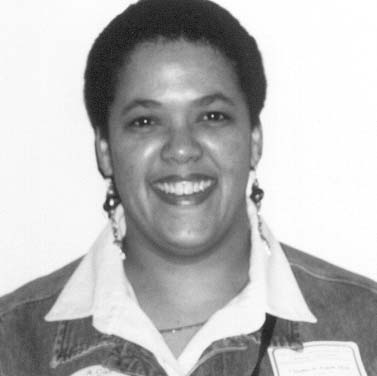 CLAUDIA FEGAN, MD, Chicago, Associate Chief Medical Officer of the Ambulatory and Community Health Network, of the Cook County Bureau of Health Services. She is a co-author of “Universal Healthcare: What the United States Can Learn from Canada” (The New Press, 1999)
 OLIVER FEIN, MD, New York, is Professor of Clinical Medicine and Clinical Public Health at Weill Medical College of Cornell University. He was Robert Wood Johnson Health Policy Fellow during 1993-1994, when he worked as a legislative assistant for Senate Democratic Majority Leader, George Mitchell.
 JERRY FRANKEL, MD, Dallas, is a urologist who is recently retired from private practice in McKinney, Texas. He is a leader in the development of less-invasive surgical techniques in his field. He ran for Congress in 1996 against House Republican Dick Armey. Dr. Frankel has published numerous articles and letters on single-payer national health care and appeared on the local affiliates of ABC, NBC, PBS, and NPR.
 DAVID HIMMELSTEIN, MD, Boston, is an Associate Professor of Medicine at Harvard. He is a co-founder of PNHP and his research focuses on problems in access to care, administrative waste, and the advantages of a national health program.
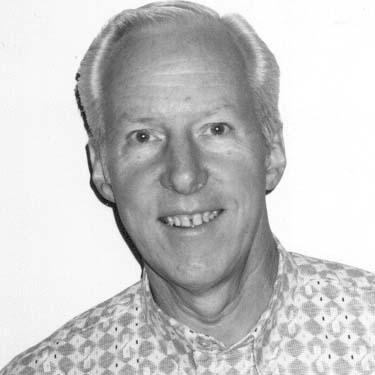 DON McCANNE, MD, California, (Senior Health Policy Fellow) Dr. McCanne is a retired family physician in San Clemente, California. For three decades, Dr. McCanne has allotted one-half of his practice hours to indigent patients.
 DEB RICHTER, MD, Vermont, practices family medicine in Montpelier, Vermont, and is a frequent spokesperson in the print, TV, and radio media.
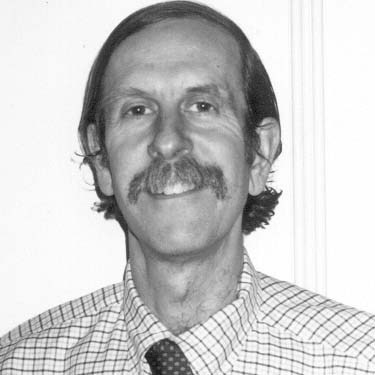 GORDON SCHIFF, MD, Massachusetts, Dr. Schiff is an internist at the Brigham and Women’s Hospital in Boston. He is an expert in patient safety and Medical Informatics and teaches at the Harvard School of Public Health.
 WALTER TSOU, MD, MPH, Philadelphia, Dr. Tsou is an internist and former Health Commissioner of Philadelphia. He currently serves on the Executive Board of the American Public Health Association.
 STEFFIE WOOLHANDLER, MD, MPH, Boston, Dr. Steffie Woolhandler is an Associate Professor of Medicine at Harvard and co-director of the Harvard Medical School General Internal Medicine Fellowship program. She worked in 1990-91 as a Robert Wood Johnson Foundation health policy fellow at the Institute of Medicine and the U.S. Congress. Dr. Woolhandler is a frequent speaker and has written extensively on health policy.