By Joan Brunwasser
OpEdNews.com, March 8, 2011
My guest today is Dr. Steffie Woolhandler, professor of medicine at Harvard University and a member of Physicians for a National Health Program. Welcome back to OpEdNews, Steffie.
You and several colleagues issued a press release today regarding the new study that appears in the March 8 issue of the American Journal of Medicine. In it, you evaluated the Massachusetts health plan vis-à-vis personal bankruptcies due to medical bills. What did you find?
Woolhandler: Both Massachusetts Gov. Deval Patrick and President Obama have used the medical bankruptcy issue to justify their health reforms. Unfortunately, what Massachusetts reform has done is to take many of the previously uninsured, and make them UNDER-insured. That is, much of the new insurance is so skimpy that families can still be bankrupted when faced with a prolonged and expensive illness.
OpEdNews: What do you mean, Steffie? I thought reducing medical bankruptcies was one of the justifications for passing health care reform in Massachusetts.
W: We found that medical bankruptcies did not fall significantly after Massachusetts’s health reform. 59 percent of bankruptcies in early 2007 had medical illness or medical bills as a cause. In mid-2009, after the reform was fully implemented, 53 percent of bankruptcies had a medical cause – a non-significant drop. The absolute number of bankruptcies that occurred in the wake of illness actually rose.
O: That’s quite disturbing. Was this an unexpected development?
W: The Obama administration told us from the outset that the new law would have coverage similar to the Massachusetts bill. So we could take a look at the coverage actually offered in Massachusetts through the insurance exchange, which in Massachusetts has the name “The Connector” and see what to expect. For someone in their late fifties, the least expensive and most-commonly purchased insurance offered by the Connector carries a premium of $5,616 annually, but comes with a whopping deductible of $2,000 and then covers only 80 percent of the next $15,000 in expenses. Someone with a chronic condition like anxiety or diabetes could easily be out-of-pocket by $10,616 annually, year after year. No wonder we’re still seeing medical bankruptcies in the state.
O: Yikes! Now what? Where does that leave us?
W: We still need single-payer, nonprofit national health insurance – an expanded and improved Medicare for all. That’s the model other countries have used to affordably cover all their residents. Medical bankruptcy is rare in Canada, which has national health insurance. Obama’s 2010 national reform did little for families who already have insurance, which is usually full of gaps like co-payments, deductibles and uncovered services. In order for insurance to protect American families from bankruptcy, it needs to be not only universal, but comprehensive. That is, it needs to fully cover all medically necessary care.
O: How can we help to make single payer happen?
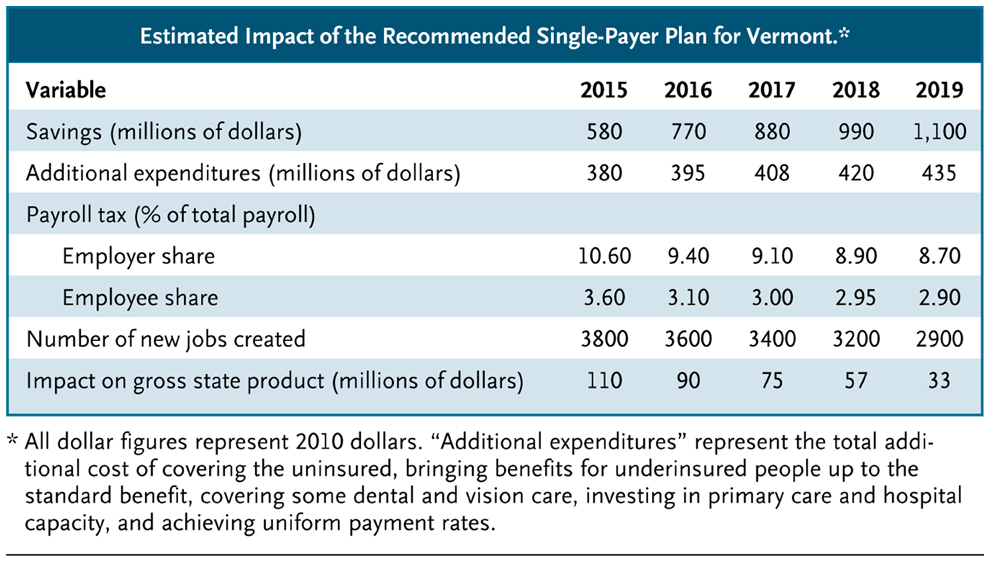
W: One hopeful note is the political situation in Vermont. The single-payer movement in Vermont has pushed the state’s politicians to embrace single-payer reform for that state, and Gov. Peter Shumlin and Sen. Bernie Sanders are publicly committed to fighting to get the federal waivers necessary to implement such reform. At a national level, it is clear to policy analysts that the Obama reform did not resolve the two major problems in U.S. health care – access to care and costs. And this will become clear to the American people very soon after the Obama plan is implemented in 2014. A resurgence in popular interest in real health reform will quickly emerge.
O: So that’s moderately encouraging. Anything to add before we wrap this up?
W: Private health insurance is a defective product. We need to do what most other developed nations have done – build a system of universal coverage based on nonprofit, national health insurance.
O: Amen. I appreciate your bringing us up to date on this important issue, Steffie. Thank you very much.
http://www.opednews.com/articles/Harvard-Study-Personal-Me-by-Joan-Brunwasser-110308-705.html
Adam Klugman speaks with Dr. Deb Richter of Vermont4SinglePayer.org
Adam Klugman speaks with Dr. Deb Richter, head of Vermont4SinglePayer.org, about Vermont’s single payer bill and health care in America.
Mad as Hell in America with Adam Klugman
Aired: March 5th, 2011
Medical Bankruptcies Continue Increasing, Despite Massachusetts Reform
By Christian Nordqvist
Medical News Today, March 9, 2011
Since Massachusetts implemented its landmark 2006 legislation which made the purchase of health insurance compulsory, the number of personal bankruptcies associated to medical bills or illness has increased, researchers revealed in American Journal of Medicine. Total medical bankruptcies rose from 7,504 in 2007 to 10,093 in 2009 in the state.
However, the actual share of all Massachusetts bankruptcies caused by a medical factor dropped from 59.3% to 52.9%. during the same period.
As the Obama administration’s health law follows many of the patterns of the Massachusetts plan, including the obligatory purchase of health insurance, this latest finding may have implications for the country as a whole. One of the administration’s most powerful arguments in favor of the new federal law was to address the medical bankruptcy problem.
Furthermore, Obama’s recent proposal to allow states to opt out of the nationwide reforms may undermine even more the inadequate standards for health cover that were included in the 2010 legislation. Nationwide plans may become even skimpier, possibly resulting in Massachusetts-like medical bankruptcies.
The authors wrote: “Health costs in the state have risen sharply since reform was enacted. Even before the changes in health care laws, most medical bankruptcies in Massachusetts – as in other states – afflicted middle-class families with health insurance. High premium costs and gaps in coverage – co-payments, deductibles and uncovered services – often left insured families liable for substantial out-of-pocket costs. None of that changed. For example, under Massachusetts’ reform, the least expensive individual coverage available to a 56-year-old Bostonian carries a premium of $5,616, a deductible of $2,000, and covers only 80 percent of the next $15,000 in costs for covered services.”
Dr. David Himmelstein, study leader, said: “Massachusetts’ health reform, like the national law modeled after it, takes many of the uninsured and makes them underinsured, typically giving them a skimpy, defective private policy that’s like an umbrella that melts in the rain: the protection’s not there when you need it. … (In the case of Massachusetts) … while we can’t completely rule out the possibility that the reform reduced medical bankruptcies, any reduction is certainly small.”
The researchers report that in a previous study they discovered that 62.1% of bankruptcies throughout the USA in 2009 were caused by medical issues. That study was often quoted by President Obama and advocates for congressional reform. The study also revealed that 77.9% of those bankrupt individuals were insured when their illness began, including 60.3% who had private insurance.
Historically, Massachusetts has always had fewer medical bankruptcies than other parts of the country, the authors note. The state has a stronger safety net, which includes public hospitals and a free medical care system for the poor which had already existed before recent reforms came in.
The 51% increase in Massachusetts’ total bankruptcy numbers between 2007 and 2009 was not as steep as it was in most of the other federal jurisdictions.
Massachusetts’ health law was passed in 2006 and become fully implemented two years later. The share of residents who were uninsured dropped from 10.4% to 4.4% between 2006 and 2009, a 58% fall. Massachusetts still has the lowest rate of any state in America.
Bankruptcies tend to occur several months after the onset of a financial shock. Therefore, the early 2007 and mid-2009 surveys do provide a good picture of the before and after effects of the health reform.
Co-author Dr. Steffie Woolhandler, said: “American families need the kind of comprehensive coverage that protects people in nations with single-payer national health insurance, such as Canada.”
***
“Medical bankruptcy in Massachusetts: Has health reform made a difference?”7
David U. Himmelstein, M.D., Deborah Thorne, Ph.D., and Steffie Woolhandler, M.D., M.P.H.
American Journal of Medicine, March 2011 (print edition).
Massachusetts state employees being shoved into limited-network plans
Plan with low rate hikes for health coverage has fewer choices
By Sean P. Murphy
The Boston Globe
March 8, 2011At a time when most health insurance companies are raising premiums by 10 percent or more, the Group Insurance Commission, which insures about 185,000 state employees and their families, last week showed them all up by limiting 2011 increases to just an average 2.4 percent.
But to achieve that goal, the GIC is counting on thousands of subscribers to give up their present plans for much cheaper ones that limit their choices of doctors and medical facilities.
The GIC has offered limited-network plans for years, but fewer than 10,000 of GIC’s 350,000 members have joined so far. Last year, the GIC added new limited-network plans offered by Harvard Pilgrim Community Health and Tufts Health Plan, but those plans, too, attracted limited interest.
To help jump-start migration to the less costly plans, the GIC, beginning April 9, will require every subscriber to pick from among the GIC’s 19 plans, which include preferred-provider organizations (PPO) that allow wide choice and health maintenance organizations that allow moderate choice but charge higher premiums than the more restrictive limited-network plans.
Any subscriber who fails to designate a plan in the one-month period ending May 9 will be dropped from their present plan and automatically enrolled in the cheapest — and most limited — plan on the GIC menu.
We keep looking at Massachusetts since it serves as a prototype for national reform under the Affordable Care Act. Under this latest development in Massachusetts, state employees are being shoved into limited-network plans – significantly limiting their choices of health care professionals and institutions.
One of the primary defects with the insurance exchange model of reform is that emphasizing affordability of health plans rather than health care itself results in a transformation to ever more inferior insurance products.
The goal of reform should not be to take away choices in actual health care, nor to shift more of the costs to those who need health care. Yet those are precisely the trends that we are seeing and will continue to see under a model of competition between private health plans.
Under a single payer national health program we would have free choice of our health care professionals and hospitals, and financial barriers to care would be removed. No wonder that we keep hearing that if (whatever) we’re going to end up with single payer. Can hardly wait.
State Health Law Waivers: Where Will They Take Us?
By Margaret Flowers
t r u t h o u t | News Analysis, Tuesday 08 March 2011
The president supports state innovation in health care, but vigilance is required to ensure state reforms improve health as we continue to call for national reform.
President Obama announced at the National Governors Association on Monday that he supports an amendment to the health law that would allow states some flexibility to innovate with their own models of health reform beginning in 2014, rather than waiting until 2017, as is currently required by law. The president’s concession comes as the current federal health law is deteriorating and states are complaining that the financial burden of complying with the law are too onerous in the face of serious budget deficits.
The president’s endorsement of the Wyden-Brown amendment, known as the “Empowering States to Innovate Act” or S.248, allows states to apply for waivers from the health insurance exchange beginning in 2014 and would give them some federal dollars to experiment with alternative ways of providing health coverage. The federal health bill requires that any state seeking a waiver from the health insurance exchange must, at a minimum, provide coverage comparable to that specified by the federal bill (Section 1332). It is left to the discretion of the secretary of health and human services to determine if a state meets this requirement.
States that put in place a single-payer health system will surpass the coverage of federal law. A single-payer health system, improved Medicare for all, would be universal and would provide the necessary cost controls and savings that would fund comprehensive coverage, including much-needed mental health, dental and vision care.
States such as Vermont and California, which appear to be closer than any others to enacting a state single-payer health system, welcomed the president’s support for the Wyden-Brown amendment because it would remove one of the many barriers they face. The amendment will still need to be passed by Congress before it arrives at the president’s desk, which may, in itself, be a formidable feat in the current political climate.
In addition, for states that want to take the path of single payer, even with the amendment, there will still be many hurdles before they can implement such a plan. The amendment only moves up the date when waivers can be applied for. It does not guarantee federal approval of the many waivers a state single-payer system would need, such as being allowed to roll their Medicaid and Medicare populations into their single-payer system.
Of concern is that the president is signaling a greater willingness to allow states to opt out of the health reform bill, not because states want to provide better coverage, but because governors in some states are opposed to the federal health law altogether. Beginning shortly after passage of the law last year, there has been an effort to undermine it through court challenges to its constitutionality and, more recently, through efforts to repeal it entirely or in part by the House. Additionally, hundreds of waivers have been issued excusing businesses, union health plans and health insurers from having to comply with parts of the law. The Department of Health and Human Services now has a 24-hour turnaround time on such waivers.
Vigilance will be required to ensure that some states do not use the amendment, if it is passed, to gut important public health programs such as Medicaid and the State Children’s Health Insurance Program and further privatize health care, which would be harmful to patients. According to a White House fact sheet released around the time of the president’s statement, “The law also allows states to submit a single application that includes Medicaid waiver requests which could, for example, seek to give people eligible for Medicaid the choice of enrolling in [health insurance] exchange plans.” A change such as this would undermine Medicaid and shift more people into more expensive and less protective private insurance plans.
Efforts are already underway in Wisconsin to take control of the state’s Medicaid programs away from the state Legislature and end the public’s ability to have a voice in the process and, instead, give full authority over the program to the governor’s office. Gov. Scott Walker appointed Dennis Smith, a former Heritage Foundation fellow who has written about moving people out of Medicaid and raising co-pays for those still in Medicaid, as his secretary of health.
Wisconsin is not alone in challenging Medicaid. According to The Wall Street Journal, more than half the states want permission to remove hundreds of thousands of people from Medicaid. Other states like New York and Arizona are cutting benefits of health programs that already provide insufficient coverage.
Decades of experience in the United States shows that the market model fails when it comes to financing health care. Health is a necessity, not a commodity. A system based on the purchase of private insurance results in higher costs and poorer outcomes. Patients who cannot afford necessary care get sick, defer treatment and develop preventable complications, sometimes fatal ones. Families experience personal bankruptcy when a serious illness or accident occurs. With increased political pressure and Secretary Sebelius already issuing hundreds of waivers, can further privatization of health care be prevented?
While some welcome the president’s support for the amendment and hope that, if it passes, a state will be able to demonstrate the benefits of a single-payer system, as happened in Saskatchewan (and which led to Canada’s national Medicare system), it is possible that the actual outcome of such an amendment will be a further attack on our necessary public health programs. For this reason, it is imperative that we continue to push for a national health program, improved Medicare for all in the US.
“It would require fewer waivers and be simpler to enact improved Medicare for all at the national level,” says Dr. Garrett Adams, president of Physicians for a National Health Program. “Not only is it simpler, but it would save lives and end personal bankruptcy caused by medical illness. We would like to see a national Medicare-for-all system enacted sooner rather than later. Every day that we wait, hundreds of Americans die of preventable causes.”
Physicians for a National Health Program advocates for a national, publicly financed and privat
ely delivered health system: an improved Medicare for All as embodied in H.R. 676, the “Expanded and Improved Medicare for All Act.” Among the benefits of such a program are that it is a simpler system for patients and health professionals, recaptures about $400 billion annually in unnecessary paperwork and bureaucracy and directs that money into care, allows freedom to choose one’s health provider and more control over one’s treatment, is universal and provides comprehensive health benefits while at the same time effectively controlling our soaring health care costs. In this time of fiscal and health crises, national Medicare for all is more important than ever.
Make health care a right for all
By Dr. Bruce Trigg
Albuquerque Journal, Feb. 25, 2011
Today is Human Rights Day at the State Capitol. And today Sen. Jerry Ortiz y Pino will present Senate Joint Resolution 5 for a state constitutional amendment that will recognize health care as a human right to the first legislative committee to which it has been assigned.
The amendment requires passage by both houses of the Legislature, and then it goes directly to the voters at the next general election. This is the closest thing we have to a referendum under our state laws; the voters get to make the final decision in November.
The timing for this amendment couldn’t be better.
All over the world people are protesting and risking their lives to win the democratic and human rights that too many Americans take for granted. But our own rights and freedoms were won through many decades of struggle. And the struggle isn’t over. Political forces are at work that would further restrict access to medical care. That is why this bill has been introduced.
The fundamental human right to health is recognized by every other Western democratic country and by numerous international bodies and treaties. Why shouldn’t the people of the United States be able to access medical care as a right, based only on medical need? Why don’t we guarantee that everyone has medical care on the same basis as we now provide police and fire protection and universal free education?
Instead health care is treated like any other commodity that gets bought and sold according to the forces of the marketplace.
We mustn’t overlook the fact that many Americans already do receive medical care either provided directly by the government (such as the Veteran’s Administration, the military, the Indian Health Service, UNM Hospital, the Department of Health) or paid for by the government (Medicaid for the poor and Medicare for those over 65). But all the others are essentially on their own.
Those with no insurance — 1 in 4 of our fellow New Mexicans — too often suffer needlessly and die younger because they had limited or no access to care. Even many with private health insurance cannot afford the cost of a serious illness. Excessive medical bills are the cause of more than half the bankruptcies in this country. Supporters of this amendment believe our country can do better: We can and should take care of all our people.
The wording of the proposed amendment is simple. It states: “Health care is a fundamental right that is an essential safeguard of human life and dignity, and the state shall ensure that every resident is able to realize this right by establishing a comprehensive system of quality health care that is accessible to each resident on an equitable basis, regardless of ability to pay.”
The amendment paraphrases the words of the late Cardinal Joseph Bernardin, who was the archbishop of Chicago. This religious and moral leader sparked a national movement in the 1990s to recognize health care as a human right for which government must take responsibility. Every major religion shares these values.
Why are we introducing this amendment now in the midst of a contentious national debate over the recently passed Affordable Care Act (ACA)? Because, no matter what you think of the ACA, this amendment provides us with an ethical and moral yardstick by which we can measure the outcome of the ACA and of any future state or national health reform policies. The amendment is a mirror that shows us what kind of a society we really are. What are our core values? Do we really believe in the value of all people? Are we willing to provide everyone with the medical care they need to live a healthy and long a life?
I believe that we really do care for our families and neighbors and co-workers and that is what New Mexicans will say if they’re given the chance in November.
Dr. Bruce Trigg is a pediatrician and recently retired after 23 years with the New Mexico Department of Health. He is chair of the N.M. Network of Health Professionals for a National Health Program.
http://www.abqjournal.com/opinion/guest_columns/25216116769opinionguestcolumns02-25-11.htm#ixzz1G2WkEd00
Mass. health reform hasn't stopped medical bankruptcies: Harvard study
March 8, 2011
Dear PNHP colleagues,
A new study by PNHP co-founders Drs. David Himmelstein and Steffie Woolhandler was published today by the American Journal of Medicine.
The study finds that the reforms passed in Massachusetts have failed to significantly reduce the rate of medical bankruptcy in that state, and that the absolute number of medical bankruptcies has increased.
Because the federal health reform law is patterned after the Massachusetts plan, the study casts serious doubt on claims that the federal law, which is now approaching its first anniversary, will remedy this scandalous and tragic problem.
While the study has already drawn coverage from the Boston Globe, the Los Angeles Times and The Hill, among other media, activists are encouraged to forward the release below to their local media contacts and/or to write a letter to the editor or an opinion piece based on this material. To help you in this effort, a state-by-state estimate of the number of people bankrupted by medical bills in 2010 can be found here.
In the same vein, talking points about the first anniversary of the Obama administration’s health law (March 23) can be found here. The media is expected to give considerable attention to the anniversary, and your voice can be an important part of the national discussion.
Thank you for your continuing efforts in support for single-payer national health insurance.
Best regards,

Mark Almberg
Communications Director
P.S. Please make a tax-deductible donation today to help PNHP get its single-payer message out, whether through media initiatives such as this one or through the printing of new brochures and other materials. Your support makes a difference!
EMBARGOED until
March 8, 2011, 12:01 a.m., Eastern time
Contact:
David Himmelstein, M.D.
Steffie Woolhandler, M.D.
Mark Almberg, PNHP, (312) 782-6006, mark@pnhp.org
Massachusetts reform hasn’t stopped medical bankruptcies: Harvard study
Skimpy health insurance policies are likely culprit in continuing problem; findings indicate national reform law won’t stop bankruptcies
The percentage of personal bankruptcies linked to medical bills or illness changed little, and the absolute number actually increased in Massachusetts after the implementation of its landmark 2006 law requiring people to buy health insurance, a Harvard study says.
The new study, which appears in today’s American Journal of Medicine, found that between early 2007 and mid-2009, the share of all Massachusetts bankruptcies with a medical cause went from 59.3 percent to 52.9 percent, a non-significant decrease of 6.4 percentage points. Because there was a sharp rise in total bankruptcies during that period, the actual number of medical bankruptcy filings in the state rose from 7,504 in 2007 to 10,093 in 2009.
The findings have national implications because the Obama administration’s health law is largely patterned after the Massachusetts plan, including its individual mandate. One of the administration’s arguments in support of the new federal law was that it would significantly reduce medical bankruptcies nationwide. The findings in Massachusetts cast doubt on that claim.
Moreover, the president’s recent proposal to let states opt out of the national health reform threatens to further weaken the inadequate standards for coverage that were included in the 2010 reform law. The result may well be the growth of skimpier plans nationwide, leading to even higher rates of medical bankruptcy than in Massachusetts.
To explain why medical bankruptcies persist in Massachusetts, the authors of the new study write: “Health costs in the state have risen sharply since reform was enacted. Even before the changes in health care laws, most medical bankruptcies in Massachusetts – as in other states – afflicted middle-class families with health insurance. High premium costs and gaps in coverage – co-payments, deductibles and uncovered services – often left insured families liable for substantial out-of-pocket costs. None of that changed. For example, under Massachusetts’ reform, the least expensive individual coverage available to a 56-year-old Bostonian carries a premium of $5,616, a deductible of $2,000, and covers only 80 percent of the next $15,000 in costs for covered services.”
The study’s lead author, Dr. David Himmelstein, said, “Massachusetts’ health reform, like the national law modeled after it, takes many of the uninsured and makes them underinsured, typically giving them a skimpy, defective private policy that’s like an umbrella that melts in the rain: the protection’s not there when you need it.”
In the case of Massachusetts, “while we can’t completely rule out the possibility that the reform reduced medical bankruptcies, any reduction is certainly small,” he said. Himmelstein conducted the study as associate professor of medicine at Harvard Medical School; he currently is professor of public health at City University of New York.
In 2007, the last year for which national estimates are available, medical issues contributed to 62.1 percent of bankruptcies nationally, according to a 2009 study by the same group of researchers. That study, which was frequently cited by the president and congressional reform advocates, also found that 77.9 percent of those bankrupted were insured at the start of their illness, including 60.3 percent who had private coverage.
The authors note that Massachusetts has historically had fewer medical bankruptcies than the rest of the nation, presumably reflecting, among other things, the state’s more robust social safety net, including public hospitals and a system of free medical care for the poor that predated the recent reform. Massachusetts’ 51 percent increase in total bankruptcies between 2007 and 2009 was slower than the increase in
the majority of other federal jurisdictions.
The state’s health law was passed in 2006 and was fully implemented by early 2008. According to the U.S. Census Bureau, the share of state residents who were uninsured fell by 58 percent between 2006 and 2009, from 10.4 percent to 4.4 percent, and remains the lowest rate of any state.
Because bankruptcies lag many months behind a financial shock, the early 2007 and mid-2009 surveys provide a good “before and after” look at the effects of the health reform, the researchers said.
Study co-author Dr. Steffie Woolhandler, a professor of public health at City University of New York who was professor of medicine at Harvard when the research was conducted, said, “American families need the kind of comprehensive coverage that protects people in nations with single-payer national health insurance, such as Canada.” Although recent data are lacking, an older study found few medical bankruptcies in Canada, she said.
*****
“Medical bankruptcy in Massachusetts: Has health reform made a difference?” David U. Himmelstein, M.D., Deborah Thorne, Ph.D., and Steffie Woolhandler, M.D., M.P.H. Deborah Thorne is associate professor of sociology at Ohio University. American Journal of Medicine, March 2011 (print edition).
A copy of the manuscript of the study is available here.
*****
Physicians for a National Health Program (www.pnhp.org) is an 18,000-member organization advocating single-payer national health insurance for the United States. PNHP had no role in funding the study mentioned above. To speak with a physician/spokesperson in your area, visit www.pnhp.org/stateactions or call (312) 782-6006.
Talking Points: Impact of the federal health law after one year
By PNHP
1. Number of Americans who lack any health coverage still exceeds 50 million, although perhaps 1 million children up to age 26 are now covered on their parents’ policies, and up to 70,000 are covered because of the ban on pre-existing condition exclusions for children.
2. Over 45,000 excess deaths annually due to lack of health insurance.
3. Over 40 million Americans, including over 10 million children, are underinsured. Although insurers can no longer rescind policies and must raise the cap on lifetime benefits to $750,000, over 900 plans and 4 states (affecting 2.4 million people) have been exempted from the cap, and insurers can still rescind policies for alleged “fraud” (which they claim in the majority of cases already).
4. Perhaps 12,000 people have gained coverage in new state high risk pools, not the 325,000 expected.
5. Seniors get a 50 percent discount on brand name drugs in the donut hole as well as some key preventive services without cost-sharing, such as an annual physical.
6. The bill has not reduced medical inflation or bankruptcies due to medical costs (although medical inflation slowed the year before the bill passed to its lowest rate of increase in five decades due to the recession). Data from Massachusetts indicate that even when the federal health law is fully implemented it is unlikely to have much impact on medical costs and medical bankruptcy, which affects over 1 million families annually.
7. On the bright side, debate over the Obama plan opens up some space for ongoing national debate over health reform (compared to the decade of silence after the defeat of the Clinton plan) that we can take advantage of, such as the upcoming one year anniversary of the plan’s passage. As the plan fails to have much impact, more people acknowledge that we do really need single payer.
Jacob Hacker had a useful chart in the New York Times:
http://www.nytimes.com/interactive/2011/02/17/opinion/20110217_oped.html
Reform in Massachusetts fails to reduce medical bankruptcies
Medical Bankruptcy in Massachusetts: Has Health Reform Made a Difference?
By David U. Himmelstein, MD, Deborah Thorne, PhD, Steffie Woolhandler, MD, MPH
The American Journal of Medicine
March 2011
Despite a marked declined in the uninsurance rate in Massachusetts since the implementation of health reform, the proportion of bankruptcies that occurred in the wake of medical problems has not decreased significantly, and the absolute number of medical bankruptcies has actually increased by one third.
What accounts for the seemingly paradoxical trends of increasing coverage yet stable, or even increasing (on a per capita basis), medical bankruptcy rates? Health costs in the state have increased sharply since reform was enacted. Even before the changes in health care laws, most medical bankruptcies in Massachusetts, as in other states, affected middle-class families with health insurance. High premium costs and gaps in coverage — copayments, deductibles, and uncovered services — often left insured families liable for substantial out-of-pocket costs. None of that changed.
Conclusions
The recently enacted national health reform law closely mirrors Massachusetts’ reform. That reform expanded the number of people with insurance but did little to upgrade existing coverage or reduce costs, leaving many of the insured with inadequate financial protection. Our data do not suggest that health care reform cannot sharply reduce the number of medical bankruptcies. Indeed, medical bankruptcy rates appear lower in Canada, where national health insurance provides universal, first dollar coverage. Instead, these data suggest that reducing medical bankruptcy rates in the United States will require substantially improved — not just expanded — insurance, as well as better disability insurance programs to provide income support to ill individuals and family caregivers.
https://pnhp.org/docs/2011/AJM_Mass-Reform-hasnt-stopped-med-bankruptcies.pdf
Comment:
By Don McCanne, MD
“Unaffordable underinsurance” is rapidly becoming the new standard in the United States. Even with subsidies, insurance premiums are ever less affordable, and for those who need health care, out-of-pocket spending creates significant financial hardships. Since reform under the Affordable Care Act closely mirrors that of Massachusetts, their current experience with medical bankruptcy portends the future of medical bankruptcy throughout the United States.
The Massachusetts experience shows that merely providing insurance coverage to the majority of the population is not enough. The quality of the insurance coverage is crucial. In 2009, 89% of Massachusetts debtors and all their dependents had health insurance at the time of filing, yet the insurance was not effective in reducing the rate of medical bankruptcy below levels that already existed before the full implementation of the Massachusetts health reform program.
Other nations with first dollar coverage do not see medical bankruptcies, even though they cover everyone at a much lower cost. We could do the same here. In fact, we most likely will once the nation understands that “unaffordable underinsurance” is rapidly becoming the new national norm – now carved in stone by the Affordable Care Act. We just need more highly skilled artisans to rework that stone.
Mass. Health Reform Hasn't Halted Medical Bankruptcies
Researchers also say those once uninsured now have coverage that is 'skimpy' and 'defective'
U.S. News and World Report
March 8, 2011
(HealthDay News) — The percentage of personal bankruptcies caused by medical bills or personal illness has changed only slightly since Massachusetts began requiring people to buy health insurance in 2006, a new study finds.
The finding challenges the Obama administration’s claim that medical bankruptcies will decline under the new U.S. health care law, which is largely patterned after the Massachusetts law, according to the Harvard University researchers.
They found that the proportion of bankruptcies in Massachusetts that were medical-related dropped from 59.3 percent to 52.9 percent between early 2007 and mid-2009. This 6.4 percent decrease is non-significant, according to the study authors.
They also found that the actual number of medical bankruptcy filings in the state rose from 7,504 in 2007 to 10,093 in 2009.
“Health costs in the state have risen sharply since reform was enacted. Even before the changes in health care laws, most medical bankruptcies in Massachusetts — as in other states — afflicted middle-class families with health insurance. High premium costs and gaps in coverage — co-payments, deductibles and uncovered services — often left insured families liable for substantial out-of-pocket costs. None of that changed. For example, under Massachusetts’ reform, the least expensive individual coverage available to a 56-year-old Bostonian carries a premium of $5,616, a deductible of $2,000, and covers only 80 percent of the next $15,000 in costs for covered services,” the researchers wrote.
“Massachusetts’ health reform, like the national law modeled after it, takes many of the uninsured and makes them underinsured, typically giving them a skimpy, defective private policy that’s like an umbrella that melts in the rain: the protection’s not there when you need it,” lead author Dr. David Himmelstein said in a Physicians for National Health Reform news release.
He was an associate professor of medicine at Harvard Medical School when he conducted the research and is now professor of public health at City University of New York.
The study is published March 8 in the American Journal of Medicine.
Massachusetts reforms had no impact on medical bankruptcy, liberal researchers say
By Jason Millman
The Hill, March 8, 2011
An individual mandate has done little to stem the rate of medical bankruptcies in Massachusetts, boding poorly for the federal healthcare reform law enacted almost a year ago, according to a new liberal study.
The number of medical bankruptcies in Massachusetts increased from 7,504 in 2007 to 10,093 in 2009, while the state’s rate of medical bankruptcies experienced a “non-significant” decrease from 59.3 percent to 52.9, said researchers Dr. David Himmelstein and Dr. Steffie Woolhandler in the American Journal of Medicine.
The authors, both affiliated with single-payer advocate Physicians for a National Health Program, said medical bankruptcies continue to plague Massachusetts because the 2006 reform, pushed by then-Gov. Mitt Romney (R), covered more people but provided them with weak insurance. The researchers said this raises the same concern with the federal healthcare overhaul because it was modeled after the Massachusetts reform, including the requirement for all individuals to purchase insurance by 2014.
“Massachusetts’ health reform, like the national law modeled after it, takes many of the uninsured and makes them underinsured, typically giving them a skimpy, defective private policy that’s like an umbrella that melts in the rain: the protection’s not there when you need it,” Himmelstein said in a statement.
President Obama and Democrats often cited the need to end medical bankruptcies as they made their case for healthcare reform. However, the liberal advocates say the reforms do not go far enough.
“[R]educing medical bankruptcy rates in the United States will require substantially improved — not just expanded — insurance, as well as better disability insurance programs to provide income support to ill individuals and family caregivers,” the researchers wrote.
The Massachusetts medical bankruptcy rate is actually on the lower end of the scale when compared to national figures. The study’s authors attributed this to the state’s relatively high prosperity, older population and robust social safety net.
Medical bankruptcies a continuing problem, study finds
By Kay Lazar
The Boston Globe, March 8, 2011
The 2006 Massachusetts law that required nearly everyone to buy health insurance has not significantly staunched residents’ pain from medical bankruptcies, according to a new study.
A survey of Massachusetts residents who filed for bankruptcy in July 2009 found that 53 percent cited a medical cause, down from 59 percent who blamed a medical cause in a survey done in early 2007, before the state law had been fully implemented. But because of the small number of people surveyed, the difference was not statistically significant, according to the study in today’s American Journal of Medicine.
Lead study author Dr. David Himmelstein said medical bills are still causing bankruptcies because health costs in the state have continued rising sharply. High premium costs, along with large co-payments and deductibles, often expose families with insurance to substantial out-of-pocket costs, said Himmelstein, a professor of public health at City University of New York.
“People think they have reasonable insurance until they try and use it,” Himmelstein said. “You are carrying an umbrella and it starts to rain and you put it up and it’s full of holes. For most people, it just hasn’t rained yet.”
Himmelstein, who conducted the research while working as an associate professor of medicine at Harvard Medical School, is co-founder of Physicians for a National Health Program, an organization that pushes for national health insurance.
He said his findings suggest that the national health overhaul, which was largely modeled on the Massachusetts law and will take full effect in 2014, will not ease the number of medical bankruptcies, either.
http://www.boston.com/news/health/blog/2011/03/medical_bankrup.html