Medical students and doctors gather to support Senator Kuehl’s SB 840 plan to provide every Californian with healthcare. There are several health care bills out right now, but this is the one that makes the most sense.
Eliminating broker fraud
Health Care Fraud Committed by Agents, Brokers, and Insurer Employees
What types of fraudulent schemes are perpetrated by those in the insurance field?
AHIP (America’s Health Insurance Plans)
Agent and Broker Fraud
Misrepresentations on applications
A man tells an agent filling out an application for him that he is a smoker. The agent intentionally fails to note this on the application so that the man will get a better rate.
Misrepresentations of coverage
Agent Carson deliberately and falsely tells an applicant that her family history of high blood pressure and heart disease and her prior treatment for irregular heartbeats will have no bearing on the issuance or rating of the policy.
Improper replacements, including churning and twisting.
Churning occurs when an agent or broker replaces the coverage of his own current clients without regard to need in order to earn a new commission. Twisting occurs when an agent or broker targets new prospects for the purpose of replacing their existing coverage without regard to need in order to earn a commission.
Agent Miller changes her affiliation to another insurer. She persuades many of her clients to get new policies from her new company by telling them that the coverage it offers is superior. This is not really so — Miller just wants to earn new commissions. (Churning)
Broker Harlan targets clients of other agents and brokers. He tells them that the coverage he offers is better than what they have. Again, this isn’t true — Harlan too just wants to earn new commissions. (Twisting)
Insurer Employee Fraud
Insurance company employees are in a unique position to manipulate information in applications and claims. Home office employees also have access to automated billing systems and computer databases. Consequently, opportunities for employee fraud are abundant.
http://www.ahiphiwire.org/Broker/LearningCenter/Feature.aspx?doc_id=147191
Comment:
By Don McCanne, MD
In a single payer national health program enrollment is automatic and permanent. Churning, twisting, misrepresentations of coverage, and falsified applications wouldn’t even exist.
California's health reform failed because mandates are fundamentally flawed as a model for reform
For Immediate Release:
January 31, 2008
Contact:
Dr. Quentin Young 312.782.6006
Drs. David Himmelstein and Steffie Woolhandler 312.782.6006
Todd Main 312.782.6006
While Governor Schwarzenegger’s health reform plan crashed and burned this week on the legislative highway, it confirmed once again that using mandates to achieve universal coverage is a failed model for reform.
The take home lesson: America’s health insurance industry is the problem. Any reform based on a prominent role for the industry precludes success, because the private health insurance industry is simply too bureaucratic and expensive. The administrative overhead in the current private system approaches 30%.
As the members of the California Senate also learned, it is financially impossible to expand coverage to the uninsured without also controlling costs. This means taking on the politically challenging task of ousting the insurance industry profiteers.
The failure of the mandate model in the six states that have tried it (and currently in Massachusetts) can be directly attributed to the private insurance industry. Each of these state reform efforts promised cost savings, but none included real cost controls. As the cost of health care soared, legislators backed off from enforcing the mandates or from financing new coverage for the poor. Just last month, Massachusetts projected that its costs for subsidized coverage may run $147 million over budget.
The “mandate model” for reform rests on political surrender: avoid challenging insurance firms’ stranglehold on health care while coercing the uninsured to purchase costly insufficient insurance policies. But it is economic nonsense. The reliance on private insurers makes universal coverage unaffordable.
It is ironic that what started out as a “politically feasible” alternative to the single payer bill SB 840 that was approved by both houses and then vetoed by the Governor turned out to have little political support when it came under scrutiny in the Senate.
It failed the “politically feasible” test because its supporters surrendered to the insurance industry in advance on cost control and then gave them a blank check in the form of millions of new customers.
State budget experts testified that the bill was fatally underfunded and could leave the state billions of dollars in the red. Having been down that road with the hastily enacted energy deregulation fiasco, proponents could only muster one yes vote out of eleven committee members.
The wisdom of the California Senate’s rejection of the mandate model of reform jumpstarts the national movement for an entirely achievable single payer medicare for all system.
Quentin Young, MD
National Coordinator
Physicians for a National Health Program
PNHP has Health Policy Experts available for interviews to discuss Single Payer reform and the positions of the presidential candidates
Please call or e-mail to contact any of PNHP’s Health Policy Experts<
 QUENTIN YOUNG, MD, Chicago, Dr. Young is a practicing internist in Hyde Park. He chaired the Department of Internal Medicine at Cook County Hospital for a decade. He is the former President of the American Public Health Association. Contact: 312.782.6006
 OLVEEN CARRASQUILLO, MD, MPH, New York City is Assistant Professor of Medicine and Public Health at Columbia University’s College of Physicians and Surgeons. Dr. Carrasquillo is a member of the Advisory Committee of the National Hispanic Medical Association, and is a practicing internist with patients in the predominantly Latino community of Washington Heights.
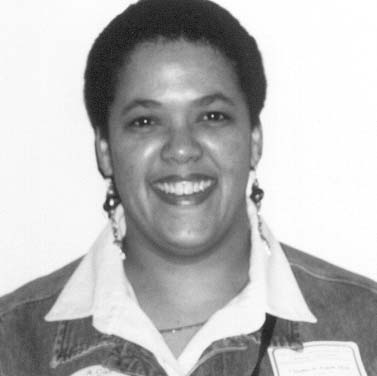 CLAUDIA FEGAN, MD, Chicago, Associate Chief Medical Officer of the Ambulatory and Community Health Network, of the Cook County Bureau of Health Services. She is a co-author of “Universal Healthcare: What the United States Can Learn from Canada” (The New Press, 1999)
 OLIVER FEIN, MD, New York, is Professor of Clinical Medicine and Clinical Public Health at Weill Medical College of Cornell University. He was Robert Wood Johnson Health Policy Fellow during 1993-1994, when he worked as a legislative assistant for Senate Democratic Majority Leader, George Mitchell.
 JERRY FRANKEL, MD, Dallas, is a urologist who is recently retired from private practice in McKinney, Texas. He is a leader in the development of less-invasive surgical techniques in his field. He ran for Congress in 1996 against House Republican Dick Armey. Dr. Frankel has published numerous articles and letters on single-payer national health care and appeared on the local affiliates of ABC, NBC, PBS, and NPR.
 DAVID HIMMELSTEIN, MD, Boston, is an Associate Professor of Medicine at Harvard. He is a co-founder of PNHP and his research focuses on problems in access to care, administrative waste, and the advantages of a national health program.
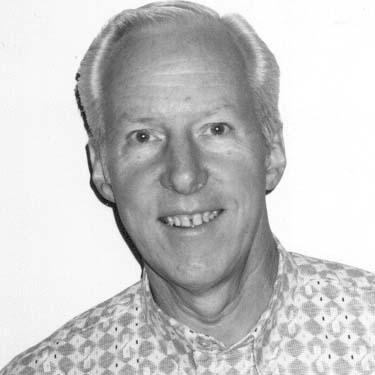 DON McCANNE, MD, California, (Senior Health Policy Fellow) Dr. McCanne is a retired family physician in San Clemente, California. For three decades, Dr. McCanne has allotted one-half of his practice hours to indigent patients.
 DEB RICHTER, MD, Vermont, practices family medicine in Montpelier, Vermont, and is a frequent spokesperson in the print, TV, and radio media.
 GORDON SCHIFF, MD, Massachusetts, Dr. Schiff is an internist at the Brigham and Women’s Hospital in Boston. He is an expert in patient safety and Medical Informatics and teaches at the Harvard School of Public Health.
 WALTER TSOU, MD, MPH, Philadelphia, Dr. Tsou is an internist and former Health Commissioner of Philadelphia. He currently serves on the Executive Board of the American Public Health Association.
 STEFFIE WOOLHANDLER, MD, MPH, Boston, Dr. Steffie Woolhandler is an Associate Professor of Medicine at Harvard and co-director of the Harvard Medical School General Internal Medicine Fellowship program. She worked in 1990-91 as a Robert Wood Johnson Foundation health policy fellow at the Institute of Medicine and the U.S. Congress. Dr. Woolhandler is a frequent speaker and has written extensively on health policy.
Contingent workers and health care
Contingent Workers and Contingent Health
By Kristin J. Cummings, MD, MPH and Kathleen Kreiss, MD
JAMA
January 30, 2008
Employment arrangements in which the worker has a nontraditional relationship with the work-site employer have come to be grouped together in recent years as “contingent” work. Throughout the 1970s and 1980s, as employers sought more flexibility, contingent employment arrangements became more common in the United States. From 1969 to 1993, the number of part-time workers nearly doubled, representing a quarter of all growth in the national workforce. From 1982 to 1990, employment in temporary agencies increased 10 times faster than did the workforce as a whole. During the 1980s, the use of independent contractors in coal mining and of contract company workers in agriculture doubled.
The use of contingent workers has not been limited to the private sector: by 2006, the federal government was spending an estimated $400 billion per year on contractors. Since national data were first collected by the Department of Labor in 1995, contingent workers have consistently represented nearly one-third of the total workforce, reaching 43 million in 2005. However, because only those with fixed addresses are surveyed, this is likely an underestimate. Thus, contingent work has taken hold in the United States, bringing with it concerning implications for health.
Contingent workers are a diverse group, ranging from well-compensated independent financial consultants to low-skilled construction workers. The majority of the contingent workforce is white and aged 25 years or older; however, compared with workers in traditional arrangements, contingent workers are more likely to be young, female, black or Hispanic, and to have lower incomes and fewer benefits. One analysis of 2005 federal data found that 16% of contingent workers have family incomes less than $20 000, a proportion twice as high as that of noncontingent workers. For some contingent workers, such as day laborers and agency temporary workers, the proportion surpassed 20%. Only 13% of contingent workers (and 9% of those with low family incomes) had health insurance provided by their employer, compared with 72% of noncontingent workers.
http://jama.ama-assn.org/cgi/content/full/299/4/448#AUTHINFO
Comment:
By Don McCanne, MD
“Only 13% of contingent workers had health insurance provided by their employer, compared with 72% of noncontingent workers.”
It is unrealistic to expect employers to provide long-term health benefits to these employees who move in and out of their workforce. Because of changes in income, residency, dependent status, and so forth, it is also very difficult to provide stable enrollment in public insurance programs.
A national health program in which enrollment is automatic and permanent would eliminate the problem of finding a way to finance health care for these individuals. Although that certainly would not eliminate all access problems, it would remove the financial barriers to care.
In the meantime, our Community Health Centers do provide some basic health services for these individuals, though access to specialized services, laboratory tests, imaging, pharmaceuticals, and other products and services, is still quite limited. If we had a health care financing system that covered everyone, just think of how much more effective these centers would be in providing appropriate health care services. As part of our health care delivery system, they also need assurances that they will have the funds to fulfill their mission.
Health Care In South Africa: Medical Error
by David Adler
The New Republic
11.07.05
Conservative lawmakers and many business leaders are touting health savings accounts as the silver bullet to fix America’s dysfunctional health care system.. But, while widespread use of health savings accounts is untested here, there is a country with a decade’s worth of experience with similar consumer-driven health plans: South Africa. The experience there should serve as a cautionary tale for anyone who thinks these accounts will solve America’s health care crisis. In South Africa, consumer-driven health care has had some decidedly unhealthy effects.
South African health care has some similarities to care in the United States. Medicine is often just as advanced (remember, South African doctors performed the world’s first heart transplant in 1967). And, like the United States, South Africa is a developed country without national health insurance. Instead, consumer-driven plans with medical savings accounts (equivalent to health savings accounts in the United States) are held by over half of South Africans with private health care. (Private health care there covers nearly 15 percent of the population, including almost all highincome South Africans, regardless of race. Everyone else is forced to rely on the underfunded public sector.)
These consumer plans have their roots in the final days of apartheid, when health insurance, like many sectors of the South African economy, was rapidly deregulated because business leaders feared the incoming African National Congress government. Until then, South Africans obtained private health coverage through employer-sponsored or profession-based insurance plans that were tightly regulated by the government. But, after 1994, South Africa quickly acquired one of the least regulated insurance markets in the developed world. Today, some 150 “medical schemes” (the telling term South Africans use for insurers) vie with one another to attract members.
In the frenzied atmosphere following deregulation, schemes began to offer something new: a medical savings account not tied to any particular employer and coupled with a high deductible insurance plan. But, at first, not everybody could join. Those with a high risk of claiming benefits–generally, people over 55–were barred from participating. The result was an unprecedented restructuring of the insurance market. The young and healthy migrated to the new consumer-driven plans and away from traditional employer-based schemes. Meanwhile, the old and infirm were left in traditional insurance schemes. Discovery Health, the pioneer of consumer-driven plans, grew to become the largest medical-scheme administrator in the country. (Through a subsidiary called Destiny Health, the company is now active in the United States.)
In at least one way, the plans have been a success: They are enormously popular, a phenomenon the insurance industry attributes to people’s preference for managing their own day-to-day medical expenses. Additionally, the costs for visits to general practitioners, which are typically paid out of medical savings accounts, have been held somewhat in check. These two factors have led conservative and libertarian groups in the United States, such as the Texas-based National Center for Policy Analysis, to write glowingly about the South African experience.
At a macroeconomic level, however, there is less cause for celebration. Private health care costs have hardly been contained. In fact, the opposite is the case. Between 1996 and 2001, the cost of specialty care increased 43 percent, and the cost of hospital care rose 65 percent. This represents a marked increase from the inflation rates for the five years prior. There have also been substantial increases in plans’ administrative costs (which include profits). Meanwhile, the number of South Africans lacking health insurance–which is the bulk of the population–has continued to grow rapidly. Consumer-driven health plans have also done too little to address South Africa’s most pressing health problem: HIV. Before this year, many medical schemes covered only badly needed antiretroviral treatments as part of their medical savings accounts, and they stopped providing the treatments when funds dried up. (In January, the government mandated minimum coverage for HIV.)
Government regulators in South Africa, known as the Council for Medical Schemes, are intensely concerned about the effect of the consumer-driven plans. In their view, the plans’ true raison d’être is to allow insurers to cherry-pick healthy people. Medical savings accounts are a method for insurers to “cream skim” the healthy, because these plans work best if you will have little need to go to the doctor.
The South African story, then, is a move from a noncompetitive insurance environment to a competitive one, but the competition wasn’t by hospitals to provide the best or cheapest care, but rather among insurers to get the healthiest patients. Consumer-driven plans are central to this process, because they are ideal for “risk-selecting” the young and fit, who have flocked to the new plans. Not in need of expensive medical care, the healthy could watch their account balances grow, leaving the truly sick behind in traditional plans.
This particular type of competition–to attract the healthy–in turn led to price increases, because insurers had little incentive to control the prices medical providers charged. After all, it was no longer their problem. It was up to the patient to worry about costs, and the patient hardly had the same bargaining power as the insurers once did. According to a key South African regulator, Alex van den Heever of the Council for Medical Schemes, “Competition based on the shifting of risk and cost to members only reduced the incentives of health insurers to directly manage health care service providers.”
The South African experience with consumer-driven health plans and medical savings accounts may soon be drawing to a close. In 2002, the country’s Department of Health conducted an inquiry into the South African health system that, though nonbinding, has been influential and is expected to lead to change. Its conclusion: Savings accounts should be phased out of medical schemes. As its authors wrote, ” The focus of health policy needs to be on risk-sharing and cost containment. None of these key health policy objectives can be achieved through medical savings accounts” (italics in original).
South Africa’s experiment with consumer-driven health plans raises important questions for policymakers in the United States currently contemplating widespread implementation of health savings accounts. It suggests that such accounts can indeed foster greater competition and transform a health system–but not in the ways their proponents intend. Partly in response to the troubling health care trends brought about by the dominance of consumer-driven medical schemes, South Africa is now in the process of reregulating the health care industry and moving away from medical savings accounts. South Africa gives us a chance to look before we leap–and hopefully step back from the edge.
— David Adler
California reform defeat and UnitedHealth
Panel kills Schwarzenegger's health plan
By Jordan Rau
Los Angeles Times
January 29, 2008
Gov. Arnold Schwarzenegger’s audacious plan to arrange medical insurance for nearly all Californians — one watched as a potential model for the nation — was rejected Monday by the state Senate, obliterating the chance of anything but piecemeal healthcare changes from the Legislature this year.
The Senate Health Committee voted down the $14.9-billion proposal, which would have required people to hold private insurance and subsidized the premiums for those who could not afford them. The repudiation came from Republicans and Democrats, with only one of 11 senators backing the plan that Schwarzenegger and Assembly Speaker Fabian Nuñez (D-Los Angeles) spent much of 2007 putting together.
Lawmakers called the plan, which passed the Assembly last month, “fundamentally flawed” and “a fairy tale” as a visibly frustrated Nuñez, sitting in the committee room, muttered disagreement under his breath. Senators said the proposal, while laudable in its ambitions, might fall apart financially in a few years, leaving the state to cancel its new healthcare services or put taxpayers on the hook for billions of dollars more.
The defeat may be a poor omen for national efforts to overhaul the country’s healthcare system. The three leading Democratic presidential candidates — Hillary Clinton, Barack Obama and John Edwards — all have proposed similar programs aimed at expanding private insurance while allowing people who have coverage they like to keep it.
http://www.latimes.com/news/local/la-me-health29jan29,1,2516994,full.story
And…
Health plan faces fines of $1.33 billion
By Lisa Girion
Los Angeles Times
January 29, 2008
California regulators are expected to announce today that they are seeking as much as $1.33 billion in penalties from Cypress-based PacifiCare as a result of widespread problems stemming from its takeover two years ago by healthcare giant UnitedHealth Group Inc.
In an investigation prompted by widespread complaints, the state Department of Insurance uncovered 133,000 alleged violations of state laws and regulations regarding payments for medical care. Each violation carries a maximum penalty of $10,000 for a possible total of $1.33 billion.
Separately, the state Department of Managed Health Care alleged that 30% of the medical claims it reviewed were improperly denied. That agency is seeking an additional $3.5 million in fines.
“These were very serious violations,” said Cindy Ehnes, executive director of the Department of Managed Health Care. “The most fundamental promise of insurance is that they will pay when you are sick, and they will pay those physicians and hospitals in a fair manner.”
Insurance Commissioner Steve Poizner expressed frustration at efforts to get the company to make changes.
“After years of broken promises to California regulators, it became crystal clear that PacifiCare simply could not or would not fix the meltdown in its claims-paying process,” he said. “We’re going to put an end to that. If PacifiCare can’t understand the ABCs of basic claims payment, maybe it will understand the dollars and cents of regulatory action.”
http://www.latimes.com/business/la-fi-insure29jan29,0,3638983.story
Comment:
By Don McCanne, MD
There is no celebration in California. We are back to the status quo. Although those who call for compromising fundamental health policy principles say that the status quo is everyone’s second choice, it isn’t. It’s our last choice.
What on earth happened in California?
The California legislature passed SB 840, Sen. Sheila Kuehl’s single payer bill that would have ensured comprehensive, affordable health care for everyone. Gov. Schwarzenegger vetoed it simply because of his anti-government ideology. He then called for a post-partisan process that would achieve the goal of universal, affordable coverage, with shared responsibility for financing health care.
The model selected, of course, was to build on the current system, expanding public coverage, and mandating individuals (or their employers) to obtain private insurance coverage. Numerous studies have confirmed that this is by far the most expensive method of achieving comprehensive reform, and falls short on several important policy measures.
After years of relative inaction on reform, a new problem has been introduced. Health care has become so expensive that private insurers are no longer able to market reasonably comprehensive plans at premiums that are affordable for average-income individuals. As in Massachusetts, the negotiators of the reform proposal pretended that they could.
Fortunately, Senate President Pro Tem Don Perata recognized that the bill was structured on a wish-it-would-work financing proposal, and failed to pass the sniff test. He decided that we needed more information about the proposed financing. He asked for an independent analysis by the Legislative Analyst. The numbers didn’t work.
To move forward with this proposal would have resulted in financial hardships for average-income Californians who needed health care, and it would have resulted in chronic underfunding of the health care delivery system with inevitable impairment of access (“rationing” due to inadequate resources).
It has been well established that the least expensive and most effective and equitable method of comprehensive reform would be to adopt a single payer system. Yet, in the name of compromise, health reform negotiators continue to insist that reform must be built on a framework that keeps the private insurance industry in play. This is an industry that makes health care access unaffordable by shifting costs to patients, that deprives patients of their choices of health care providers, that dumps high-cost patients onto taxpayer-funded programs, that… (make your own list).
Since they are doing such a poor job of providing the services that we should expect from insurers, what do they provide that should cause us to keep them in play? Well, their primary product is administrative services. How well are they doing there? They not only provide a great excess of expensive, superfluous administrative services, they also place a tremendous, costly administrative burden on the providers of health care.
Some might say that the outrageous costs of this administrative burden might be worth it if they were providing high-quality administrative services. But as an example, look at the record of UnitedHealth/PacifiCare. The most stright-forward administrative function is claims processing. Yet, as Insurance Commissioner Steve Poizner says, “after years of broken promises to California regulators, it became crystal clear that PacifiCare simply could not or would not fix the meltdown in its claims-paying process.”
We need to hunt down the nut who keeps telling us that we can’t fix our health care system without including the private insurance industry. Whoever it is is feeding that same nonsense to the leading Democratic presidential candidates.
A positive note:
Yesterday, before the crucial vote in the Senate Health Committee, hundreds of medical students from throughout California descended on Sacramento for Lobby Day – to advocate for a single payer health care system. The day before, a training session was so well attended that a second auditorium with video transmission was required to accommodate the students.
My observation is that the future of U.S. health care is in very, very good hands.
http://www.csphr.org-a.googlepages.com/lobbyday#cosponsors
RNs Praise Courageous Vote by Senate Committee On Badly Flawed Healthcare Bill
For Immediate Release
January 28, 2008
Contact:
Donna Gerber, 916-919-1226
Charles Idelson, 510-273-2246, 415-559-8991
The California Nurses Association/National Nurses Organizing Committee today offered praise to the Senate Health Committee for resisting enormous pressure to pass a badly flawed healthcare bill and pledged to work with legislators, community groups, and labor for genuine healthcare reform that avoids the serious shortcomings of AB x 1.
In a statement following the vote, CNA/NNOC Executive Director Rose Ann DeMoro congratulated the committee “for its thorough, deliberative process and for taking a principled courageous stand despite the enormous pressure brought to bear by those who were pushing for hurried passage for a bad bill.”
“AB x 1 was rejected not because Californians and the legislature like the status quo or do not yearn for fixing our broken healthcare system. The bill collapsed because it was fundamentally flawed on its merits on access, quality, and cost,” DeMoro said.
Among CNA/NNOC’s key concerns, said DeMoro, were the mandate forcing individuals to purchase insurance with no controls on costs or a minimum standard for benefits or quality, the failure to provide meaningful protection to families facing a huge spike in out-of-pocket costs, and the danger that the low employer mandate would encourage employers to drop current coverage.
Additionally, DeMoro noted the serious underfunding of the proposal, including s tobacco tax and “the absurd premise of basing a health bill on essentially encouraging individuals to smoke.”
DeMoro made note of several of the comments by committee members during discussion on the bill today, including committee chair Sen. Sheila Kuehl’s comment that not voting for this bill “does not mean we prefer the status quo, any more than Gov. Schwarzenegger was saying he preferred the status quo when he vetoed SB 840,” a single-payer, Medicare-for-all style bill.
She also praised the comments of Sen. Leland Yee who noted, “the only way we can get true health care reform is with a single-payer process” that “is fair and makes sure everyone is covered.”
“We look forward to working with Sen. Kuehl, Sen. Yee, and everyone who is dedicated, along with us, to a genuine, comprehensive reform, such as Sen. Kuehl’s SB 840. In the interim, there is a short term alternative. Adopt AB x 1’s fee on hospitals reimbursed through higher Medi-Cal payments to hospitals proposed in the bill, and use the resulting federal money to expand coverage for children,” DeMoro said.
Following are 10 reasons CNA/NNOC opposed AB x 1:
1. Forced individuals to buy insurance policies without knowing the cost or what coverage they will receive.
2. No meaningful cost controls on rising premiums, co-pays, or deductibles.
3. Failed to identify minimum coverage, likely to be cheap HMO plans without dental, vision, mental health, long term care and other essentials which will cost extra.
4. Gaping holes in supposed affordability protections. No cap on premiums or out-of-pocket costs for middle-income families. Low-income employees ineligible for public subsidies if they opt out of employer coverage offer which could be a gym club membership or health savings account.
5. Harsh penalties for individuals who fail to buy insurance, including garnishing wages or mortgage liens, but no penalties for employers who don’t comply.
6. Incentives for employers who now provide benefits to cancel coverage to pay cheaper fee or shift more costs to workers. Encouraged large employers like Wal-Mart to dump lowest wage employees into the public pool.
7. Sunset of hospital fees and tax credits and a two-thirds vote for increasing employer mandate. No similar protections for individuals who would bear the burden of future increases in costs.
8. Tied funding to tobacco tax, so anti-smoking programs would continually undermine the plan’s funding base.
9. Jeopardized public safety net hospitals. Gives higher reimbursements to private hospitals while shifting $1 billion from counties to pay for the plan.
10. Could bankrupt California. The Legislative Analyst Office projected likely shortfall of $3.9 billion. Figure far greater if the costs of state-subsidized premiums are higher, the number of uninsured matches federal numbers not the proponents’ estimates, and if the impending recession pushes more Californians into the pool.
Ten Lessons for the Candidates from the California Healthcare Fiasco
Rose Ann DeMoro
The Huffington Post
Posted January 29, 2008 | 02:53 PM (EST)
Before the leading Democratic candidates come to California for the upcoming super Tuesday primary February 5 and spend a lot of time talking about their health plans, they might want to cast a look at the demise of Gov. Arnold Schwarzenegger’s much ballyhooed healthcare bill.
Despite a year of fawning praise by a number of media and supposed policy experts and intense lobbying for the bill by some of the state and nation’s most powerful political players and vested interests, the bill collapsed Monday in the Senate Health Committee, gaining just one vote from the 11 committee members.
For months the Schwarzenegger bill, which landed him on talk shows and the covers of national magazines, was marketed as the model for national reform.
As was before it, the Mitt Romney-inspired Massachusetts law, now careening with $400 million in red ink and 60,000 people, so far, who have been exempted from its punitive, mandatory insurance plans.
Proponents of the California bill promised that they had learned from the Massachusetts debacle and fixed its myriad flaws as they crafted revised version after revised version in closed door meetings. One thing they may have learned — roses don’t grow in the dark.
What does this mean for the three Democrats running for their party’s top prize or other legislators contemplating similar bills? A few reminders, and several huge potholes and pitfalls to avoid:
1. It’s not the swiftest idea to force people to buy insurance without telling them how much it will cost and what they get in return, and then threaten to seize their wages and their house if they don’t go along.
2. If the leading proponent of the bill doesn’t want the plan either, you might want to send the script back to re-write. During a committee hearing, state Sen. Gloria Negrete McLeod asked Schwarzenegger’s Secretary of Health Kim Belshe if she’d want the bill’s coverage. After hemming and hawing, Belshe conceded she’d have to defer until she knew what those benefits are.
3. Don’t propose a $14 billion plan in the midst of a $14 billion budget deficit. And when your lead proponent, Schwarzenegger, wants to raise Medi-Cal (Medicaid) reimbursements and benefits in his bill while simultaneously urging the legislature to cut Medi-Cal benefits and reimbursements in his budget, people might think he’s auditioning for a role in a remake of Dr. Jekyll and Mr. Hyde rather than governing.
4. Promoting lung cancer and emphysema to pay for a health bill is not a smooth move. Nor is a bill that relies on a hefty tobacco tax while concurrently advocating smoking cessation programs. Can you say declining revenue stream?
5. Providing corporate welfare by encouraging Wal-Mart and other big employers to dump their low-wage hourly employees into an underfunded public pool is not a slick way to ask for union support.
6. It doesn’t count as “cost controls” when you ask the insurers to tell us how much they are charging. And subsidies or tax credits for premiums don’t make a plan “affordable” when people have to pay extra for co-pays, deductibles, dental, vision, mental health, and long term care.
7. Assuring people choice of provider does not mean they can continue to enjoy the pleasure of being price gouged every time choose an “out of network” doctor or hospital. They already have that privilege.
8. When your main advocate is a governor who has vetoed every healthcare expansion and insurance regulation bill put before him, while accepting tens of thousands of dollars in campaign contributions from the healthcare industry, you might have a credibility gap.
9. Don’t pretend the insurance industry is opposed to the bill when seven of the state’s biggest insurance giants are stumping for it.
10. If the bill caps the fees being paid by employers and hospitals, but sets no limit on what individuals and workers will have to pay year in and year out, don’t be surprised if people think their pocket is being picked.
P.S. Californians, like other Americans, do want genuine healthcare reform. This wasn’t it. Let’s try again.
Caps on catastrophic losses
More Hitting Cost Limit on Health Benefits
By Christopher Lee
The Washington Post
January 27, 2008
A small but growing number of American families beset by major medical problems are learning the hard way that simply having health insurance is sometimes not enough.
Those who need organ transplants or who have hemophilia, Gaucher disease or other costly chronic illnesses can easily rack up medical bills that blow through the lifetime benefits cap of $1 million or more that is a standard part of many insurance policies.
That has left some very sick people facing health-care tabs of hundreds of thousands of dollars or more, prompting their families to seek help from the government, or to scramble to change jobs or even divorce for no other reason than to qualify for new health insurance.
Statistics on how many people exceed the lifetime caps are hard to come by, but advocates note that the amount of many caps hasn’t changed in decades, or at least has not kept up with health-care inflation and the sky-high cost of lifesaving new therapies, making it more likely that people will reach the limit.
An annual survey by the Henry J. Kaiser Family Foundation found that 55 percent of workers with employer-based coverage had a lifetime limit in 2007, including 23 percent with a cap of less than $2 million. That was up from about 50 percent who faced a cap in 2004.
Mohit Ghose, a spokesman for America’s Health Insurance Plans, an industry group, said the answer to the problem lies not in raising the caps but in tackling the ever-spiraling cost of new therapies, drugs and medical devices to get more value from every health-care dollar.
“Are we in a position to pay a quarter-million dollars for a course of treatment as a nation, or is there a way that the public and private sectors can work together to shore up the mechanisms that are used to pay for those high-cost treatments?” Ghose asked.
http://www.washingtonpost.com/wp-dyn/content/article/2008/01/26/AR2008012601058.html
Comment:
By Don McCanne, MD
Those of us who support single payer national health insurance believe that access to health care should not be impaired by erecting financial barriers to care. Others believe that individuals should be responsible for “modest” costs that enable access to care, such as high-deductible plans (conceding that low-income individuals would need some assistance). But everyone agrees that we should all be protected from catastrophic health care expenses. So why do private health plans place a cap on catastrophic losses, forcing financial ruin on those with the greatest of catastrophic health circumstances?
The reason is that private insurers must make every effort to limit the exposure of their risk pools to high health care spending lest the premiums they charge would no longer be competitive in the private insurance market. Capping losses is mandated under the rules of market justice. But under the rules of social justice, individuals must be protected from financial hardship, no matter the intensity of their health care needs.
So what is the recommendation of the private insurance industry (AHIP)? The “public and private sectors” should work together. In fact, their proposal specifically calls for segregating the healthy into the private plans and turning those with significant health care needs over to the government. They profit on the healthy while we pay taxes to care for the sick.
Caps for catastrophic losses for private insurers is good business, but it’s terrible health policy. As stated in these messages before, it is long past time to change from a health care financing system that follows the rules of market justice to one that follows the rules of health care justice.
Opinions of New Hampshire Physicians Contrast with Presidential Candidate Plans for Healthcare Reform
New Hampshire Medical Society
For the betterment of public health since 1791
For Immediate Release
December 18, 2007
Contacts:
Dr. Seddon Savage, President, NH Medical Society 603-646-9215, seddon.savage@dartmouth.edu
Dr. Gary Sobelson, 228-0071, gsobelson@comcast.net
Dr. Beth Smith, 229-5200, Elizabeth.r.smith@hitchcock.org
Palmer Jones, Executive Vice President, NHMS, 224-1909, Palmer.Jones@nhms.org
A recent survey of New Hampshire physicians regarding the United States healthcare system suggests that many are ready for change. While physicians have divergent opinions about some of the directions that change should take, there is consensus on many issues that may be surprising. The 514 physicians who responded to the survey, which was sponsored by the NH Medical Society and conducted by the University of New Hampshire Survey Center, appear to be demographically representative of New Hampshire physicians. 29% percent of the respondents were primary care physicians and 71% specialists, surgeons or in other types of practice.
Physician opinions, as reflected in the survey, are not entirely resonant with key features of many of the proposals for healthcare reform offered by current Presidential candidates. While the candidate’s plans differ from one another, most would preserve a central role for private insurance companies, maintain a regulated market-based system, make employers or individuals responsible for purchase of health insurance and restrict publicly funded healthcare to specific groups, all features that the survey suggests NH doctors do not widely support.
The survey found that 81% of responding physicians agree healthcare should be “available to all citizens as part of the social contract, a right similar to basic education, police and fire protection,” with 94% of primary care physicians endorsing this view. Two thirds of New Hampshire physicians, including 81% of primary care clinicians, indicated they “would favor a simplified payor system in which public funds, collected through taxes, were used to pay directly for services to meet the basic healthcare needs of all citizens.” Only one third of physicians indicated support for an employer-based system or agreed that “the free market system is the best way to create a high quality, equitable, affordable and accessible healthcare system.” The physicians were split on individual responsibility for purchasing healthcare.
73% of the physicians indicated they do not believe “insurance companies provide important services that add value to the health care system” and 80% disagreed that “competition and profit within the insurance industry drive innovation, quality or efficiency.” 86% indicated that administrative and paperwork burdens interfere with their ability to serve patients well and 77% (93% of primary care physicians) indicated that there should be greater equity in reimbursement of different specialties for time spent in providing care to patients. Despite these challenges however, 88% percent of New Hampshire physicians agree that, “putting aside paperwork and administrative challenges,” they “experience deep satisfaction in the practice of medicine.”
The doctors disagreed with some common cost containment practices: 92% agreed that the current practice of “denying or limiting access to needed care in non-futile situations in order to preserve profits is unethical” and 96% disagreed with statement that “denying insurance to those with pre-existing conditions is an appropriate means of controlling costs.” Most agreed, however, that control of healthcare costs must include some limits on availability of services (88%) and that the US healthcare system would benefit from planning of services to match need (93%). Nearly all (97%) agreed “health outcomes are improved when patients receive coordinated care of chronic illness in a primary care medical home.”
Whatever the structure and funding of the healthcare system, however, the survey finds that physicians believe “the health of individuals can be enormously affected by their personal behaviors and choices”(98.6%) and that “psychosocial and socioeconomic factors are important contributors to health status in the United States” (97.7%). The results of the survey are expected to shape advocacy efforts by the New Hampshire medical community related to public health and the healthcare system.
U.S. should have Medicare for all ages
By Robert Gumbiner
Press-Telegram, 1/27/08
Long Beach, CA
There is a somewhat illogical argument being made against expanding Medicare to include all citizens and taxpayers in the U.S., which is that Social Security and Medicare are going to go broke. This argument makes no sense. For one thing, if this were true, how could the federal government keep borrowing from Social Security and Medicare? The fact is, Medicare has the money and the federal government doesn’t.
Another argument used to muddy the waters is that health care costs more than Medicare can afford to pay. The answer to this problem is simple: collect more money. When the cost of living goes up, we expect to pay more for goods and services. Twenty years ago, a house might cost $50,000 or $150,000; that same property now costs $800,000. So why should we expect to pay the same amount of money for Medicare health care that we were paying 20 years ago?
In addition, let’s pay more attention to controlling the costs and better education of the providers in the cost of their procedures. Give the providers, i.e. doctors and hospitals, some responsibilities for cost control.
True, when 80 million baby boomers join the 40 million people currently covered by Medicare, the budget may be stretched thin. But since Medicare will be spreading the risk over 120 million people, in the future it will work. Remember, a lot of those new people are accessing Medicare at 66 years of age and those are winners for the Medicare program because they are healthier than the average. These younger people will be feeding in over the next 20 to 30 years, and using less care initially. Actually, Medicare may work better; it’s the increasing number of people in their late 80s and 90s that we have to worry about.
By the same token, we could expand Medicare to provide health care to everyone, using a simple payroll deduction (from employees) and contribution (from employers). We know that people will agree to pay more if they get more. In the Scandinavian countries people are willing to pay more because they get more social services, including health care coverage. People in this country can understand this simple equation. They would be agreeable to pay another 4 percent payroll deduction if it meant 100 percent coverage and no financials worries.
This is a simple plan that can work, but the public is being led down the garden path by a bunch of unknown, talking heads. The propaganda machines for the insurance and pharmaceutical companies are trying their old-fashioned scare techniques on the American public, claiming that Medicare is going broke, so forget about using it to establish national universal health care.
Garbage!
It will just take another three or four percentage points – whatever it costs – out of payroll. People will be delighted to pay it in order to get full coverage.
The biggest opponents to expanding Medicare are the insurance and pharmaceutical companies. Insurance companies are parasitical. They get paid for doing nothing. In fact, they create their work. Having managed two insurance companies in addition to a large HMO, I can tell you that it costs at least 15 percent or more to market your product and another 10 percent to run the company, even if you are fully funded and spreading the risk. This means 25 percent to 30 percent of “health care cost” is going directly to the insurance companies and is not contributing anything to health care. Right now, Medicare avoids this added 25 to 30 percent, paying something like 4 to 6 percent, all in, for claims adjustments outsourced to companies like Blue Cross. It is time for insurance companies to get out of the health care business.
We brought the tobacco companies under control for the greater good of the American public; we can do the same with the insurance and pharmaceutical companies that shamelessly exploit the American public.
How is it that American pharmaceutical companies can sell their same product for 30 percent, 40 percent or 50 percent less in Canada and Mexico and make money? Doesn’t that mean they are making 30 percent, 40 percent or 50 percent more than they need to make off the American public? It is a crime. It’s ridiculous. Why doesn’t Congress do anything about it?
Robert Gumbiner, M.D., is founder and former CEO of FHP International.
IOM report: Knowing What Works
Knowing What Works in Health Care: A Roadmap for the Nation
The National Academies
Institute of Medicine
January 24, 2008
Where is the wisdom we have lost in knowledge?
Where is the knowledge we have lost in information?
T. S. Eliot, The Rock (1934)
Recommendations
Building a Foundation for Knowing What Works in Health Care
Congress should direct the secretary of the U.S. Department of Health and Human Services to designate a single entity (the Program) with authority, overarching responsibility, sustained resources, and adequate capacity to ensure production of credible, unbiased information about what is known and not known about clinical effectiveness. The Program should:
* Set priorities for, fund, and manage systematic reviews of clinical effectiveness and related topics.
* Develop a common language and standards for conducting systematic reviews of the evidence and for generating clinical guidelines and recommendations.
* Prepare an annual report to Congress.
The secretary of Health and Human Services should appoint a Clinical Effectiveness Advisory Board to oversee the Program. Its membership should be constituted to minimize bias due to conflict of interest and should include representation of diverse public and private sector expertise and interests.
The Program should develop standards to minimize bias due to conflicts of interest for priority setting, evidence assessment, and recommendations development.
Setting Priorities
The Program should appoint a standing Priority Setting Advisory Committee (PSAC) to identify high priority topics for systematic reviews of clinical effectiveness.
* The priority setting process should be open, transparent, efficient, and timely.
* Priorities should reflect the potential for evidence-based practice to improve health outcomes across the life span, reduce the burden of disease and health disparities, and eliminate undesirable variation.
* Priorities should also consider economic factors, such as the costs of treatment and the economic burden of disease.
* The membership of the PSAC should include a broad mix of expertise and interests and be chosen to minimize committee bias due to conflicts of interest.
Assessing Evidence
The Program should develop evidence-based methodologic standards for systematic reviews, including a common language for characterizing the strength of evidence. The Program should fund reviewers only if they commit to and consistently meet these standards.
* The Program should invest in advancing the scientific methods underlying the conduct of systematic reviews and, when appropriate, update the standards for the reviews it funds.
The Program should assess the capacity of the research workforce to meet the Program’s needs, and, if deemed appropriate, it should expand training opportunities in systematic review and comparative effectiveness research methods.
Developing Clinical Practice Guidelines
Groups developing clinical guidelines or recommendations should use the Program’s standards, document their adherence to the standards, and make this documentation publicly available.
To minimize bias due to conflicts of interest, panels should include a balance of competing interests and diverse stakeholders, publish conflict of interest disclosures, and prohibit voting by members with material conflicts.
Providers, public and private payers, purchasers, accrediting organizations, performance measurement groups, patients, consumers, and others should preferentially use clinical recommendations developed according to the Program standards.
http://www.iom.edu/CMS/3809/34261/50718.aspx
Comment:
By Don McCanne, MD
Our mishmash that we call a health care system has two general characteristics that must be rectified. First, we provide both insufficient and excessive health care services that fall far short of the goals of high quality health care and optimal health care outcomes. Second, we waste an enormous amount of funds on poor quality, ineffective care while failing to spend enough on efficient, high quality services.
John Wennberg, Elliott Fisher and their colleagues have demonstrated the high prevalence of expensive, high-tech excesses that provide no net health care benefit. Barbara Starfield and colleagues have demonstrated that higher quality and less expensive health care is delivered by systems that reinforce their primary care infrastructures. Studies by RAND have demonstrated that those receiving the best care we have to offer are being deprived of important services that they would be receiving in a high performance system. The sad status of our health care system is exemplified by the recent report demonstrating that the United States, of nineteen OECD nations, has the worst rate of amenable mortality.
The Institute of Medicine has produced several reports that should provoke action on our part. One famous report demonstrated that 18,000 U.S. residents die each year merely because they lack health insurance. We dutifully read the report and filed it in the health policy section of our libraries. That number is now 22,000 and growing.
Let’s not do that with this report. It has long been recognized that we need to know what works in health care so that we can establish guidelines for better use of our resources. It is inconceivable that a system operating under the rules of market justice could ever erect the guideposts for such reform. For this to work for all of us, we need to shift toward using the rules of social justice.
Dispensing with the superfluous rhetoric, that simply means that we need our government to use the resources of the Department of Health and Human Services to move forward with the crucial goals described in this Institute of Medicine report.
While we’re at it, let’s provide our administrators with a modern, efficient, integrated method of financing health care that would ease the task of achieving the goals in the report. Let’s enact a single payer national health program.