Sept. 30, 2010
Dear PNHP colleagues and friends,
We write to cordially invite you to PNHP’s upcoming Annual Meeting on November 6 in Denver (details below) and to update you on a recent burst of activity in support of single-payer national health insurance.
-
PNHP members will be marching alongside tens of thousands of others in the “One Nation Working Together” march in Washington, D.C., this Saturday. While the primary emphasis of the Oct. 2 march is on “Demanding the change we voted for” on the jobs issue, PNHP members will be marching under the banner of “Single Payer – Improved Medicare for All” with allies like Healthcare-Now and National Nurses United. If you’re in D.C. that day, wear your white coat and join us!
-
Princeton professor Tsung-Mei Cheng, PNHP’s Dr. Olveen Carrasquillo and nurses’ union staffer Michele Evermore were featured at a successful congressional briefing on Capitol Hill last Thursday, Sept. 23. Several dozen legislative aides, along with Reps. John Conyers and Lynn Woolsey (Woolsey and Rep. Raul Grijalva were the honorary co-hosts of the event), participated in the session. Professor Cheng’s slide show and Dr. Carrasquillo’s remarks give a flavor of the meeting, the themes of which were (1) protecting the Medicare program from cuts by the Deficit Commission, and (2) promoting an improved Medicare for all as the best way to provide universal and affordable care. A video of the session should be available soon.
-
Only a few days before, PNHP leaders Dr. Quentin Young and Dr. Margaret Flowers spoke at the Congressional Black Caucus Foundation’s annual legislative meeting, where, Dr. Young says, the sentiment in their breakout room – packed with about 150 people – was overwhelmingly in support of the single-payer solution. Rep. Conyers, Sen. Bernie Sanders, the NAACP’s Hilary Shelton, TV and radio host Ed Schultz, and Dr. Julianne Malveaux of Bennett College also spoke. The next day, Dr. Flowers appeared on Schultz’s radio program and The Ed Show on MSNBC (skip to 21:00).
-
There’s more: Dr. Hank Abron’s fine op-ed in the San Francisco Chronicle … an excellent letter to the editor by Dr. Nancy Crumpacker of Oregon … the continuing 24-city tour by the Mad as Hell Doctors through California … many state PNHP chapter activities, too numerous to mention here … PNHP booths at meetings of the American Academy of Family Physicians, the American Academy of Pediatrics and the American College of Emergency Physicians … a recent AP poll showing that twice as many Americans (40 percent) believe the health reform law doesn’t go far enough to change the health system as those who believe the federal government shouldn’t be involved in health care (20 percent)… and single-payer candidates running for office across the nation, including the remarkable gubernatorial campaign of Peter Shumlin in Vermont.
-
Finally, PNHP’s 2010 Annual Meeting is getting closer (Nov. 6), and the deadline for getting the best deal on a room at the Sheraton Denver Downtown Hotel is next Tuesday, Oct. 5. ($149 single/double; “senior” room rate is $125; call 1-800-325-3535.) Democracy Now host Amy Goodman will be joining us in Denver, along with pharmaceutical industry critics Donald Light and Joel Lexchin, American pediatric surgeon practicing in Canada Sherif Emil, activist Rose Roach, journalist T.R. Reid and PNHP leaders in the national and state single-payer movements.
Don’t miss this extraordinary gathering. Please sign up today! Note: the meeting will be preceded by our popular Leadership Training course on Nov. 5.
» Click here to register for the Annual Meeting
» Click here to learn more about the Leadership Training
Cordially,
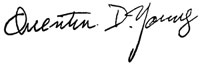
Quentin Young, M.D.
National Coordinator

Ida Hellander, M.D.
Executive Director
P.S. If you definitely can’t make it to Denver, please contribute financially toward its success, including by underwriting some of our scholarships to medical students who will be attending.
What if everyone had Medicare?
By Henry Abrons
San Francisco Chronicle, Friday, September 24, 2010
The Census Bureau released its annual report on income, poverty and health insurance coverage in the United States earlier this month, and it’s no surprise to learn that we’re in bad shape. The number of people living in poverty was 43.6 million (14.3 percent), up sharply from 2008, and real per capita income declined 1 percent.
Looking at health insurance, the situation is truly dire. There was a dramatic spike in the uninsured – 4.3 million more, to a record 50.7 million – in spite of the expansion of government health insurance rolls by nearly 6 million.
Those opposing government health insurance should ponder the fact that private health insurance coverage dropped to the lowest level since comparable data were first collected in 1987. On the other hand, those who look to the new health reform law – the Patient Protection and Affordable Care Act (PPACA) – for a solution should be deeply disturbed.
PPACA was not designed to provide universal coverage. In fact, if the new law works as planned, in 2019 there will still be 23 million uninsured. Yet the consequence of being uninsured can be lethal: Research published last year shows about 45,000 deaths annually can be linked to lack of coverage. That number is probably more than 50,000 today.
As Don McCanne, senior health policy fellow at Physicians for a National Health Program, has observed, PPACA is an underinsurance program. Employers, seeing little relief, will expand the present tr
end of shifting more insurance and health care costs onto employees.
Individuals buying plans in the new insurance exchanges (which won’t start until 2014) will discover that subsidies are inadequate to avoid financial hardship. Inevitably, they will end up with underinsurance, spotty coverage and high deductibles.
And workers who are unemployed or without employment-based insurance will move into Medicaid (Medi-Cal in California), where providers are reimbursed at such low rates that many will not accept patients.
When Congress passed the new law last spring, it based its decision on a faulty assumption – namely, that the rest of the population will have sustainable private health insurance. But between 2008 and 2009, the number of people covered by private health insurance decreased from 201.0 million to 194.5 million, and the number covered by employment-based health insurance declined from 176.3 million to 169.7 million.
If this trend continues, as it’s bound to do under current economic conditions, the ranks of the uninsured will expand and the new law will fall far short of the mark – either the cost will exceed projections, or coverage will need to be reduced.
The Census Bureau report underscores the urgency of going beyond the Obama administration and swiftly implementing a more fundamental reform – a single-payer national health insurance program – improved Medicare for all.
Improved Medicare-for-all, by replacing our dysfunctional patchwork of private health insurers with a single, streamlined system of financing, would save about $400 billion annually in unnecessary paperwork and bureaucracy. That’s enough to cover all of those now uninsured and to provide every person in the United States with quality, comprehensive coverage.
A single-payer plan would also furnish us with effective cost-control tools, like the ability to negotiate fees and purchase medications in bulk. It would permit patients to go to the doctor and hospital of their choice.
Short of a full national plan, some states, like ours, are eyeing a state-based single-payer model. The new health law allows states to experiment with different models of reform, but not until 2017. Congress should move that date forward. There is no time to waste.
Henry Abrons, M.D., is a member of Physicians for a National Health Program-California (www.pnhpcalifornia.org).
http://sfgate.com/cgi-bin/article.cgi?f=/c/a/2010/09/24/EDRK1FFRST.DTL
Letters to the editor
The Oregonian, Sept. 28, 2010
Regence BlueCross BlueShield and other large insurers canceled their policies for children just before they would have had to accept any patient regardless of his or her medical condition (“Regence drops child-only coverage,” Sept. 23). This confirms what we have long known: Since 20 percent of the population use up 90 percent of health care expenses in any given year, insurance companies make money by not insuring these costly patients.
We need an insurance system that pools the risk evenly and spreads out the costs of the sickest 20 percent of us. Other rich nations have versions of a single-payer system to finance health service payments. It is time we adopt a single-payer national health program in the United States. Such a system would provide affordable access to medical services for everyone. No one would have to worry about pre-existing conditions, deductibles, provider networks, medical debt, losing insurance with a job loss or a doctor rejecting them as a patient because they are on Medicaid. Instead, the sick would simply choose their doctor and hospital.
Nancy Crumpacker, M.D.
Northwest Portland
Crumpacker is affiliated with Physicians for a National Health Program
http://blog.oregonlive.com/myoregon/2010/09/we_need_health_care_for_all.html