Below are excerpts from the remarks made at the unveiling of “Beyond the Affordable Care Act: A Physicians’ Proposal for Single-Payer Health Care Reform” and the related publication of “Moving Forward From the Affordable Care Act to a Single-Payer System” in the American Journal of Public Health on May 5, 2016, at the National Press Club. The panel of speakers was moderated by Dr. Robert Zarr.
To view photos from the press conference, please visit our Flickr page. To hear audio highlights alongside these photos, please view the video below or visit our YouTube page.
We also encourage you to join PNHP today, and to endorse the Physicians’ Proposal, either as a physician / medical student, or as a non-physician health professional / reform advocate outside the health professions.
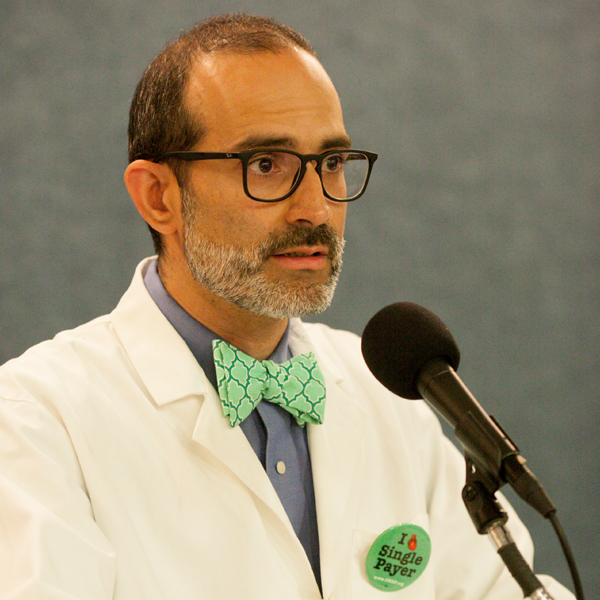 Robert Zarr, M.D., M.P.H.
President, Physicians for a National Health Program
As a pediatrician, I am tired of seeing families postpone medical care because they’re afraid of the bill. I see children under-immunized for diseases that are easily preventable. In fact, just this week I saw another 18-month-old toddler who came in, not having had her 12-month shots. We’re talking about immunizations for measles, mumps and rubella – delayed in 2016. I see my patients forced to change their doctor because their new insurance card is no longer accepted. Sadly, this is not uncommon. We can do better. Using five successful decades of experience with Medicare, we must improve and extend Medicare to all Americans. We can neither turn back the clock, nor accept the status quo. We must accept the inevitable, single payer, so we can start living without the ever-looming threat of medical and financial disaster. Steffie Woolhandler, M.D., M.P.H.
Co-chair, Working Group on Single-Payer Program Design
Twenty-seven million Americans are still uninsured and that number is not expected to fall. Tens of millions with insurance face sky-high copayments and deductibles that would bankrupt them if they were seriously ill. And many more have narrow network plans that won’t cover care at top medical centers. Meanwhile, profit-driven insurers and hospital chains increasingly dominate health care. And insurers’ growing demands for documentation wastes doctors and nurses time, and saps their morale. While these trends predated the ACA, the law fueled merger-mania, and added bureaucratic complexity and cost. The alternative we developed calls for radical change: a single-payer national health program. Our plan would cover everyone for all medically necessary care, without copayments or deductibles. And it would guarantee Americans the right to choose any doctor or hospital. Our nation can readily afford this if we replace today’s wasteful patchwork of insurance plans with a streamlined single-payer system.
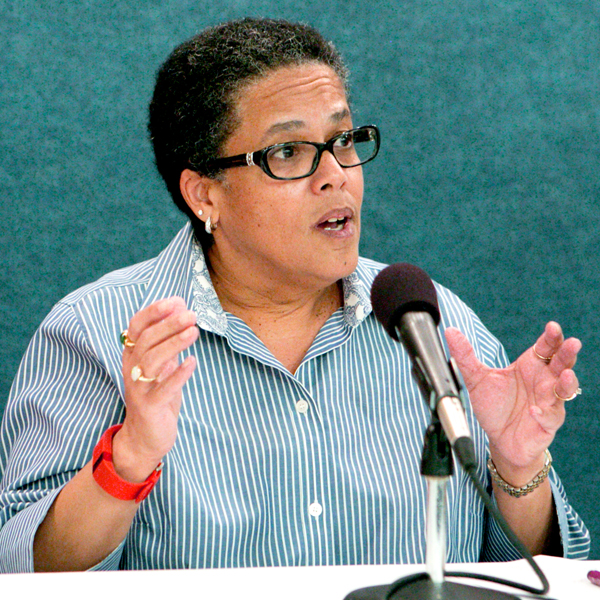 Claudia Fegan, M.D., CHCQM
National coordinator, PNHP
Many people may ask, “Well, why do we have a Physicians’ Proposal? Why now? Didn’t we get there with the Affordable Care Act?” And the simple answer is “no.” The simple answer is, “What is OK about a plan that leaves 27 million people still uninsured?” I’m not even talking about the underinsured; I’m talking about the uninsured. So the Affordable Care Act didn’t get there. One, it leaves too many people uncovered. Two, it says it’s OK to have higher and higher patient cost sharing. And three, it increases the bureaucracy in health care. The amount of money going to administration, the amount of money deciding who’s covered, is increasing, not going down. It’s not going to patient care. The Physicians’ Proposal is another opportunity to talk about how we can get health reform right.
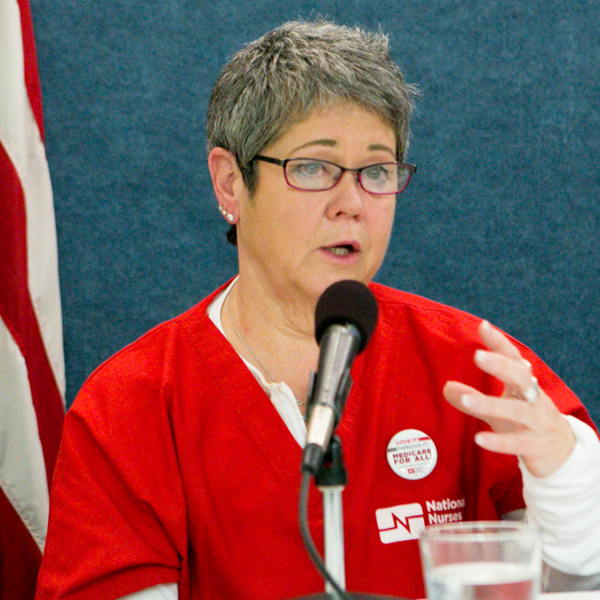 Karen Higgins, R.N.
Co-president, National Nurses United
This updated approach to achieving guaranteed health care for all is essential to providing the health security our patients desperately need. Patients go without medications, or cut pills in half to make them last longer, are kicked out of the hospital when the insurance company says so, or cannot see the provider best suited to their condition because they are “out of network.” We should always remember that “coverage” is not “care,” particularly in the present system of high deductibles and other out-of-pocket costs that create big barriers to access. Nurses work on the front lines with doctors within our dysfunctional health care system, which is dominated by private insurers, drug companies and corporate hospital chains that put their bottom line ahead of patient needs. For Registered Nurses, it is time to make our health care system reflect the values of caring, compassion and community. It’s time for Single-Payer, Improved Medicare for All!
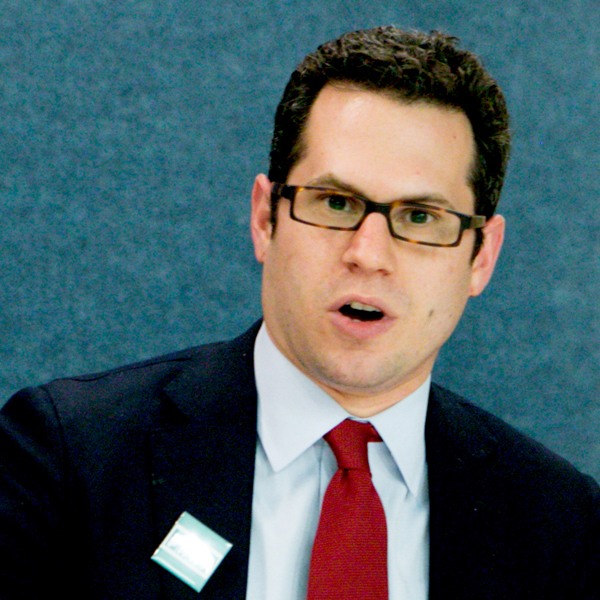 Adam Gaffney, M.D.
Co-chair, Working Group on Single-Payer Program Design
The good news is that there is an alternative path, which my colleagues and I are setting forth today. Our proposal sets forth the fundamentals of a far more efficient, fully universal national health program for the U.S. A single-payer national health program would cover everybody in the nation, regardless of age, income, or country of birth. It would provide comprehensive benefits to health care, including important services far too often neglected in today’s system, like long-term care. It would, at the same time, eliminate cost sharing – copayments, deductibles, and coinsurance
– so that individuals and families would never again need to decide between medicine and rent. The system of single-payer financing is the critical factor that makes such an expansion of coverage economically possible. It’s the only realistic way to achieve the long-sought goal of universal health care in America. We hope that this proposal can help to realize it.
 Sidney Wolfe, M.D.
Co-founder, Health Research Group, Public Citizen
All of us here were trained and have provided health care to tens of thousands of patients in this country. And we are part of what we call a health-care-providing system: nurses, doctors, psychologists, physical therapists, pharmacists, dentists and others. But we have another system, and I think it’s important to identify it as such because it does eat up about a quarter of our health budget. It’s called the health-care-denying and billing system. It starts out with the insurance industry and it foists itself on doctors’ offices, pharmacies, hospitals and so forth. There’s no other country in the world that has anything remotely like it. If those nations had a system like ours, they would not be able to have health care for everyone. The only thing I can say is that a wealthy country such as ours that refuses to provide health care for everyone cannot be described as morally civilized.
Please note that PNHP maintains a speakers bureau. Contact us via this form to schedule grand rounds on the ongoing health care crisis and post-ACA options for reform.