• Skip to primary navigation
  • Skip to main content
  • Skip to primary sidebar
  • Skip to footer

PNHP

  • Home
  • Contact PNHP
  • Join PNHP
  • Donate
  • PNHP Store
  • About PNHP
    • Mission Statement
    • Local Chapters
    • Student chapters
    • Board of Directors
    • National Office Staff
    • Contact Us
    • Privacy Policy
  • About Single Payer
    • What is Single Payer?
    • How do we pay for it?
    • History of Health Reform
    • Conservative Case for Single Payer
    • FAQs
    • Información en Español
  • Take Action
    • The Medicare for All Act of 2025
    • Moral Injury and Distress
    • Medical Society Resolutions
    • Recruit Colleagues
    • Schedule a Grand Rounds
    • Letters to the Editor
    • Lobby Visits
  • Latest News
    • Sign up for e-alerts
    • Members in the news
    • Health Justice Monitor
    • Articles of Interest
    • Latest Research
    • For the Press
  • Reports & Proposals
    • Physicians’ Proposal
    • Medicare Advantage Equity Report
    • Medicaid Managed Care Report
    • Medicare Advantage Harms Report
    • Medicare Advantage Overpayments Report
    • Pharma Proposal
    • Kitchen Table Campaign
    • COVID-19 Response
  • Member Resources
    • 2025 Annual Meeting Materials
    • Member Interest Groups (MIGs)
    • Speakers Bureau
    • Slideshows
    • Newsletter
    • Materials & Handouts
    • Webinars
    • Host a Screening
    • Events Calendar
    • Join or renew your membership

Arizona Information

Contact Information

Arizona Coalition for a State & National Health Program
Website: http://az.pnhp.org

State Legislation

HB 2677 introduced by Minority Leader Phil Lopes (Link)

Media Contacts
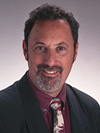
Joshua Freeman, M.D.
info@pnhp.org

Dr. Josh Freeman, now based in Tucson, is professor emeritus at the University of Kansas Medical Center in Kansas City, where he served as the Alice M. Patterson MD and Harold L. Patterson MD Professor and Chair of the department of family medicine from 2002-2016, and was also professor in the departments of preventive medicine and public health and of health policy and management.

Dr. Freeman was a Fulbright Scholar in São Paulo, Brazil in 2003 and served nationally as Treasurer of the Society of Teachers of Family Medicine and the Association of Departments of Family Medicine. He received STFM’s highest honor, the Recognition Award, in 2006. He served as a member of the board of trustees of Roosevelt University in Chicago, as assistant editor of the journal Family Medicine, and also on the board of Southwest Boulevard Family Health Center in Kansas City, KS. He publishes the widely read blog, Medicine and Social Justice, and in 2015 published his book, “Health, Medicine and Justice: Designing a fair and equitable healthcare system.”


Local Unions Endorsing Single Payer

  • National Nurses Organizing Committee — Arizona
  • Pima Area Labor Federation, Tucson, AZ

Utah Information

Contact Information

Joseph Q. Jarvis, M.D., MSPH
joseph.jarvis@msn.com


IBM CEO Palmisano on single payer

IBM CEO Sees Big Opportunity In Health-Care Technology

By Peter Loftus
The Wall Street Journal
October 6, 2009

The chief executive of International Business Machines Corp. (IBM) sees a huge business opportunity in making the U.S. health-care system more efficient.
(Sam) Palmisano sees IBM providing everything from electronic-health records technology to ultra-tiny personal devices that read DNA and cost less than $1,000. He likened those technologies to health-care equivalents of universal bar-codes in the retail industry, which made that industry more efficient.
But Palmisano acknowledged that single-payer, government health systems outside the U.S. make it easier to use technology for health-information sharing, because health information is more centralized.
“The advantage of a government payer or centralized system is they can begin to create incentives for change much more so than you can in a fragmented model,” he said.
He said the federal government could save itself $900 billion over 10 years in health-care spending by simply managing it better.
http://online.wsj.com/article/BT-CO-20091006-708860.html

So IBM CEO Sam Palmisano says that single payer, government health systems have an advantage over fragmented systems (like ours in the U.S.) since they can create incentives for change. That seems counter to those who claim (falsely) that government systems suppress innovation.
He also states that the federal government could manage health care spending better (as Medicare and the VA have done).
Wow! Welcome aboard!

Price Differentials Are Not Evidence of Cost Shifting

by Austin Frakt
The Incidental Economist Blog
October 5, 2009

A recent Business Week article summarized an argument against a public option that is based on the unfounded claims of cost shifting made by insurers and hospitals. In it Jane Sasseen and Catherine Arnst write

Proponents add that government competition would force private insurers to lower premiums, making coverage more affordable for all.

But the business community keeps cranking out studies undercutting such arguments. The insurance industry trade group, America’s Health Insurance Plans (AHIP), compared the lower reimbursement rates for health care paid by public programs vs. private payers. The group claimed the difference reflects cost shifting, which added an estimated $1,512 to the average premiums paid by a family of four. “The existence of the private sector allows that shift,” says Karen Ignagni, the head of AHIP. “If you clamp down on one side of a balloon, the other side just gets bigger.”

Ignagni’s balloon analogy is a false one, and AHIP’s cost shifting argument is faulty. It is based on a study that misapplies the term “cost shift” to price differentials.

Continue reading at: http://theincidentaleconomist.com/price-differentials-are-not-evidence-of-cost-shifting/

IBM CEO Palmisano on single payer

IBM CEO Sees Big Opportunity In Health-Care Technology

By Peter Loftus
The Wall Street Journal
October 6, 2009

The chief executive of International Business Machines Corp. (IBM) sees a huge business opportunity in making the U.S. health-care system more efficient.

(Sam) Palmisano sees IBM providing everything from electronic-health records technology to ultra-tiny personal devices that read DNA and cost less than $1,000. He likened those technologies to health-care equivalents of universal bar-codes in the retail industry, which made that industry more efficient.

But Palmisano acknowledged that single-payer, government health systems outside the U.S. make it easier to use technology for health-information sharing, because health information is more centralized.

“The advantage of a government payer or centralized system is they can begin to create incentives for change much more so than you can in a fragmented model,” he said.

He said the federal government could save itself $900 billion over 10 years in health-care spending by simply managing it better.

http://online.wsj.com/article/BT-CO-20091006-708860.html

Comment:

By Don McCanne, MD

So IBM CEO Sam Palmisano says that single payer, government health systems have an advantage over fragmented systems (like ours in the U.S.) since they can create incentives for change. That seems counter to those who claim (falsely) that government systems suppress innovation.

He also states that the federal government could manage health care spending better (as Medicare and the VA have done).

Wow! Welcome aboard!

Bad advice from the OECD

The Organization for Economic Cooperation and Development and Health Care Reform in the United States

By Don R. McCanne
International Journal of Health Services
Volume 39, Number 4 / 2009

Abstract:
Among OECD nations, the United States is an outlier in having the highest per capita health care costs in a system that unnecessarily exposes many individuals to financial hardship, physical suffering, and even death. President Obama and Congress are currently involved in a process to reform the flawed health care system. The OECD has contributed to that process by releasing a paper, “Health Care Reform in the United States,” which describes some of the problems that must be addressed, but then provides proposed solutions that omit consideration of a more equitable and efficient universal public insurance program. The same omission is taking place in Washington, DC. By reinforcing proposals that support the private insurance industry, the source of much of the waste and inequities in health care, the authors of the OECD paper have failed in their responsibility to inform on policies rather than politics.
http://baywood.metapress.com/link.asp?id=g132608kq2372735

The OECD has a mission of bringing together governments “committed to democracy and the market economy.” Their release of a paper supporting a private insurance model of reform for the United States seemed to be a fulfillment of this mission. But even their paper added nothing that would refute what we already know from our efforts at reform: the private insurance model is an expensive, wasteful, inequitable, and a fairly ineffective model of ensuring affordable, high quality care for everyone.
It’s not too late to change. Many undoubtedly contend that most of the political capital has been spent and that we cannot go back, but political capital is not a finite commodity. Political capital can be wasted, as it has been on the current reform process. Pursuing policies that cater to the private insurance industry at the cost of health care justice very rapidly depletes political capital. But new political capital can be generated simply by pursuing popular policies that would lead to success in achieving our goals.
The OECD is not going to help us infuse more political capital into the process, but we can do it ourselves. Communicate. Educate. Grassroots. Coalitions. Just think of how much political capital we could generate as long as our goal is affordable, high quality health care for everyone. The supply would be endless.

Life, Liberty, Health Care

By Billy Zou
The Dartmouth
Monday, October 5, 2009

For those who have been living outside the U.S. or in a cave, two health care reform bills have been proposed to universalize the American health care system. One, H.R. 3200, proposes a public health insurance plan or “public option,” while the other, H.R. 676, would create a single-payer system that would cover all medically essential care.

The Senate rejected the public option plan last Tuesday, and the forecast is gloomy for proposals of bolder changes.

There’s been a lot of “debate” surrounding the reform. With all the news stories of inflammatory protests at town halls, I suspect that there’s something more than Godwin’s Law at work in political forums across the country.

It’s obvious that private insurance companies do not want a single-payer system that would marginalize their role to providing supplemental care, or a public option that would provide competition and potentially drive down premiums.

What I am interested in, however, is not the kaleidoscopic advantages that a universal public health insurance system would provide: reduced administrative costs, more patients seeking preventative measures — which save costs in the long run — and pharmaceutical research focused on developing drugs that reap the most social benefits rather than the largest profit, for example.

According to a report by the Organisation for Economic Co-operation and Development, one reason single-payer Canada spent $3,895 per capita on health care in 2007 while the U.S. spent $7,290 — with arguably inferior outcomes and 16 percent of the population uninsured — is Canada’s reduced administrative costs.

I am interested, on the other hand, in how seriously Americans take their Declaration of Independence, which states that they have certain inalienable rights, and that among them are “Life, Liberty and the pursuit of Happiness.”

If this is the case, isn’t government justified in — nay, obligated to — protect these rights?

The question then becomes whether health care is really a human right. There are those who argue that it is not, claiming that one only has the right to seek health care, not demand that others provide it. To them I say, is it not an American right to demand protection from foreign armies? Is it not a right to demand that our water be potable, our food edible and our media credible? (OK, not the last one.)

Food need not be a public good because it is inexpensive and easily obtained. This is not the case with some the most essential medical care, which may be very expensive and unaffordable to a large slice of the population.

To have a serious illness go untreated is to be deprived of the hope of pursuing happiness, if not at some point life (according to the American Journal of Public Health, 44,800 die in the U.S. each year simply from lack of coverage).

Indeed, according to an article on the science new web site, Science Daily, a global study on Satisfaction with Life conducted at the University of Leicester found that happiness correlated with health more strongly than any other measure.

The pragmatist in me realizes that a single-payer system isn’t happening in America any time soon.

Nevertheless, if the access to necessary health care is an inalienable right, then it is something that should not be handed out by private insurance companies that would prefer to turn away patients in order to maximize profit.

Instead, providing health care should be the responsibility of the government. The sole purpose of its existence is to protect the rights of those who have to live in this country.

Docs as Props

By SinglePayerAction.org
October 5, 2009

In the Rose Garden this morning, President Obama met with a group of doctors.

From all fifty states.

Banned from the meeting were doctors from Physicians for a National Health Program — representing more than 17,000 docs who support a single payer health care system.

Those doctors were not invited to attend.

They asked to be admitted.

And were denied.

Instead, a small group of these single payer docs circled the White House in protest

And then joined a group of anti-war demonstrators at the front of the White House.

They want Congress to start from scratch.

Dr. Paul Hochfeld led a group of these doctors on a cross-country 22-day, 27-town whistle-stop tour for single payer.

This morning, Hochfeld, an emergency room physician from Corvallis, Oregon, insisted on being admitted to the Rose Garden event.

And amazingly he was allowed in — even though his name was not on the list of doctors to be admitted.

But afterward, Hochfeld said it was a mere “photoshoot.”

“There were no questions,” Hochfeld said after the Rose Garden event. “There were no comments. This was clearly a photoshoot. This isn’t about health care. This is about our legislators needing campaign financing. These were genuine doctors inside. And they agree that our political process is completely corrupt. And that’s the reason we are not getting the only solution to this real mess we are in — single payer.”

“We wanted to meet with President Obama and he refused us,” said. Dr. Michael Huntington, another Oregon doc who traveled cross country with Hochfeld and a group of other Mad as Hell Doctors. “The public option is a sham. It will cost more and serve fewer people than a single payer health plan. Obama’s plan is going to be one public plan swimming in the shark infested waters of private health insurance industry. The public plan will accept the sick and the poor. The wealthy and the employed will be excluded from the public option. The public option will struggle and fail.”

Dr. Andy Coates traveled from Albany, New York to meet with Obama today.

He too was denied entry.

“A single payer plan would save hundreds of billions of dollars a year,” Dr. Coates said. “It would be about health care, not health insurance. Our idea is evidently so dangerous that we had to be moved a quarter mile from the White House. Every entrance to the White House is closed down for the next hour and a half so there wouldn’t be a camera to take a picture showing there are doctors who want national health insurance.”

Dr. Walter Tsou came from Philadelphia to meet with President Obama.

No luck.

“The doctors in the White House will tell you that they support single payer,” Dr. Tsou said. “They want to see something done. But whatever the something is is going to be totally influenced by the insurance and drug lobby. And that something is going to put more billions of dollars of our money into their pockets. I resent that. It’s a waste of our money. We know a better solution — single payer. We need to have the courage to confront the insurance industry. I would urge members of Congress to vote against the way Obamacare is fashioned right now. Obama’s health plan is being fashioned by the industry.”

Dr. Tsou said he supported Obama during 2008, but he’s having second thoughts now.

Sam Husseini, a single payer activist, said after the event that Obama used the docs as props.

“Insurance companies are cherry picking patients,” Husseini said. “Now Obama is cherry picking doctors.”

Bad advice from the OECD

The Organization for Economic Cooperation and Development and Health Care Reform in the United States

By Don R. McCanne
International Journal of Health Services
Volume 39, Number 4 / 2009

Abstract:

Among OECD nations, the United States is an outlier in having the highest per capita health care costs in a system that unnecessarily exposes many individuals to financial hardship, physical suffering, and even death. President Obama and Congress are currently involved in a process to reform the flawed health care system. The OECD has contributed to that process by releasing a paper, “Health Care Reform in the United States,” which describes some of the problems that must be addressed, but then provides proposed solutions that omit consideration of a more equitable and efficient universal public insurance program. The same omission is taking place in Washington, DC. By reinforcing proposals that support the private insurance industry, the source of much of the waste and inequities in health care, the authors of the OECD paper have failed in their responsibility to inform on policies rather than politics.

http://baywood.metapress.com/link.asp?id=g132608kq2372735

Comment:

By Don McCanne, MD

The OECD has a mission of bringing together governments “committed to democracy and the market economy.” Their release of a paper supporting a private insurance model of reform for the United States seemed to be a fulfillment of this mission. But even their paper added nothing that would refute what we already know from our efforts at reform: the private insurance model is an expensive, wasteful, inequitable, and a fairly ineffective model of ensuring affordable, high quality care for everyone.

It’s not too late to change. Many undoubtedly contend that most of the political capital has been spent and that we cannot go back, but political capital is not a finite commodity. Political capital can be wasted, as it has been on the current reform process. Pursuing policies that cater to the private insurance industry at the cost of health care justice very rapidly depletes political capital. But new political capital can be generated simply by pursuing popular policies that would lead to success in achieving our goals.

The OECD is not going to help us infuse more political capital into the process, but we can do it ourselves. Communicate. Educate. Grassroots. Coalitions. Just think of how much political capital we could generate as long as our goal is affordable, high quality health care for everyone. The supply would be endless.

Dr. Quentin Young speaks at the Mad as Hell Doctors rally

By Illinois Media Progressives  
September 26, 2009, Chicago.

Continued insurer discrimination assured

Discrimination by Insurers Likely Even With Reform, Experts Say

By David S. Hilzenrath
The Washington Post
October 4, 2009

If insurers are prohibited from openly rejecting people with preexisting conditions, they could try to cherry-pick through more subtle means. For example, offering free health club memberships tends to attract people who can use the equipment, says Paul Precht, director of policy at the Medicare Rights Center.
Being uncooperative on insurance claims can chase away the chronically ill. For people who have few medical bills, it is less of a factor, said Karen Pollitz, research professor at the Georgetown University Health Policy Institute.
And to avoid patients with costly, complicated medical conditions, health plans could include in their networks relatively few doctors who specialize in treating those conditions, said Mark V. Pauly, professor of health-care management at the University of Pennsylvania’s Wharton School.
At a more nuts-and-bolts level, AHIP has been trying to shape the legislation in ways that could help insurers attract the healthy and avoid the sick, though it has given other reasons for advancing those positions.
By itself, a ban on discrimination would not eliminate the economic pressure to discriminate.
“It would probably increase the incentive for cherry-picking,” Pauly said.
http://www.washingtonpost.com/wp-dyn/content/article/2009/10/03/AR2009100302483_2.html

No matter how tightly regulated, investor-owned private insurers will always find ways to avoid enrolling those with greater health care needs. To fulfill their business responsibilities they are mandated to control costs in any way possible. To remain competitive and survive, nonprofit insurers must follow their lead.
A public insurance program has a mission of assisting individuals in getting the care they need. It is especially important to include those who have greater needs.
What does this say about a stand-alone “public option” that competes with private plans on a level playing field by being fully funded by the beneficiaries? Adverse selection would drive the premiums sky high, and the program would fail.
Would we really want our government to engage in the same injustices of the marketplace in which the public administrators would devise schemes to exclude higher cost patients from the government program, just so they could keep the premiums competitive? Of course not. Almost everyone agrees that the government should serve as the safety net, and yet the proposed public option safety net is all holes and no mesh.
If the government were in charge of our health insurance, we would expect it to provide all of us with the coverage that we need. Yet when the private sector is in charge, we reward it richly for devising ways of preventing us from having the coverage that we need.
Maybe before we do anything else, we need to address our pervasive cognitive dissonance.

17 Held in Protest Outside Health Insurer's Offices

By Colin Moynihan
New York Times
City Room Blog
September 29, 2009

Right-wing and antigovernment activists — a few of them wielding not only signs but even loaded firearms — have organized some of the angry protests surrounding the health care debate. But in Midtown Manhattan on Tuesday morning, a different sort of health care protest took place, led by left-leaning groups who accused insurers of greed and called for nationwide, single-payer health insurance.

The police said that 17 people were arrested after refusing to leave the lobby of an office building on Park Avenue where the insurance company Aetna has offices. They were charged with criminal trespass. In addition, the police said, three of those arrested were charged with obstructing governmental administration.

Organizers said it was the first step of a national campaign meant to publicize their views and challenge claims made by right-wing radio hosts and Republican officials.

“The myths about government death panels are pure hysteria,” an organizer, Mark Milano, said on Park Avenue. “The real death panels are people who are paid by insurance companies to deny health care to patients.”

About 50 people arrived at the building, at Park Avenue and 40th Street, at 10 a.m., participants said, and sent a representative to the Aetna offices upstairs to demand that the company agree to immediately approve “lifesaving” health care requests made by doctors. When that person was turned away, organizers said, 16 protesters entered the lobby of the building and sat on the floor.

Soon the police arrived and a senior officer used a bullhorn to inform those in the lobby that they were breaking the law and subject to arrest. By 10:45, officers could be seen removing the last of the demonstrators and ushering them into the back of police vans.

A spokeswoman for Aetna, Cynthia Michener, said that no protester visited the company’s office on Tuesday.

“Aetna has been actively engaged in health reform,” she wrote in an e-mail message. “When you put yourself out there like we have on this issue, you make yourself a target. But there is more agreement than disagreement on the need to get reform done. It is important we work together to make health care reform a reality this year.”

Ms. Michener added:

Broadly, Aetna ‘s goals are to get everyone covered, improve the quality of health outcomes and provide better value for each dollar spent on care. We’re committed to guaranteed coverage without regard to pre-existing conditions along with an individual requirement to get everyone in the system and subsidies for those who can’t afford it.

Outside, a crowd chanted “patients not profits” and said that large insurers routinely made decisions on what sorts of treatment to cover based more on cost than medical necessity.

“This is very much a dignified, nonviolent response to what some people call the howler movement that erupted in August,” said Katie Robbins, part of an advocacy group called Healthcare Now.

There has been a backlash from some quarters against Mr. Obama’s support for a public insurance plan that would compete with private insurers.

Ms. Robbins advocates on behalf of a bill before the House of Representatives that would, essentially, expand Medicare to cover all citizens. She said organizers from several groups across the country, with networks in 40 states, had been working together for about six weeks on a campaign they called Mobilization for Healthcare for All.

The groups have organized using a Web site and Twitter. So far, organizers said, 300 people have signed up to take part in additional protests using civil disobedience and aimed at insurance companies that are being planned for October, while legislators are expected to be working on health care issues.

“We’re going to be in Chicago next week and L.A. the week after that,” Ms. Robbins said. “We’re timing this around the legislative efforts of Congress.”

Video:

http://www.youtube.com/watch?v=gqP8bEyFRAo

http://cityroom.blogs.nytimes.com/2009/09/29/17-held-in-protest-outside-health-insurers-offices/

  • « Go to Previous Page
  • Page 1
  • Interim pages omitted …
  • Page 797
  • Page 798
  • Page 799
  • Page 800
  • Page 801
  • Interim pages omitted …
  • Page 1226
  • Go to Next Page »

Primary Sidebar

  • About PNHP
    • Mission Statement
    • Local Chapters
    • Student chapters
    • Board of Directors
    • National Office Staff
    • Contact Us
    • Privacy Policy
  • About Single Payer
    • What is Single Payer?
    • How do we pay for it?
    • History of Health Reform
    • Conservative Case for Single Payer
    • FAQs
    • Información en Español
  • Take Action
    • The Medicare for All Act of 2025
    • Moral Injury and Distress
    • Medical Society Resolutions
    • Recruit Colleagues
    • Schedule a Grand Rounds
    • Letters to the Editor
    • Lobby Visits
  • Latest News
    • Sign up for e-alerts
    • Members in the news
    • Health Justice Monitor
    • Articles of Interest
    • Latest Research
    • For the Press
  • Reports & Proposals
    • Physicians’ Proposal
    • Medicare Advantage Equity Report
    • Medicaid Managed Care Report
    • Medicare Advantage Harms Report
    • Medicare Advantage Overpayments Report
    • Pharma Proposal
    • Kitchen Table Campaign
    • COVID-19 Response
  • Member Resources
    • 2025 Annual Meeting Materials
    • Member Interest Groups (MIGs)
    • Speakers Bureau
    • Slideshows
    • Newsletter
    • Materials & Handouts
    • Webinars
    • Host a Screening
    • Events Calendar
    • Join or renew your membership

Footer

  • About PNHP
    • Mission Statement
    • Local Chapters
    • Student chapters
    • Board of Directors
    • National Office Staff
    • Contact Us
    • Privacy Policy
  • About Single Payer
    • What is Single Payer?
    • How do we pay for it?
    • History of Health Reform
    • Conservative Case for Single Payer
    • FAQs
    • Información en Español
  • Take Action
    • The Medicare for All Act of 2025
    • Moral Injury and Distress
    • Medical Society Resolutions
    • Recruit Colleagues
    • Schedule a Grand Rounds
    • Letters to the Editor
    • Lobby Visits
  • Latest News
    • Sign up for e-alerts
    • Members in the news
    • Health Justice Monitor
    • Articles of Interest
    • Latest Research
    • For the Press
  • Reports & Proposals
    • Physicians’ Proposal
    • Medicare Advantage Equity Report
    • Medicaid Managed Care Report
    • Medicare Advantage Harms Report
    • Medicare Advantage Overpayments Report
    • Pharma Proposal
    • Kitchen Table Campaign
    • COVID-19 Response
  • Member Resources
    • 2025 Annual Meeting Materials
    • Member Interest Groups (MIGs)
    • Speakers Bureau
    • Slideshows
    • Newsletter
    • Materials & Handouts
    • Webinars
    • Host a Screening
    • Events Calendar
    • Join or renew your membership
©2025 PNHP